
Canadian Grocery Stores: Local and Online Guide
Compare Canadian grocery stores and online options by sourcing, quality, delivery, flexibility, and transparency. Find a better fit for Ontario shopping.

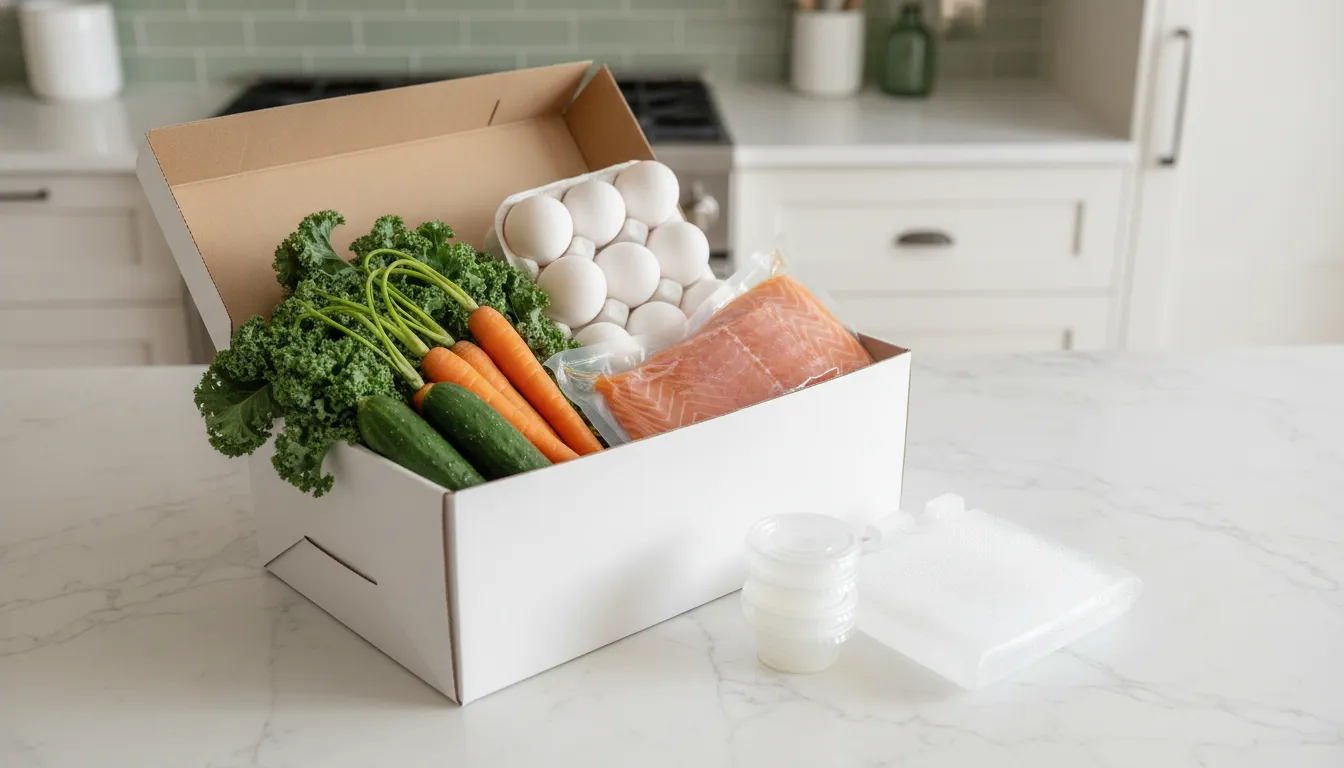
Why meal kits create food waste is not only a packaging story. A kit can cut some store waste by sending exact recipe portions. It can still leave a half onion, a spare sauce packet, and plastic the blue bin will not take. The useful question is which waste shows up in your kitchen, and which of it you can avoid by ordering groceries you will cook.
A meal kit is built around one recipe and a set number of servings. That design looks tidy on the card. At the table, households rarely match the card. Someone skips dinner, a child will not eat the herb, or you already had rice in the cupboard. The unused bit is too small to save and too specific to fold into tomorrow's lunch.
Three leftovers show up again and again:
University of Michigan researchers still found a real upside on the supply-chain side. In a 2019 life-cycle study, the same five dinners bought as meal kits averaged 6.1 kg of greenhouse gas emissions. Against 8.1 kg for the grocery-store versions, about one-third lower. Less food was lost between the farm and the plate, and that savings outweighed extra packaging in their model. The study is about emissions from farm to landfill, not about whether your household liked the leftovers. Both things can be true. Kits can waste less food in the supply chain and still leave awkward scraps at home.
The University of Michigan study is the public source for the emissions detail.
The other pile is the box. A typical kit arrives as an insulated carton holding gel packs, a liner, and a separate plastic bag or cup for almost every ingredient. NSF International's Canadian packaging brief describes that stack plainly: ingredients in plastic bags and jars, inside an insulated cardboard box with ice packs. The brief also notes the appeal. Packaged portions can mean fewer leftovers. The cost is overpackaging.
That packaging is not all the same once it hits a GTA kitchen:
Food waste and packaging waste are not equal in climate terms. NSF cites older Canadian research putting the value of food that ends up in landfills or composters at $31 billion a year. With 47 percent of that waste happening at home. The same brief quotes packaging researchers who argue that protecting food can matter more than the wrapper. Because growing and shipping food uses far more resources than making the pack. Use that as a tie-breaker, not a free pass. A wrapper you cannot recycle is still waste you have to deal with every week.
If you want the household side of this, how to reduce food waste when you grocery shop covers shopping habits. This article stays on the kit-specific traps: portions, duplicate staples, and the box.
The waste is usually a habit, not one bad recipe. Watch for these four patterns before you blame the food itself.
Kits sell two-person or four-person meals. A household of three, a night of guests, or a week when one person is away does not land on those numbers. You either stretch a sauce until it tastes thin or throw out the extra protein because it was never enough for a second full meal. Flexible groceries let you buy the amount you cook, including a larger pack you can split across two dinners.
Oil, salt, rice, tortillas, and common spices arrive in sample sizes because the recipe has to work for a first-time cook. If those items already live in your kitchen, the new packet is a duplicate. StopWaste lists an opt-out for pantry staples as a basic packaging practice. Many kits still do not offer it, so the duplicate becomes the default.
Kits ask you to pick recipes days ahead, then ship a menu you cannot easily rewrite. A soccer night, a leftover lunch, or a sudden plan to eat out leaves a protein with a short date and no backup recipe. That is different from a weekly grocery order you can edit before it leaves the warehouse. You skip the fish, add eggs, and keep Thursday's plan.
A kit that promises no leftovers often means no usable leftovers. You get exactly one dinner and nothing worth packing for lunch. That can be fine for a couple that wants a clean counter. It is a poor fit for a family that counts on one cook covering two meals. Waste here is the missing second use, not a pile of scraps.
Put the two models side by side before you call the kit greener or wasteful. The Michigan study measured supply-chain emissions. For those five dinners, kits came out ahead of a typical grocery-store trip. A weekly grocery subscription is a third model. You still skip the store trip, and you choose amounts and recipes yourself.
| Waste point | Pre-portioned meal kit | Flexible weekly grocery order |
|---|---|---|
| Portion fit. | Locked to 2 or 4 servings. | You choose the pack size. |
| Leftovers. | Often too small to save. | Plan them into a second meal. |
| Pantry staples. | Tiny duplicates are common. | Reorder only what is low. |
| Menu changes. | Hard once the kit is packed. | Edit, skip, or swap the week. |
| Packaging. | Many small plastics plus gel packs. | Skip duplicate sauce cups and staples. |
| Supply-chain food loss. | Lower in the 2019 study than store trips. | A weekly route skips store spoilage. |
Tre'dish sits in that third column for Greater Toronto Area households. You build a weekly box from the groceries you want, pay for products rather than a subscription fee, and skip or change a week without a penalty. Refrigerated delivery still uses insulated packaging, so the box is not zero-waste. The difference is choice. You are not locked into a plastic cup for every teaspoon of sauce. One percent of each purchase goes to Feed Ontario, which is a community outcome, not a waste claim.
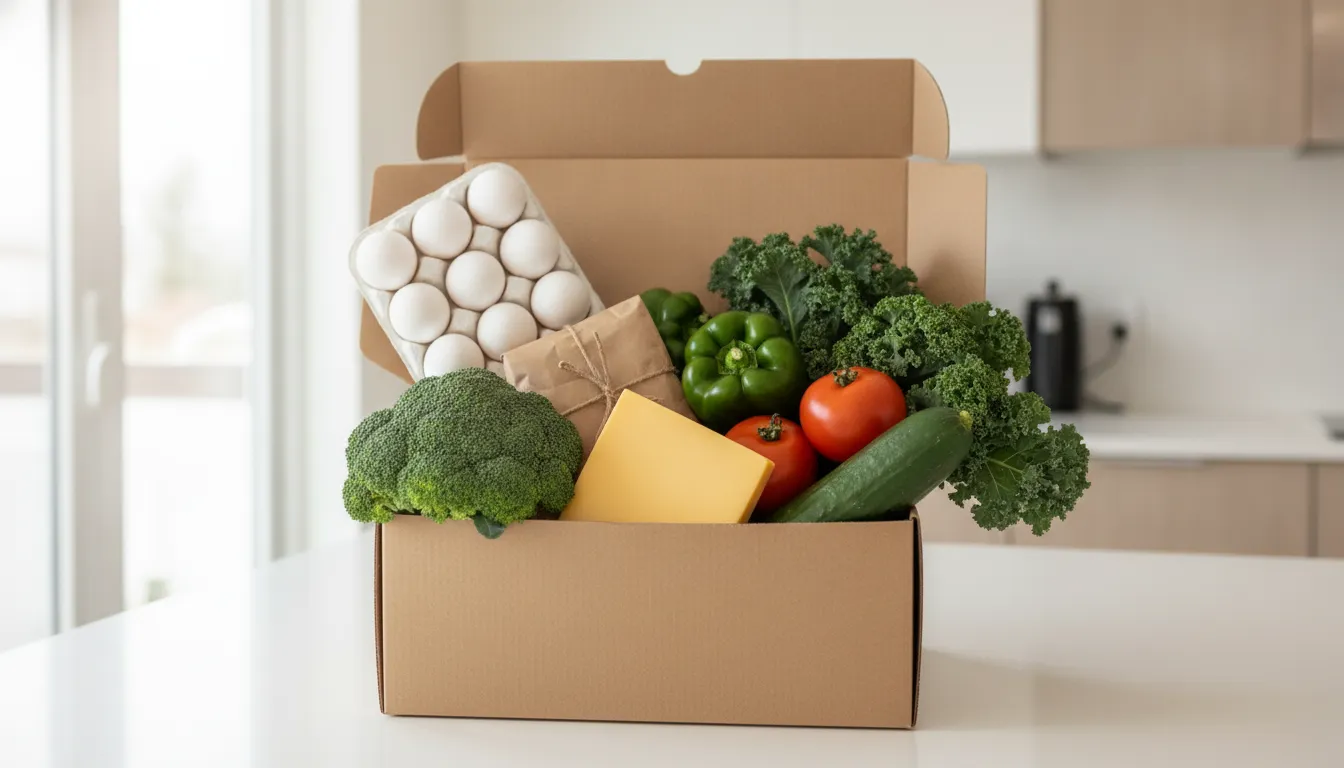
For the side-by-side buying choice between a kit and grocery delivery, use the existing guide to grocery delivery versus a meal kit. This section is only about waste, not about which service to rank.
You do not have to quit kits to waste less. Use them for the nights that match the portion count, and stop using them as the whole week. A short routine keeps the useful parts and drops the scraps.
Meal prep with grocery delivery is the practical next step if you want one cook to cover several days. Eco-friendly grocery delivery packaging explains what to do with insulated boxes and cold packs after a grocery drop, which is a different pile from kit sauce cups.
Replace the kit habit with a short list, not a new diet. Order the foods that survive a changed week, and buy fresh add-ons only for the meals you have already named.
Start with items you can cook more than one way. Eggs, plain grains, a block of cheese, yogurt, and a whole vegetable keep their options open. A pre-mixed sauce packet does not. If a recipe idea needs a special herb, buy the smallest bunch and name the second dish before it arrives.
Count dinners at home, then subtract the night you already know will be leftovers or takeout. Order that many portions, not the kit default. A family that cooks four nights does not need five kit-sized fish packs "just in case." The spare pack is the waste.
Build the box in three passes. First, breakfast and lunch staples you are low on. Second, two or three dinners with a shared vegetable. Third, one interesting item, not five. A balanced grocery delivery order walks through that kind of weekly plan. A weekly grocery list for a family of four is a useful cross-check if you are feeding more than two people and kit portions keep coming up short.
A grocery subscription can support this only if you are allowed to change the box. Whether a grocery subscription can reduce food waste depends on that flexibility. A locked menu just recreates the kit problem with a different logo.
They can do both. The 2019 University of Michigan study found lower average emissions for kit dinners than the same meals from a grocery store. Pre-portioned ingredients and a direct supply chain lost less food before it reached the kitchen. At home, fixed portions, duplicate staples, and sauce cups still create waste. The study is not a reason to ignore that packaging.
Kits use many small formats at once: film bags, sauce cups, spice packets, liners, and gel packs. StopWaste notes that one kit can include more than two dozen packages, and that insulation and cold packs are often hard to recycle. Cardboard is the easy piece. The small plastics usually are not.
Sometimes, and only up to a point. Canadian packaging guidance cited by NSF says the resources used to grow and ship food dwarf the resources used to make the wrapper. So protecting food can be the lower-impact choice. That argument fails when the pack is a duplicate staple you already own, or a gel pack with no take-back program.
It can, if you order amounts you will cook and skip staples you already have. A flexible weekly box lets you change the plan before delivery. A kit locks portions and recipes earlier. Tre'dish delivers that kind of weekly grocery box in the Greater Toronto Area, with no subscription fee, and you can skip or edit a week.
Check the brand's own return or reuse steps first, then your city's list. Do not assume a gel pack belongs in recycling because it arrived with cardboard. For grocery delivery packaging rather than kit cups, the packaging guide is the closer match.
Meal kits are a reasonable tool for one planned dinner. They create waste when they become the whole week: odd leftovers, pantry duplicates, and a box full of packs you cannot recycle. A weekly grocery order you can edit is the simpler fix. Choose the food, choose the amount, and skip the week that does not need a delivery.
End of article.