
Best Deals on Groceries: A Quality-First Guide
Find the best deals on groceries by comparing unit prices, freshness, Canadian sourcing, product quality, and the time your shopping routine saves.

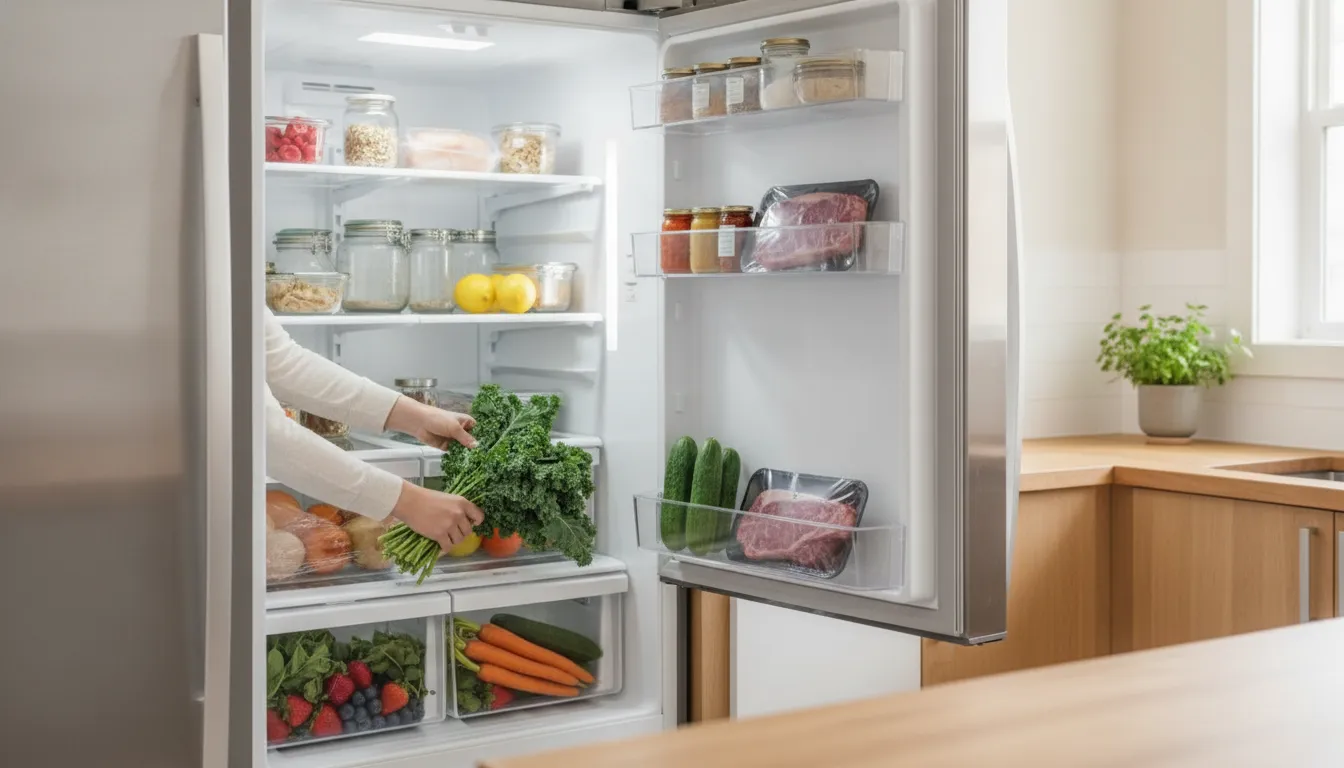
The fastest way to lose a week of greens is to drop the whole delivery on one fridge shelf and shut the door. If you want to know how to keep produce fresh in the fridge, use three moves. Set the fridge to 4°C (40°F) or lower. Keep fruit and vegetables in separate drawers. Wash most items only when you are about to eat them.
Health Canada's produce storage guidance says those habits cut waste and lower the chance of foodborne illness. A weekly GTA delivery makes the routine easier, because everything arrives on one day and you can put it away once.
Unpack the box before you start dinner. Put the coldest items away first, then split the rest into three piles: fridge now, counter until ripe, and freezer if something is already soft.
Tre'dish deliveries arrive in insulated boxes with ice packs, so the cold chain is already started. Your job is to finish it. If a box sat by the door, open it first and get the greens and cut fruit into the fridge before you sort pantry items. You can skip or adjust a week when you are away, which keeps you from storing food you will not eat.
A cold fridge is not the right home for every item in the box. Some fruit and vegetables last longer on the counter, and a few should never go in the refrigerator at all.
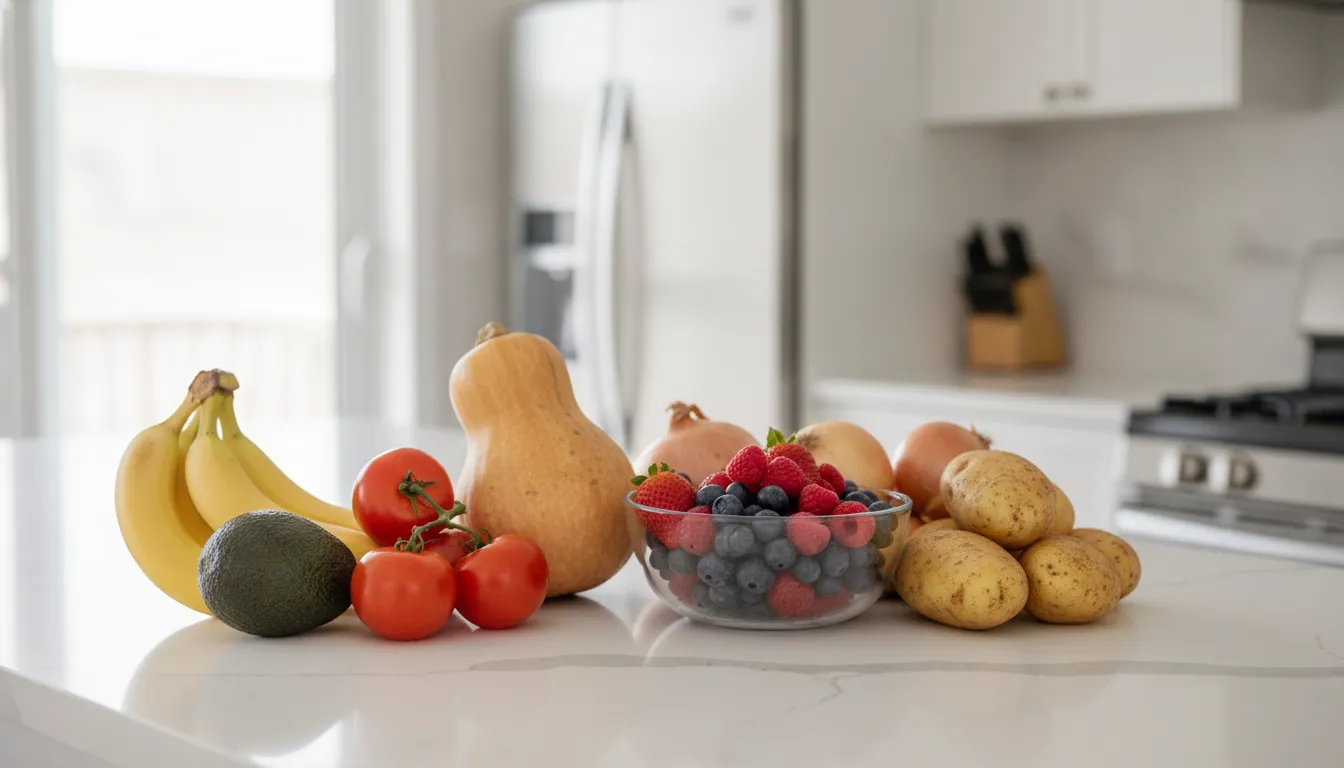
Keep bananas, potatoes, pineapple, sweet potatoes, dry onions, and garlic out of the fridge. Store fresh basil in a sealed container at room temperature. Cold air blackens the leaves. Give onions, potatoes, and garlic a cool, dry, well-ventilated spot, and do not store onions next to potatoes. Each makes the other spoil faster.
These items can sit out until they are ripe, then move to the fridge so they last longer. Group them so the rule is easy to scan.
Ripe tomatoes lose some flavour in the cold, so leave them out if you will eat them in a day or two. If they are already soft and you need the rest of the week, the fridge is the better trade.
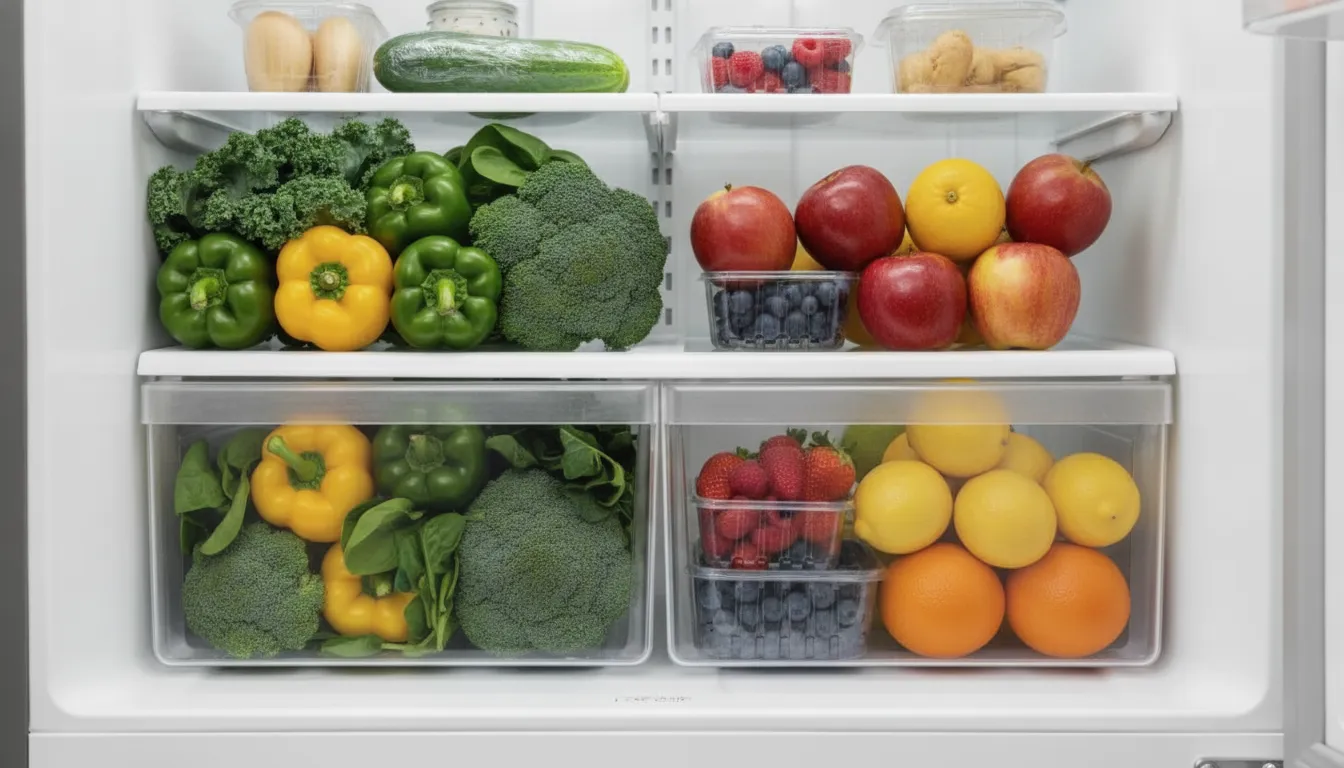
This is the core of how to keep produce fresh in the fridge. Use two drawers with different humidity, and do not mix fruit with vegetables.
| Drawer | Put these here | Skip this |
|---|---|---|
| High humidity, for vegetables | Greens, broccoli, celery, cucumbers, peppers, cabbage, and green onions. | Apples, bananas, tomatoes, and dry onions. |
| Low humidity, for fruit | Apples in a vented bag, grapes, berries, apricots, and citrus. | Potatoes, garlic, and fresh basil. |
| Counter, then fridge when ripe | Avocados, peaches, pears, mangoes, melons, and tomatoes. | Anything already cut. |
| Never the fridge | Bananas, potatoes, pineapple, dry onions, garlic, and basil. | Do not use the crisper or the door bins. |
Leafy greens, broccoli, peppers, celery, cucumbers, cabbage, cauliflower, eggplant, peas, corn, leeks, parsnips, artichokes, Brussels sprouts, and summer squash want the closed, high-humidity drawer. Store mushrooms in a paper bag. Stand asparagus stems in a little water. Keep green beans in a ventilated bag. Herbs other than basil last longer if you trim the stems and put them in a container in that same drawer.
Apples, grapes, apricots, nectarines, cranberries, and berries belong in the low-humidity drawer. Keep berries in a ventilated container so moisture can escape. Apples give off ethylene, a gas that speeds ripening in nearby produce, so a ventilated bag in their own drawer protects the greens.
Most of the time, no. Water left sitting on the skin invites mould before you get a chance to eat it. Health Canada says to rinse most vegetables and fruit only before you prepare, freeze, or eat them, and never with soap.
Leafy greens are the exception. Rinse them, spin or pat them dry, then store them in a container lined with a dry towel. Swap the towel if it gets wet midweek. For everything else, a quick rinse at meal time is enough. Cut away bruised spots before you eat, because damaged skin is where spoilage starts.
If you want a longer plan for using what you buy, the grocery shopping waste guide covers planning. This page stays on what happens after the food is in the kitchen.
A weekly delivery only stays useful if Thursday's greens still look like Monday's greens. Build a short midweek check into the same put-away routine.
Apples, pears, and ripe avocados release more ethylene as they soften. Lettuce, broccoli, and cucumbers are sensitive to it. One apple in the greens drawer can yellow the lettuce before you use it. Keep ethylene producers in the fruit drawer, in a bag with a few holes.
Soft berries and limp herbs should be eaten or frozen the day they arrive. Do not wash berries until you are ready to freeze or eat them. Spread them on a tray, freeze until firm, then move them to a bag. Vegetable scraps can go in a freezer bag until you have enough for stock.
Many vegetables and fruits keep in the freezer for up to 12 months once they are prepared. The freezer-friendly grocery guide covers what is worth freezing.
Yes, because you put the food away once instead of in small trips through the week. That helps when the first 15 minutes stay consistent, and it hurts when ripe fruit gets buried under the rest.
Tre'dish is a flexible grocery subscription for busy GTA households. You pay for the products, with no subscription fee, and you can skip, change, or cancel a week. Refrigerated delivery and insulated packaging protect freshness on the way. Local farms and producers supply much of the grocery selection, and a portion of profits goes to Feed Ontario. None of that replaces a 4°C fridge or a clean drawer. It does mean the food can arrive cold and ready to store.
If you are still comparing how produce gets to the door, the produce box home delivery guide covers that choice. This page starts after the box is open. For what is in season before you order, see the Ontario summer produce guide.
Choose a mix you can see. A few heads of sturdy greens, a bag of carrots with tops removed, berries you will eat in three days, and fruit that can finish ripening on the counter. Leave the extra melon for a later week. You can adjust the order instead of forcing it into a crowded drawer. Households planning a bigger shop can start from a weekly grocery list for a family of four and then apply the drawer rules here.
Once you cut it, the rules change. The protective skin is gone, so time and temperature matter more than they did for the whole item.
Cover cut melon, sliced cucumber, and chopped peppers and refrigerate them right away. Keep them above raw meat so drips cannot reach them. Use cut produce within a few days, and throw it out if it smells off, feels slimy, or has sat above 4°C. You cannot judge safety by look alone. Health Canada's storage guidance is clear on that: when in doubt, throw it out.
Basil stays on the counter in a sealed container. For cilantro, parsley, and dill, trim the stems, wrap them loosely in a dry towel, and place them in the high-humidity drawer. Green onions go in the fridge, not with the dry onions on the counter. If herbs are already wilting on arrival, chop and freeze them in a little water or oil in an ice cube tray.
Most waste comes from a few repeat habits, not from one bad piece of fruit sitting in the wrong spot.
Rinsing a whole week's berries or peppers on delivery day leaves water in the container. That water is what you see as mould by day three. Wash at meal time instead.
The door is the warmest spot and the one that swings open most. Milk might survive there. Tender herbs, greens, and berries will not. Use the door for condiments and drinks.
Yes, and that is a real safety problem. Keep raw meat, poultry, and seafood on the bottom shelf in a container. Produce stays in the drawers above it. Use a separate grocery bag for raw meat so the same bag does not carry greens on the next order.
No. Air has to move. If you cannot close the drawer without crushing lettuce, eat or freeze the ripe items before the next delivery. Skipping a week is better than stacking food you will not reach. A grocery subscription that cuts waste only works if the fridge can hold what arrives.
No. Store berries unrinsed in a ventilated container in the low-humidity drawer. Rinse them just before you eat or freeze them, because soap does not belong on produce.
Leave tomatoes on the counter until they are ripe. Move them to the fridge only if they are softening faster than you can eat them. Cold storage keeps them from turning too fast, but it also dulls the flavour.
Rinsed and dried greens in the high-humidity drawer often last several days to about a week, depending on how fresh they were on arrival. A dry towel in the container helps. Slimy leaves should be thrown out, not rinsed and reused.
Set the refrigerator to 4°C (40°F) or lower. That is the Health Canada target for keeping food out of the temperature danger zone. Pre-cut fruit and ready-to-eat salads need that temperature the whole time, including the trip from the door to the drawer.
No. Keep dry onions and potatoes in a cool, dark, ventilated place, stored apart from each other. Green onions are the exception and belong in the fridge. Cut onion, once sliced, should be covered and refrigerated.
Set the fridge to 4°C, split fruit and vegetables into their drawers, and leave the counter pile for what still needs to ripen. That is the whole method for how to keep produce fresh in the fridge after a GTA delivery. When you are ready for the next week, start a shop and put it away the same way.