Is Milk Delivery Cheaper? The Real Cost vs. The Store
Wondering is milk delivery cheaper than grocery store trips? Get a real cost comparison, including hidden fees, time savings, and tips for smarter shopping.


Grocery spending is easier to understand when you separate a national benchmark from your household's real routine. A one-person home, a family with growing children, and a household that cooks most meals will not follow the same monthly pattern. Location, dietary needs, food waste, and how often you eat out all shape the number.
So, how much do canadians spend on groceries per month? Statistics Canada reports that the average Canadian household spent 8,659 Canadian dollars on food purchased from stores in 2023, or about 722 Canadian dollars per month. This figure covers store-bought food, not restaurant meals, and it is a starting point rather than a recommended budget. Statistics Canada provides the underlying annual figure.
The useful next step is to put that average in context. Looking at household size and shopping habits can help you set a weekly amount that feels realistic. A flexible grocery routine can also make planning and delivery easier for busy Ontario households.
Based on the latest benchmark from Statistics Canada, the average Canadian household spent about CAD 722 per month on food purchased from stores in 2023. That figure comes from annual household spending of CAD 8,659, divided by 12 months. It is a useful starting point for understanding grocery spending, but it is not a recommended budget for every household.
The benchmark covers food bought from stores, which broadly represents groceries and other food purchased for home use. It is separate from restaurant spending. Statistics Canada reported average household spending of 3,351 Canadian dollars on food purchased from restaurants in 2023. When food bought from stores and food purchased away from home are considered together, the average household spent 12,046 Canadian dollars on all food that year. Statistics Canada's spending release explains these categories and why they should not be treated as one grocery number.
The calculation is straightforward: CAD 8,659 divided by 12 equals approximately 721.58 Canadian dollars, which rounds to CAD 722 per month. The annual figure is the official benchmark, while the monthly amount is a practical conversion for household planning. It should be read as an average across Canadian households, not as a monthly bill that every family receives.
Statistics Canada reported that the CAD 8,659 store-bought food average was 7.4% higher than in 2021. That comparison also reinforces why the year matters. Food prices, household circumstances, and shopping patterns change, so a 2023 national average provides context rather than a permanent rule.
Households differ in ways that have a direct effect on the grocery total. The number of people sharing food, dietary requirements, and how often meals are cooked at home can all move spending above or below the national average. Location and food waste matter too. A household that buys mostly fresh ingredients may have a different pattern from one that relies more on pantry staples. Someone who eats out frequently may spend less on groceries while spending more on total food.
A better use of the benchmark is to compare it with your own records. Review several months of store receipts or account transactions, then separate groceries from restaurant meals and non-food purchases. Look for your normal weekly range, recurring items, and occasional larger shops. That gives you a personal baseline without forcing your routine to match a national average.
For busy households, a consistent weekly grocery routine can also make the monthly number easier to understand. Planning around what you actually eat, the quality you expect, and the time available for shopping is more useful than chasing an arbitrary figure. The national benchmark answers the question, but your own household pattern determines what a sensible budget looks like.
A monthly grocery budget is shaped by more than the number on a national average. Household size matters, but so do portion sizes, dietary needs, where you live, how often you cook, and how much food gets used before it spoils. Restaurant meals and takeout matter too, because a grocery total may look lower when more meals are purchased away from home.
Living alone can create a different cost pattern from sharing a household. An Interac survey reported that Canadians living alone spent about 102 Canadian dollars per week on groceries. Compared with about 80 Canadian dollars per person per week among couples in a shared household. That works out to roughly CAD 442 per month for the first figure, but these are survey results and should not be treated as a universal one-person budget. Larger households may benefit from sharing package sizes, while also buying more total food.
Portion control and waste can make a meaningful difference for people shopping for one. In the same survey, 32% of single-person respondents said food often spoiled before they could use it. Smaller packages may cost more per unit, but buying a large quantity that goes unused does not create good value either. A realistic plan accounts for how often you cook, whether you eat leftovers, and how much storage space you have.
Dietary requirements can change both the products in a cart and the time needed to prepare meals. A household buying specialty ingredients, higher-protein foods, or more fresh produce may spend differently from one relying on pantry staples. Cooking most meals at home usually moves more food spending into the grocery category. A household that cooks less often may buy fewer groceries but spend more on restaurants or takeout. Neither pattern automatically represents better value; the useful comparison is whether the overall routine fits the household.
Location also matters. Prices, access to stores, transportation, and delivery availability vary between communities. A household in a large urban area may have more shopping options, while another may face longer trips or fewer convenient retailers. A 2025 food sentiment survey found that 46.4% of respondents reported spending between CAD 300 and CAD 600 per month on food at home. While about 20% reported spending more than CAD 600. Those figures describe survey responses, not recommended budgets, and they are not directly comparable with every grocery-only measure.
For a practical starting point, track a few weeks of actual purchases and note restaurant spending, waste, and irregular stock-up trips separately. Then build a flexible weekly routine around the foods your household really uses. If you are planning for four people, this guide to weekly grocery planning for Canadian families can help turn a broad monthly figure into a workable list.
A monthly average is useful as a reference point, but it is not a rule for every household. Your household size, dietary needs, location, cooking habits, and schedule all change what a realistic grocery budget looks like. The goal is to turn a broad benchmark into a routine you can review and adjust, not to force every week into the same number.
Choose a monthly amount based on your own recent grocery receipts and priorities. If you are starting from a national average, treat it as a rough benchmark rather than a personal target. Health Canada recommends deciding how much you will spend on groceries each week or month. Write the number down, and decide whether it includes household staples, drinks, snacks, or only the food you buy for meals. Clear boundaries make the figure easier to use.
Divide the monthly amount into four working portions, then leave some flexibility for the calendar. A month is not exactly four weeks, and some shopping trips will include larger purchases such as cooking oil, coffee, pantry staples, or household-size packages. Think of the weekly figure as a checkpoint, not a spending test. A lower week can balance a week when you need to restock several basics.
Before building a list, look through the fridge, freezer, and pantry. Note food that needs to be used soon, then plan one or two meals around it. This can help you avoid buying duplicates and makes room for fresh items that will actually be used. Health Canada also cautions that buying more in bulk than you need can lead to waste, so a larger package is not automatically the better choice.
Choose a few meals for the week, add breakfast and lunch basics, and list snacks or specialty items separately. A written list can reduce impulse purchases, according to Health Canada. Compare unit prices when products come in different sizes. For produce, seasonal options may be less expensive, while frozen or canned choices can be practical alternatives when fresh produce is out of season. These choices should fit your household, not a rigid formula.
Keep a simple note of what you bought, what was left over, and what you ran out of. After a few weeks, adjust the working amount or the way you divide it. If planning for a larger household, this guide to weekly grocery planning for Canadian families can help turn the routine into a reusable checklist.
A weekly plan should make grocery decisions clearer while leaving room for real life. Use the benchmark to ask better questions, then let your household's actual needs guide the next month.
National figures are useful, but the measures behind them are not identical. The examples below show why household size, survey design, and what counts as food spending all matter.
| Example | Reported amount | Basis and source |
|---|---|---|
| Person living alone | About CAD 442 per month | CAD 102 per week from a reported Interac survey, converted to four and one-third weeks |
| Couple in shared household | About CAD 347 per person per month | CAD 80 per person per week from the same survey coverage |
| Average Canadian household | About CAD 722 per month | CAD 8,659 annual store-bought food spending in 2023, Statistics Canada |
| Higher-spend food-at-home group | More than CAD 600 per month | About 20% of respondents in a 2025 food sentiment survey |
These figures are not directly comparable. The first two are per-person weekly survey figures, the third is an average per household from official annual spending data. And the fourth describes a share of respondents whose food-at-home spending exceeded a threshold. They use different dates, samples, and definitions.
That is why the best answer for your household starts with a benchmark, then moves to your own records. A single person may spend more per person because packages and ingredients are harder to share. A larger household may spend more overall but less per person on some items. Dietary needs, location, food preferences, and irregular stock-up trips add more variation.
Use the table to understand the range of situations, not to judge whether your own budget is right or wrong. Track store-bought food separately from restaurants and takeout, then review a few months rather than one unusual shopping trip. The result will be more useful than matching a national average exactly.
Once you know your pattern, you can decide whether in-store shopping, delivery, or a mix of both fits your time and priorities. The right choice should support the food you want, the freshness you expect, and a routine you can maintain.
A grocery budget is not only about the amount on a receipt. It also reflects the time spent planning meals, driving to a store, walking the aisles, waiting in line, and carrying everything home. For a busy household, reducing those repeated tasks can make a weekly routine easier to maintain. That convenience does not automatically mean a lower grocery bill, but it can make shopping more deliberate and predictable.
Delivery can help by giving you one regular point in the week to review what you need and arrange your order. Instead of making several reactive trips, you can plan around the food already at home and the meals you expect to prepare. The value is practical: fewer errands to fit into an already full schedule, less last-minute decision-making, and a clearer routine for replenishing everyday groceries.
A useful service should support your choices rather than force you into a fixed basket. You may want to change quantities, choose different products, or adjust the order as your household's needs change. A repeatable weekly cadence can provide structure while still leaving room for personal preferences, seasonal food, and unexpected changes in the week.
Freshness matters just as much as convenience. Refrigerated delivery and careful handling can help groceries arrive ready to put away, rather than turning time savings into another planning problem. The goal is a smoother handoff from shopping to storing and preparing food.
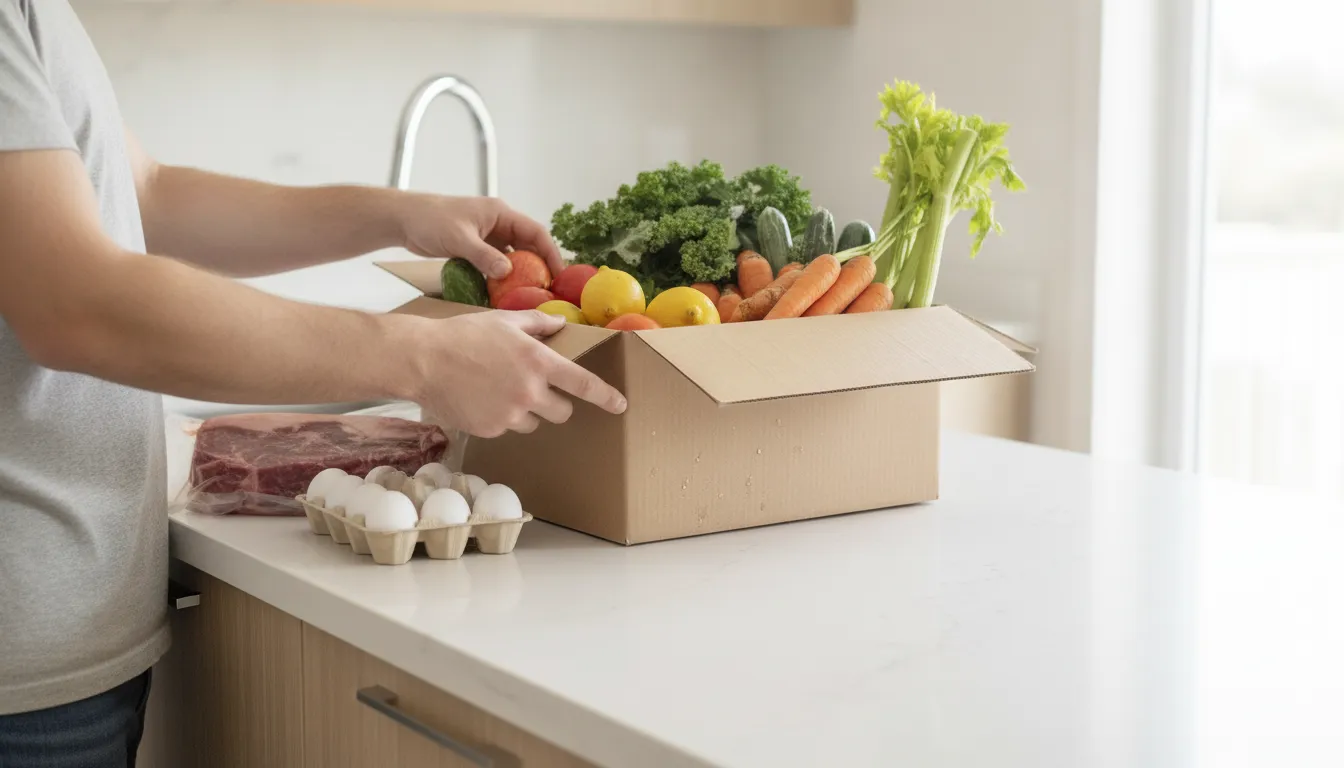
For shoppers in the Greater Toronto Area, Tre'dish offers customizable weekly grocery delivery built around Canadian and local products, alongside everyday groceries. That combination is designed for households that want quality and freshness without adding another store trip to the calendar. You can learn more about the farm-to-door grocery delivery approach and see how weekly grocery delivery works.
Start by treating delivery as a routine-management tool, not a promise of savings. Compare what you plan to buy with what you already have, use a list, and review the order before it arrives. This can help reduce forgotten staples and unnecessary repeat trips. It also makes it easier to notice which purchases are genuinely useful for your household and which ones tend to go unused.
The best measure of value will vary. One household may value reclaimed time, while another may care most about reliable freshness or access to Canadian and local products. For GTA households seeking a more manageable way to keep groceries on autopilot. A customizable weekly delivery routine can bring those priorities together without claiming that every basket will cost less.
A useful grocery routine should make everyday decisions easier without taking choice away from you. Whether you shop in store or use delivery, look for a system that fits your household's appetite, schedule, storage space, and priorities. The goal is not to follow a rigid plan. It is to create a repeatable rhythm that can change when work runs late, family plans shift, or your needs change.
It also helps to consider where the food comes from. Shoppers who want to buy Canadian groceries online can look for clear information about Canadian products and local producers. Local sourcing is not a substitute for checking quality, but it can make a routine feel more connected to the people and places behind the food.

Transparent value includes more than the number on a receipt. Consider product quality, delivery convenience, time saved, packaging, and whether the service helps you buy what you will actually use. A lower price is not useful if it leads to waste, extra trips, or food that does not fit your household. At the same time, convenience should not require you to accept unclear charges or vague product details.
For GTA households considering delivery, Tre'dish is built around customizable weekly grocery delivery, with Canadian and local products alongside everyday groceries. You can learn more about different grocery delivery options in Canada and compare how each model fits your shopping habits. Keep the central test simple: does the routine give you control, protect freshness, show fair value, and make adjustments clear before you commit?
There is no single correct amount because food preferences, location, dietary needs, and cooking habits differ. A useful starting point is the 2023 Canadian household average of CAD 8,659 per year for store-bought food, or about CAD 722 per month, based on Statistics Canada data. Treat that figure as a benchmark, then adjust it to your household.
For a rough planning number, divide a monthly budget by four rather than treating every week as identical. The CAD 722 household benchmark works out to about CAD 167 per week when annual spending is divided by 52. Actual weekly costs can vary with household size, regional prices, bulk purchases, and occasional stock-up trips.
It depends on what the amount covers. For one person, CAD 300 may be workable with careful planning, limited waste, and mostly home cooking. For a couple or family, it is likely a much tighter budget. Compare the figure with your household size and whether it includes only groceries or restaurant meals too. Statistics Canada separates store-bought food from food purchased away from home.
It can be possible for some shoppers, but it is not a dependable target for everyone. A CAD 50 weekly budget leaves little room for price changes, special dietary needs, household staples, or replacing spoiled food. Build a list, check what you already have, compare unit prices, and leave some flexibility for fresh items.
People living alone cannot always share larger packages or spread preparation across several servings. One survey reported about CAD 102 per week for single-person grocery spending, while couples in shared households reported about CAD 80 per person per week. These figures use different survey measures, so they are context, not a personal spending rule.
A national average can help you frame your grocery budget, but your best routine depends on your household, your food preferences, and the time you have available. Tre'dish is built for eligible shoppers in the Greater Toronto Area who want to choose quality groceries and make a predictable weekly order part of life.
Browse the selection and decide whether a more convenient grocery routine fits your week.