
Meal Kits Canada: A Practical Guide for Shoppers
Compare meal kits Canada shoppers can consider, from recipe structure and prep time to grocery delivery flexibility, local sourcing, and weekly planning.


Choosing a grocery delivery service is not only about getting a box to your door. The better option depends on what you want inside it, how much choice you need, how perishables are handled, and whether the routine fits your week.
Food box delivery can mean a flexible grocery order, a recipe-based meal kit, a produce box, or a retailer delivery service. For shoppers who want control over individual items, look for broad product choice, reliable cold handling, clear delivery coverage, and the ability to customize or skip weekly orders.
That distinction matters for Ontario and Canadian households comparing convenience with freshness and quality. Tre'dish is designed around customizable weekly grocery orders for the GTA, including Canadian-made products and local producer offerings.
Before choosing a format, it helps to understand what each kind of delivery actually includes. You also need to know how much control it gives you.
Food box delivery can describe several different shopping formats. The common thread is that groceries or food products are selected online and brought to your door. But the amount of choice, preparation, and flexibility depends on the service. Before subscribing, check whether you are receiving ingredients for specific recipes, a curated selection, or the everyday groceries your household already buys.
A customizable grocery delivery service lets you choose individual products from a broader catalogue instead of receiving a fixed box. That can include staples such as produce, dairy, bakery items, pantry goods, meat, seafood, and specialty foods. You decide what belongs in the order, which makes the format useful for households with different preferences, dietary needs, or changing weekly plans.
Tre'dish follows this grocery-delivery model. Customers can select individual items or bundles, personalize an order, and modify it during the available ordering window. Its documented primary service area is the Greater Toronto Area, and its catalogue includes Canadian-made products and offerings from local producers. You can learn more about how Tre'dish grocery delivery works before deciding whether the service fits your routine.
Meal kits are different. They generally centre on recipes and provide the ingredients needed for selected meals, often in pre-portioned amounts. This can reduce planning and measuring, but it may offer less choice for the rest of the household shop. A meal kit is designed around preparing the supplied recipes; customizable grocery delivery is designed around stocking your kitchen.
Produce boxes usually focus on a curated assortment of fruits and vegetables. The selection may change based on availability, so this format can be useful for shoppers who enjoy seasonal variety. Retailer or aggregator delivery, meanwhile, connects shoppers with products from a grocery store or multiple merchants. The available brands, substitutions, delivery area, and ordering rules depend on that provider.
These formats are not interchangeable. Compare the product range, how much control you have over each item, the preparation required, and whether you can adjust or skip future orders. The right food box delivery option is the one that matches how your household actually plans, cooks, and shops.
Use the same checklist for every service so you are comparing the delivery experience, not just the appearance of a box. The right option should fit how your household shops, stores, cooks, and adapts from week to week.
A reliable food box delivery service should protect perishable groceries from checkout to your refrigerator. When the order arrives, inspect the packaging before putting everything away. FoodSafety.gov recommends arranging delivery when someone can promptly store meat, poultry, seafood, eggs, and dairy. If nobody will be home, choose a cool, shaded, secure drop-off location away from pests.
Look for insulated packaging and frozen gel packs or another cold source. Perishable items should arrive frozen, partly frozen with visible ice crystals, or at least as cold as a refrigerator. A box that feels warm, has leaking or damaged packaging, or shows signs of a broken seal deserves attention before you unpack it.
Check products marked "Keep Refrigerated" as soon as they arrive. If you use a food thermometer, perishable food should be no warmer than 40 degrees Fahrenheit. Do not taste food to decide whether it is safe. If a perishable item arrives above that temperature, do not eat it. Photograph the item and contact the provider promptly to ask about a replacement, refund, or other resolution.
These checks are consistent with the guidance in FoodSafety.gov's food delivery safety guidance. The same page recommends examining both the food and its packaging to make sure they are intact. Once inspected, refrigerate or freeze perishables without delay, and keep raw meat and seafood separate from ready-to-eat foods to reduce cross-contamination.
Before choosing a service, find its policy for food that arrives at an unsafe temperature. A clear process tells you who to contact, what evidence to provide, and how the issue will be resolved. That policy, combined with dependable insulated packaging and delivery timing. Is a practical sign that freshness is treated as part of the service rather than left entirely to the customer.
The right food box delivery model depends on how much choice, preparation, and week-to-week control you want. A household that enjoys choosing individual groceries has different needs from one that wants recipes and pre-portioned ingredients. Use the comparison below to identify the format that matches your routine.
| Model. | Best fit. | Choice. | Preparation. | Flexibility. |
|---|---|---|---|---|
| Flexible grocery delivery. | Full grocery shop. | Individual everyday items. | Cook your way. | Customize, modify, skip, pause, or cancel, depending on the service. |
| Meal kits. | Recipe ideas and planned meals. | Set recipe-led menus. | Prepare pre-portioned ingredients. | Menus and delivery schedules shape the routine. |
| Produce boxes. | Curated fruits and vegetables. | Box contents or seasonal assortment. | Wash, store, and plan around produce. | Seasonal availability may affect the box. |
| Retailer or aggregator delivery. | Specific retailer or marketplace. | Retailer or participating stores. | Shop and prepare as usual. | Check minimums, windows, substitutions, and recurring-order terms. |
Flexible grocery delivery is generally the strongest fit when your household needs control over products, quantities, and weekly plans. You can select groceries rather than receiving only recipe-specific ingredients or a fixed produce assortment. That makes it easier to accommodate allergies, changing schedules, familiar staples, and different preferences under one roof.
Meal kits can reduce planning, while produce boxes can make seasonal shopping simpler. However, both may require you to build the rest of your grocery routine around what arrives. When comparing options, look beyond the box itself. Confirm what you can choose, how easily you can adjust the next order, and whether the service delivers to your area. For GTA households seeking customizable weekly groceries, a flexible model can combine convenience with everyday choice.
Words such as local, Ontario-made, and Canadian can sound interchangeable, but they describe different things. Reading the label helps you understand where a food was grown, raised, made, or substantially transformed, rather than assuming that a Canadian brand used Canadian ingredients.
Foodland Ontario's sourcing guidance defines Product of Ontario as food whose primary ingredients are grown or raised in Ontario by farmers and producers. This is the clearest of these labels for shoppers specifically looking for Ontario-grown or Ontario-raised ingredients. It can be useful when your priority is supporting nearby agriculture and choosing food connected to the province's farming economy.
Product of Canada means all or most of a product's ingredients are sourced within Canada and the product is manufactured in Canada. Made in Canada describes where the product's last substantial transformation took place. Ingredients may come from elsewhere, so a product made in Canada is not automatically made from Canadian ingredients.
The same distinction applies in Ontario. Made in Ontario means the product was crafted in the province, but some ingredients may come from outside Ontario. That does not make the product less useful or less trustworthy. It simply gives you more accurate information about its origin.
Start with the reason you care about origin. If you want Ontario produce, look for Product of Ontario or a verified Ontario-grown, raised, or made designation. If Canadian ingredients matter most, Product of Canada is more relevant than Made in Canada. When the label is unclear, check the ingredient list and product details rather than relying on packaging language alone.
Tre'dish builds its grocery selection around Canadian-made products and offerings from local producers, while serving shoppers primarily in the GTA. That does not mean every item is local. It means origin is part of the selection approach. Learn more about Canadian grocery delivery and local sourcing to see how that focus fits into the wider service.

For any food box delivery service, transparent sourcing information makes it easier to choose with confidence and align your order with your household's priorities.
Tre'dish may suit GTA households that want the convenience of food box delivery without giving up control over what goes into the box. It is built around customizable weekly grocery orders, so shoppers can choose the products they actually need instead of receiving a fixed recipe or preselected assortment. The service's current primary delivery area is the Greater Toronto Area, so shoppers elsewhere in Ontario or Canada should confirm availability rather than assume coverage.
That grocery-first model is useful for busy households with changing schedules. You can adjust an order during the open window, skip a week, pause your routine, or cancel without fees. There is also no separate subscription fee: customers pay for the groceries they select. These details make the service more adaptable than a plan that expects the same delivery rhythm every week. You can read more about how Tre'dish grocery delivery works before deciding whether the process fits your household.
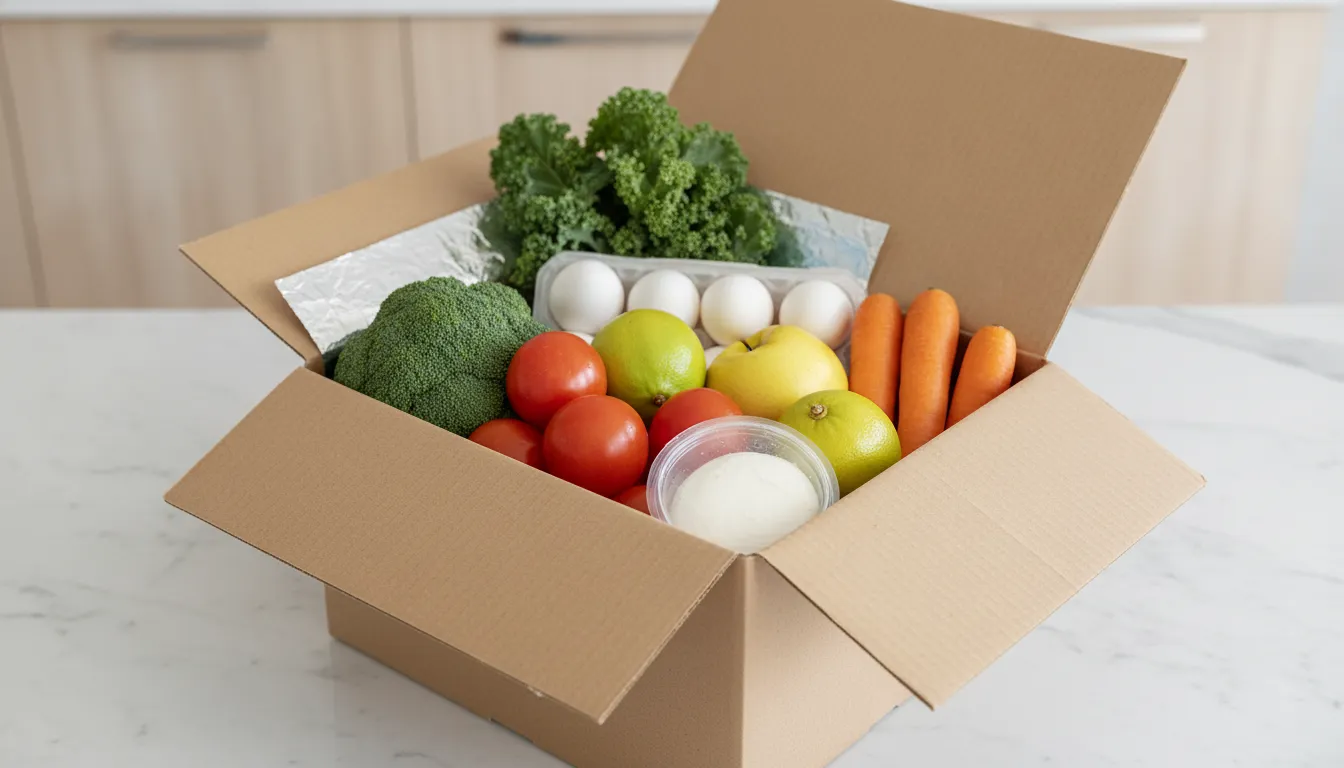
The catalog is broader than a meal kit because it is designed for grocery shopping, not only recipe preparation. That gives households room to plan breakfasts, lunches, snacks, staples, and dinners around their own preferences. Tre'dish also highlights Canadian-made groceries and products from local producers, which can be important to shoppers who want more connection to regional food choices. Its Canadian grocery delivery and local sourcing information provides additional context.
In practical terms, Tre'dish is likely a good fit if you want weekly delivery, product choice, and an easy way to change your order as life changes. It is less suitable if you live outside the GTA or specifically want a fixed meal-kit menu with pre-portioned ingredients and recipe cards.
Start by listing the groceries your household uses every week. Separate those staples from flexible items such as seasonal produce, snacks, or ingredients for new meals. This gives you a repeatable base without forcing every order to look identical.
Next, choose a delivery window that gives you time to unpack and store chilled items. Review the order before the cutoff, update quantities, and remove anything you will not use. A short review can prevent duplicate pantry items and make the next delivery more useful.
Plan two or three meals around what you already have, then fill the gaps with produce, protein, dairy, and pantry items. This approach keeps the order practical while leaving room for household preferences. Our guide to weekly grocery meal planning delivery can help you connect an order with the week ahead, and this checklist explains how to build a balanced grocery delivery order.
Finally, use the service's flexibility. Skip a week when you are away, pause when your routine changes, and adjust quantities as your household needs change. The best routine is predictable enough to save time but flexible enough to stay useful.
You choose the groceries you want online, set up a weekly order, and receive scheduled delivery. A flexible service should let you adjust quantities and selections rather than sending a fixed box. Tre'dish is designed around customizable weekly grocery orders in the Greater Toronto Area.
Yes, flexibility is important when your routine changes. Tre'dish customers can modify an order before its window closes, pause or skip a week, and cancel without fees. Check the cutoff for your order so changes are made in time.
Some services charge a recurring membership fee, so review the pricing terms before signing up. Tre'dish states that it has no subscription fees. Customers pay for the grocery products they order, rather than for a separate subscription charge.
Check that packaging is intact and that perishable foods are cold when they arrive. FoodSafety.gov delivery guidance recommends insulated packaging with frozen gel packs or dry ice for keeping perishables cold in transit. Refrigerate or freeze perishable items promptly.
Tre'dish's confirmed primary service area is the Greater Toronto Area, including Toronto and surrounding municipalities. Coverage can depend on the delivery address, so enter your location during the shopping process to confirm whether service is available where you live.
If a flexible weekly grocery routine fits your household, you can explore the available options and choose what works for you.