Are Grocery Subscription Boxes Worth It? An Honest Review
Curious if grocery subscription boxes fit your lifestyle? Find out are grocery subscription boxes worth it with real pros, cons, and tips for smart shopping.


Grocery delivery is more than choosing a few items online and waiting for a box. A dependable service connects product selection, order timing, cold handling, and a scheduled doorstep handoff. Your regular shop can fit around your household instead of another trip across town.
So, how does grocery delivery work? You browse the catalog, build or customize your order, choose delivery preferences, and review the order window before checkout.
Tre'dish then coordinates warehouse fulfillment and scheduled delivery. Its customizable autopilot model lets you adjust recurring items, skip a week, or cancel without fees.
For Ontario households, the practical details matter: what you can choose, when changes are possible, how groceries are protected in transit, and whether your address is eligible. The process starts with understanding what delivery means in practice, from the first browse to the final handoff.
Grocery delivery means choosing your food online, confirming an order, and receiving it at a scheduled time instead of carrying it home from a store. With Tre'dish, the process starts with browsing the catalog, continues through cart and order-window details, and ends with a planned delivery to your door.
In practical terms, it is an online grocery run with the transportation step handled for you. You can look through available products, compare your options, and build a cart around what your household actually needs. You can also use the guide to ordering groceries online in Ontario for more detail on the cart and checkout process.
First, browse the catalog and decide what belongs in the order. When you are ready to continue, create an account, add products to your cart, and review the order window and total. The order window gives you a defined period to check the details before the order moves forward. That makes grocery delivery more deliberate than adding items quickly during a busy store visit.
After the order window closes, the groceries move through warehouse-based fulfillment. Tre'dish then works with third-party delivery partners and scheduled delivery zones to bring the order to the customer. The exact availability depends on the delivery address, so shoppers should confirm eligibility during the shopping process.
Not necessarily. A useful grocery delivery service should fit the household receiving it. Tre'dish's model is designed around a customizable grocery order rather than a one-size-fits-all box. You choose the products, review the order details, and receive the groceries according to the available delivery schedule. That can make a recurring grocery routine easier to manage without giving up control over what comes into your kitchen.
The final part is receiving and storing the order promptly. Perishable groceries should not sit outside for long. Food safety guidance recommends arranging delivery when someone can refrigerate or freeze meat, seafood, eggs, dairy, and other perishables soon after arrival. Grocery delivery removes the store trip, but it still works best as a planned part of the household routine.
Grocery delivery is a planned sequence rather than a single click. With Tre'dish, you can browse first, decide what fits your household, and then customize your order before it moves into fulfillment. The process is designed for Ontario shoppers who want dependable delivery without giving up control over what arrives.
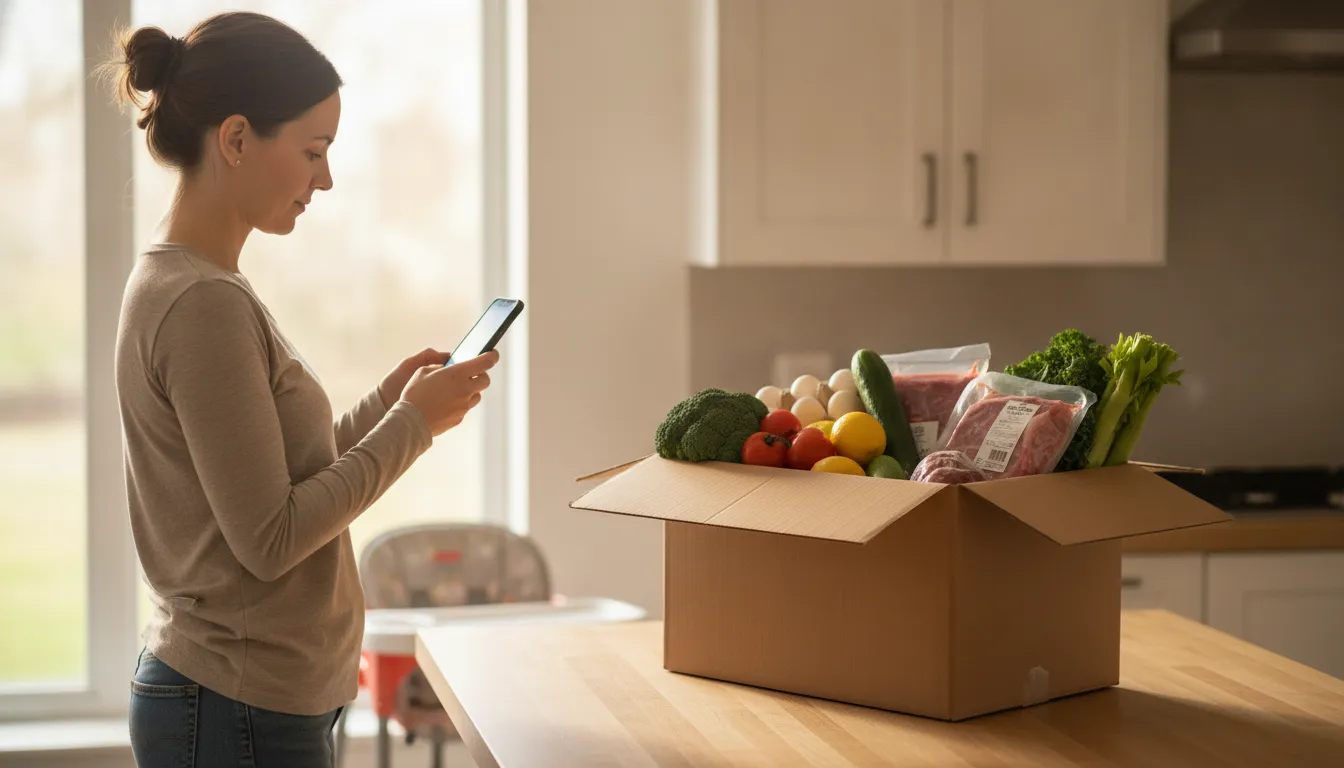
That is the basic path from browsing to doorstep handoff: choose what you want. Keep the order flexible while the window is open, and receive it through the scheduled delivery network. Tre'dish calls this Groceries on Autopilot, but autopilot remains customizable.
Checkout is not always the final moment in the process. With many grocery delivery services, your order moves through confirmation, picking, packing, routing, and doorstep handoff. The exact sequence depends on whether you are ordering from a store, a marketplace, or a dedicated delivery service.
Some services charge as soon as you submit an order. Tre'dish uses an order-window model instead. Payment is charged when the order window closes, rather than immediately when the order is placed. This gives you time to review your selections and make changes while the window is still open.
That flexibility matters for recurring orders. You can set weekly delivery preferences and choose recurring items, but the order is still customizable. If your plans change, you can modify the order during the open window, skip a week, or cancel without fees. Autopilot is designed to reduce repeated planning, not remove your control.
After the order window closes, the confirmed order moves into fulfillment. Tre'dish uses warehouse-based fulfillment rather than relying on a shopper to visit a retail store for each individual order. The warehouse team prepares the items for the scheduled route, helping turn multiple household orders into an organized delivery run.
This model is different from a generic marketplace, where a driver may shop at a participating store and deliver the order soon afterward. Tre'dish plans fulfillment around scheduled delivery zones. Its third-party delivery partners then collect the prepared orders and bring them to customers in the relevant zone. Delivery timing is therefore based on the available schedule for your address, not necessarily on an immediate, on-demand trip.
Once the route reaches your area, the delivery partner brings the prepared order to your address according to the selected schedule. Before ordering, check that your address is eligible and choose a delivery window that fits your household routine. A scheduled, consolidated delivery can replace several store trips and make the weekly grocery run easier to manage.
For a closer look at the brand-specific process, read how Tre'dish works. The main difference is that the service combines a customizable online order with warehouse fulfillment and planned delivery zones. So convenience does not require giving up the ability to review or adjust what arrives.
Freshness depends on more than a quick trip from a store to your door. Grocery delivery uses a cold-chain process that protects perishable items through fulfillment, packing, transport, and handoff. Tre'dish uses warehouse-based fulfillment and scheduled delivery zones, helping orders move through a planned process rather than sitting in an unplanned pickup queue.
Insulated packaging helps slow temperature changes while an order is on the road. Frozen gel packs provide additional cooling for items that need it, such as meat, seafood, dairy, and other perishables. These materials are part of the practical handling needed to protect food between the warehouse and your home. FoodSafety.gov food delivery guidance recommends insulated packaging and frozen gel packs or dry ice to help keep perishable food cold during transit.
That guidance also says perishable food should arrive frozen, partly frozen with ice crystals still visible, or at refrigerator temperature, 40 degrees Fahrenheit or below. If a delivery arrives while you are away, the time it spends outside matters. So choose a delivery time when someone can receive it and put food away promptly.
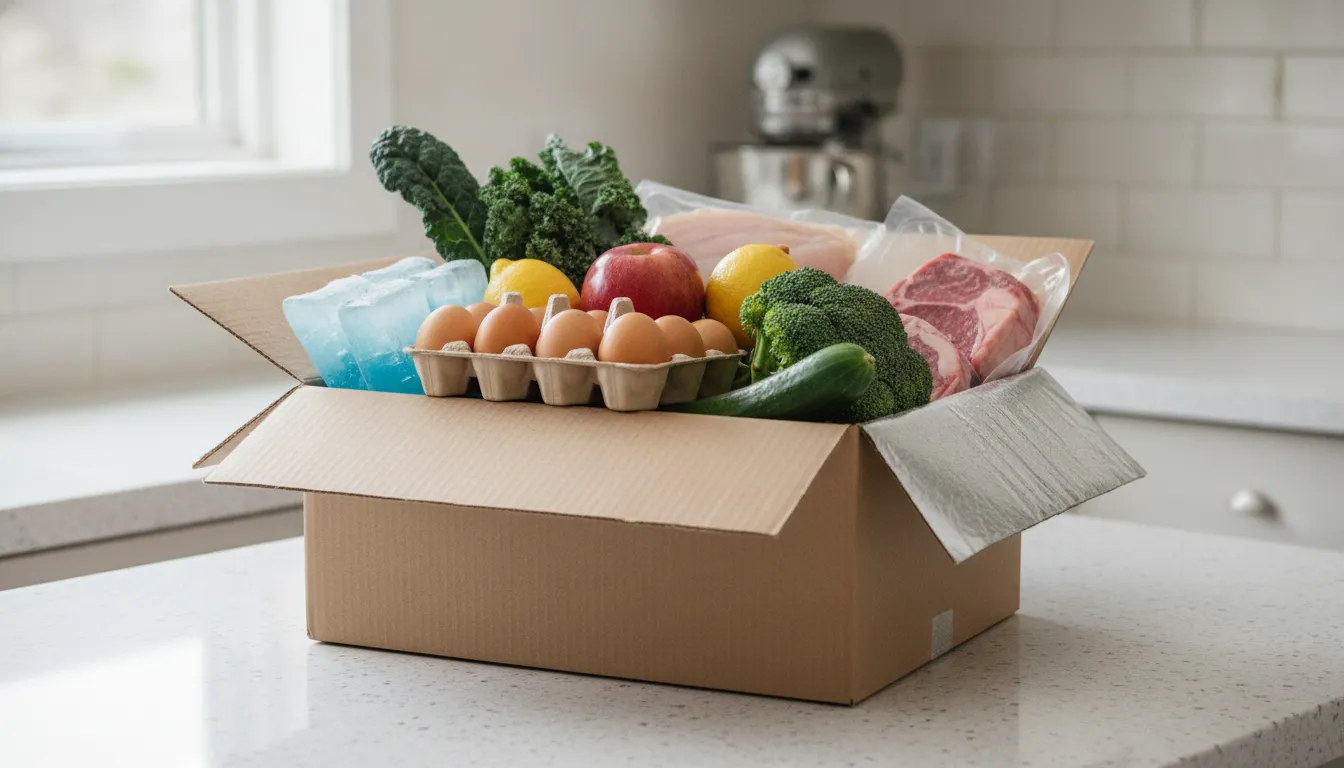
Bring the order inside and sort it by storage need. Put frozen items in the freezer, refrigerate meat, seafood, eggs, dairy, and other chilled products, and keep shelf-stable groceries in a cool, dry place. If an item that should be cold arrives warm, looks damaged, or has an unusual smell. Set it aside and contact the delivery or support team rather than guessing whether it is safe.
A quick arrival routine makes the process easy: check the bags, store cold items first, then unpack produce and pantry goods. Keep insulated materials organized until you know whether they need to be returned or discarded according to the delivery instructions.
Tre'dish uses repurposed boxes from packaging partners, and its streamlined supply chain is intended to reduce packaging and food waste. That does not mean every delivery has zero environmental impact, but reusing suitable boxes can give packaging another useful life. If a box is clean and dry, you may be able to reuse it for storage, moving, or recycling, depending on its condition and local recycling rules.
Yes. Tre'dish is designed to keep the convenience of recurring delivery without making your grocery routine rigid. You can set weekly delivery preferences and choose recurring items, then adjust the order when your plans, household, or pantry changes.
While the order window is open, you can modify the upcoming order. Add an item you forgot, remove something you already have, or change the quantities before the order is finalized. This gives you a practical review period instead of treating the first version of your cart as permanent. Payment is charged when the order window closes, rather than immediately when the order is placed, so the timing of your edits matters.
This is the part of automatic grocery delivery that makes it useful for real households. Recurring items can handle reliable staples, while open-window edits let you respond to a busy week, guests, travel, or a change in what your family wants to eat.
If you do not need a delivery one week, you can skip it without a fee. Skipping is useful when you are away, have extra food on hand, or want to shift your next order. You do not have to remove every recurring item just because one delivery does not fit your schedule. Review the upcoming order and skip that week according to the available order-window timing.
You can cancel without fees if Tre'dish no longer fits your needs. The broader idea is simple: autopilot should reduce the work of remembering groceries, not create another commitment to manage. Check your account and the current order status before making a change, especially if the order window is close to closing.
That balance of recurring choices and customer control is central to how grocery delivery can fit into everyday life. The service handles the regular rhythm, while you remain in charge of what arrives and when.
Grocery delivery tends to be worth considering when it solves a recurring problem, not simply because it moves shopping online. For an Ontario household, the strongest fit usually comes down to routine: how often you shop. How much time you spend planning and travelling, and whether you want dependable delivery without giving up control over what arrives.
Tre'dish is designed around scheduled delivery, Canadian products, and a flexible approach to recurring orders. Shoppers can use Groceries on Autopilot without accepting a fixed box or a contract. Orders can be adjusted while the order window is open, which makes the service more practical for households whose needs change from week to week. Learn more about farm-to-door grocery delivery and the relationship between sourcing and freshness.
| Routine | What to look for | Why it may fit |
|---|---|---|
| Busy workweeks | A scheduled delivery zone and a dependable delivery window | Consolidating groceries into one planned delivery can reduce repeated store trips and protect time for work, family, or rest. |
| Families with changing needs | Easy order edits, recurring items, and the ability to skip a week | Flexible ordering helps households adjust for travel, school schedules, guests, or a week when the pantry is already full. |
| Quality-focused shoppers | Clear information about Canadian products, local producers, and delivery handling | Local and regional sourcing can make it easier to prioritize Canadian options while keeping quality and freshness part of the decision. |
| People replacing last-minute errands | A broad catalog and a process that supports planned weekly shopping | Planning ahead can reduce the stress of forgotten ingredients, extra trips, and relying on takeout when the week gets crowded. |
The best service also gives you a clear arrival plan. Someone should be able to receive the order and store perishable items promptly. Tre'dish uses warehouse-based fulfillment and scheduled delivery partners, with availability dependent on the delivery address and zone. For many Ontario households, the value is a combination of time savings, predictable scheduling, local sourcing, quality, and control. If those benefits match your routine, grocery delivery may be worth it even when you still want to choose products individually.
A convenient service should also be clear about how it operates. Before you place an order, check these practical details so the experience fits your address, schedule, and expectations.
Start with eligibility. Delivery coverage may depend on your postal code, zone, and the days available in your area. Confirm that the service delivers to your Ontario address before spending time building a cart. Then check whether delivery is scheduled for a defined window or arranged more like an on-demand drop-off. Scheduled zones can be a good fit if you want a predictable routine, but only when the available day works for your household.
Look for useful sourcing information rather than broad promises. Does the service identify Canadian products? Does it explain its relationships with local or regional producers? Tre'dish, for example, focuses on Canadian products and marks options that help shoppers identify them. It also works with local and regional producers, including Ontario suppliers and Toronto food businesses. That kind of information gives you a clearer sense of what you are supporting and what may be available in the catalog.
Freshness depends on more than a delivery time. Ask whether the service uses insulated packaging, frozen gel packs, or another cold-handling process. FoodSafety.gov advises that perishable deliveries should arrive frozen, partially frozen with ice crystals, or refrigerator-cold at 40 degrees Fahrenheit or below. It also recommends arranging delivery when someone can quickly refrigerate or freeze meat, seafood, dairy, eggs, and other perishables. Tre'dish uses warehouse-based fulfillment, scheduled delivery partners, and repurposed boxes, so review both the packaging approach and what you need to do when the order arrives.
Product information should make comparison straightforward. Check whether listings show product details, unit costs, and the price before checkout. Also review the rules for substitutions, order edits, skips, and cancellations. A recurring service should not mean accepting a fixed box or a contract you cannot adjust. Tre'dish allows customers to modify orders during the open window, and its scheduled model is designed around customizable delivery rather than a one-size-fits-all shipment.
Finally, review the complete checkout total, including delivery charges, taxes, and any minimums or fees. For a broader look at grocery delivery models in Canada, compare the service structure, control, sourcing, and freshness practices instead of looking only at the item subtotal.
You browse an online catalog, create an account when you are ready, build a cart, review the available order window and total, and choose a scheduled delivery. With Tre'dish, you can add individual products or select curated bundles. Orders are fulfilled through a warehouse and delivered through scheduled delivery zones.
With Tre'dish, you can modify your order while the order window is still open. You can adjust recurring items and preferences before the order is finalized, giving you control when your plans or household needs change.
Tre'dish uses warehouse-based fulfillment and scheduled delivery partners. Perishable groceries should be delivered when someone can refrigerate or freeze them promptly, and food should arrive frozen, partially frozen with ice crystals, or at refrigerator temperature. FoodSafety.gov delivery safety guidance recommends insulated packaging and frozen gel packs for keeping perishables cold in transit.
Yes. Tre'dish's customizable autopilot lets you skip weeks, modify orders during the open window, or cancel without fees. It is designed to make recurring grocery delivery convenient without requiring a fixed box or locking you into a contract.
Delivery availability depends on your address and the scheduled zones served in your area. Check your eligibility before planning an order. Tre'dish focuses on Canadian products and works with local and regional producers, including Ontario suppliers, where available.
Tre'dish gives you a simple way to browse quality groceries, explore local options, and check whether delivery is available for your Ontario address. If the process fits your week, get started by reviewing the selection and delivery details for your area.
Check your address and choose the delivery routine that fits your week.