
Fresh Fish Delivery Service: How to Compare Options
Compare fish delivery by product details, cold handling, sourcing, and timing. Use this practical guide to plan seafood that fits your meals and routine.


Choosing a grocery store online is about more than finding a large catalogue. The right service should fit the way you eat, give you enough information to make useful choices, and make weekly delivery predictable. Before you order, check selection, sourcing, substitutions, cold handling, delivery windows and the terms that let you adjust your routine.
Begin with your real weekly list. A household cooking most evenings may need produce, meat, dairy, bakery items, frozen food and pantry staples in one order. Someone shopping for one or two people may care more about smaller package sizes, simple reordering and the ability to skip a week. A service is useful when its range supports the meals you actually prepare, not merely when it has many categories.
Selection matters because it can reduce interruptions to your week. If you routinely need another shop for milk, eggs, vegetables or breakfast items, the service may not be a good primary option. Browse several categories before making a large cart. Compare package sizes with what your household can use while the food is at its best.
A simple test is to write down five regular purchases, then add one fresh item, one chilled item and one pantry item. Search for all eight before planning a full order. This takes less time than discovering at checkout that a key ingredient is unavailable. For a more structured list of recurring essentials, our guide to keeping a pantry stocked can help you identify what you run out of most often.
Product descriptions should help you understand what you are buying. Look for a clear product name, package size and relevant information about ingredients, storage or the producer. If Canadian-made products or regional producers matter to you, check whether those items are identified rather than assuming that every product has the same origin.
Tre'dish offers groceries from Canadian suppliers and partners, with Canadian-made products identified in its assortment. Its supplier and Canadian partner information gives shoppers a way to learn more about the brands represented. Local sourcing can be one part of your decision, alongside freshness, availability, product fit and delivery timing. Our guide to supporting local farmers provides more context for shoppers who want their food choices to connect with regional producers.

Consider whether the assortment lets you build a complete order. A broad grocery order might include produce, dairy, pantry goods, frozen foods and household essentials, but each service has a different balance. If an ingredient is central to a recipe, check its listing and availability before making it the basis of a meal. For produce, you can also compare your needs with our guide to local fruit and vegetable boxes.
Availability can change between browsing and fulfillment. Before ordering, find out what happens when a product is unavailable. A service may offer a replacement, remove the item, or use instructions you provide. Do not assume that a substitute will match your preferred size, flavour, ingredients or dietary needs.
Separate flexible items from essential ones. You may accept a similar size of plain yogurt, pasta or canned tomatoes, while a specific allergen-free ingredient or recipe component may need no replacement. If the ordering system allows preferences, use them for the products that matter most. If the process is unclear, read the help information or contact support before placing a time-sensitive order.
Make meal plans resilient without making them vague. For a dinner that depends on one specific product, identify a backup ingredient before ordering. For example, if a recipe calls for one type of cheese, decide whether another cheese would work or whether the meal should move to a different day. This small decision prevents a last-minute trip when an item is unavailable. When comparing dairy options, our farm dairy delivery guide explains which product details are worth reviewing.
Refrigerated and frozen groceries need appropriate handling from packing through delivery. Look for a clear description of the service's chilled delivery process and packaging. Practical details may include insulated boxes, ice packs and instructions for receiving the order. These details do not replace good household handling: put cold foods away promptly and follow the storage guidance on each package.
Tre'dish describes deliveries using refrigerated handling and eco-friendly packaging, including insulated boxes and ice packs. That combination supports the freshness and convenience shoppers expect from a scheduled order. When groceries arrive, unpack chilled and frozen products first, check the condition of the packaging, and move them to the appropriate storage area. For another food-handling perspective, see our checklist for ordering meat online.
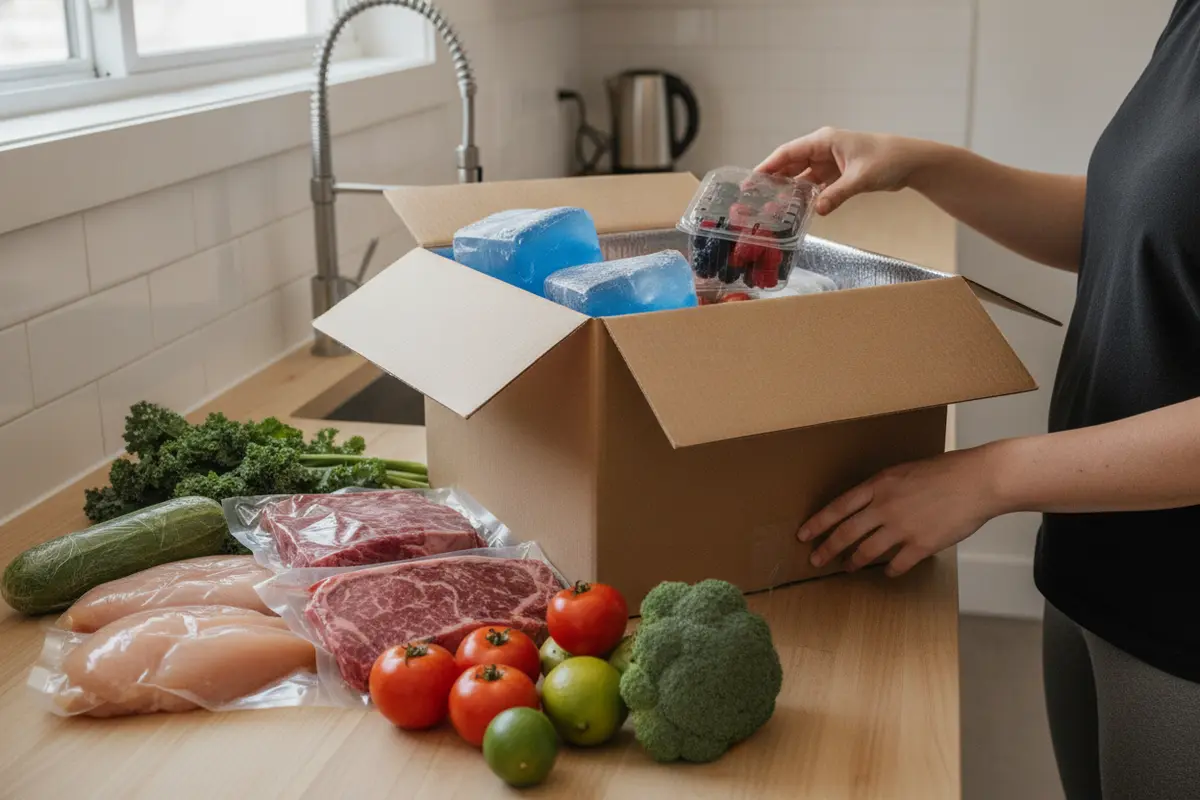
Use a consistent receiving routine. Bring the order inside, separate shelf-stable items from refrigerated and frozen foods, and inspect products for damage. Put away the coldest items first. If something is missing, damaged or does not appear to have been handled appropriately, use the company's support process rather than guessing about its condition. Keep the order information available so you can describe the problem clearly.
Packaging is also part of the overall experience. If a service uses packaging designed for reuse or reduced waste, follow its instructions for what to do with boxes or other materials. Freshness and sustainability can work together when the delivery system protects food without creating unnecessary work for the household.
A delivery window is useful only when it works with your schedule. Check which days and time ranges are offered, whether your address is covered, and when you need to place or change an order. A predictable weekly cadence can make meal planning easier, while flexibility matters when travel, work or family plans change.
Tre'dish focuses its currently confirmed delivery service on the Greater Toronto Area. Confirm address coverage before planning a recurring order. Tre'dish has no subscription fees; customers pay for products, and orders can be skipped, modified or canceled. Its how the grocery service works page explains the ordering approach. If a weekly routine appeals to you, the groceries on autopilot page describes how a regular order can remain under your control.
Ask four questions before committing to a schedule:
| What to compare | Questions to ask | Why it matters |
|---|---|---|
| Selection | Can I find regular staples and complete meal ingredients? | Helps reduce extra shopping trips. |
| Sourcing | Are Canadian products and producer details easy to identify? | Supports informed choices about origin and quality. |
| Substitutions | Can I set preferences or decline a replacement? | Keeps the order closer to your needs. |
| Cold handling | How are chilled and frozen items packed? | Helps you assess delivery preparation and receiving needs. |
| Delivery flexibility | Can I change, skip or cancel a week? | Makes a weekly routine workable when plans change. |
| Checkout terms | Are product prices and any applicable fees visible? | Lets you review the complete order before confirming. |
Online ordering gives you time to review a cart before buying. You can compare package sizes, remove items that do not fit the meal plan and check the total without moving through a busy aisle. It can also make recurring essentials easier to remember. The trade-off is that you cannot inspect an item in person before it is packed, so product information, handling and support matter.
Research comparing online and in-store grocery purchases examined how the shopping channel related to purchases of certain foods. The findings offer context rather than a promise about any one household's choices. Read the study comparing online and in-store grocery purchases. A separate USDA overview examines who uses online grocery services and why; read the USDA overview of online grocery shoppers.
Use the cart as a planning tool. Group ingredients by meal, check how many portions a package can support, and review the full order before confirming it. If you are trying a service for the first time, start with familiar foods and a manageable order. You will learn whether the selection, packaging and timing suit your household without making the first delivery harder to assess.
Compare services using the same practical checklist rather than a single headline claim. Check address coverage, the products you need, sourcing information, delivery details, substitution rules and the full price shown at checkout. A service that works for one household may not suit another with different schedules, cooking habits or dietary requirements.
For example, imagine a household planning pasta, salad and breakfast for the week. Its test cart could include pasta and sauce, lettuce and tomatoes, eggs, milk and a pantry staple. It should also decide whether another milk size is acceptable if the preferred one is unavailable. This makes the comparison concrete: the shopper is testing how well the service supports actual meals, not simply counting categories on a menu.
A second example is a busy professional who wants fewer evening errands but does not cook the same meals every week. That shopper may value a broad mix of pantry and frozen products, a clear weekly schedule and the ability to skip a delivery while travelling. A family with a fixed meal plan may place more weight on dependable access to specific fresh and chilled items. The same service can be a good fit for both, but for different reasons.
Include the time around delivery in your comparison. If no one can receive a delivery during a narrow window, a different schedule may be more useful even if its catalogue looks strong. Also ask how missing items are reported and what support is available. Convenience is not just the act of placing an order; it includes the work required before and after the box reaches your door.
Start with a realistic list, not an idealized version of how you hope to cook. Write down the meals already planned, the staples nearly finished and the foods that spoil quickly. Then check package sizes against the number of people eating and the days until the next planned shop. This keeps the cart connected to your household and makes it easier to judge whether the assortment is genuinely useful.
Choose a mix that tests the parts of the service you care about. Include a few regular pantry goods, a fresh ingredient, something refrigerated and a product your household already likes. Avoid filling the first cart with unfamiliar items. The goal is to see whether selection, delivery and packaging work for you before relying on the service for more of the week.
Use a simple portion check. If a recipe needs two servings of vegetables but the listed package is larger, plan a second meal for the remainder. If a chilled item has a short use window, schedule it earlier in the week. If you are stocking staples, leave room for products already in your cupboard. Our guide to grocery subscriptions in Canada offers another way to think about repeated essentials and flexible ordering.
After delivery, compare the order with your receipt and note what you would change next time: package sizes, preferred brands, delivery timing or substitution instructions. Keep that short list for the next order. A weekly routine becomes easier when each order teaches you something practical about what your household uses.
Confirm that the service delivers to your address, then check selection, delivery windows, substitution policies, cold handling and checkout terms. These basics show whether it can support your weekly shopping routine.
That depends on the service. Look for substitution settings or clear instructions about replacements and missing items before placing an order. For important recipe ingredients, decide in advance whether a backup product is acceptable.
Unpack refrigerated and frozen products first, put them away promptly, and follow each package's storage instructions. Before ordering, review the service's information about insulated packaging and cold handling.
No. Terms vary. Check whether you can skip, modify or cancel a week and whether there are subscription fees. Tre'dish has no subscription fees, and customers can skip, modify or cancel orders while paying for the products they order.
No. Its currently substantiated service area is the Greater Toronto Area. Check whether your specific address is covered before planning a recurring delivery.
A good grocery store online makes important details easy to understand: what is available, where products come from, how substitutions work, how chilled items are handled and when delivery arrives. Compare those points with your own routine, then choose the service that gives you useful groceries and enough flexibility to make the week work.
Tre'dish offers weekly delivery in the Greater Toronto Area, Canadian-made products in its assortment and the ability to skip, modify or cancel orders without a subscription fee. Review the service details, confirm address coverage and choose the groceries that suit your household's plans.
Create Account to begin planning your weekly groceries.