Local Food Delivery Ontario: Farm to Table Explained
Start exploring local food delivery Ontario. See how farm-to-table grocery delivery brings fresh produce, dairy, and local brands to your door.


If you are comparing grocery delivery Kitchener options, start with the details that determine whether a service will work at your address and in your weekly routine. Check coverage, delivery timing, product range, and how fresh or chilled groceries are handled before building a cart. That simple order of checks can save time and prevent a convenient-looking option from becoming a poor fit.
Begin with your complete address or postal code. A provider may describe its service area broadly, but actual delivery zones can vary by neighbourhood. Confirm eligibility directly in the provider's ordering experience or ask its support team. Do this before planning meals around a delivery or spending time building a large cart.
Next, check the practical details that affect every order:
These questions are useful whether you are considering a one-time order or a recurring weekly routine. A service may have a broad product selection but a delivery window that does not suit your household. Another may fit your schedule but carry few of the items you regularly use. Compare the complete experience, not just the convenience of ordering online.
Online food services do not all solve the same problem. Full grocery delivery may let you combine produce, dairy, proteins, and pantry goods. A produce box usually centres on fruits and vegetables. Meal kits focus on ingredients and recipes for selected dishes, while prepared meals are intended to be heated and served. Decide what you want the service to do before comparing providers.
| Option | What may arrive | Useful when | What to confirm |
|---|---|---|---|
| Full grocery delivery | A selection across fresh food and pantry categories | You want to restock different categories in one order | Coverage, assortment, delivery window, substitutions |
| Produce box | A set or customizable selection of fruits and vegetables | You want produce to guide the week's meals | Contents, portion size, seasonality, customization |
| Meal kit | Portioned ingredients and recipes for selected meals | You want help choosing what to cook | Servings, recipe choice, dietary fit, recurring-order terms |
| Prepared meals | Ready-to-heat dishes | You need a meal with little preparation | Storage directions, ingredients, delivery timing, variety |
For example, a household that needs breakfast staples, vegetables, and ingredients for several dinners may prefer a grocery order that combines categories. Someone who wants a recipe and measured ingredients may prefer a meal kit. A produce box can be a good fit if the household is happy to adapt meals to what arrives. Tre'dish explains different grocery box types for shoppers weighing these formats.
The formats are not interchangeable. A grocery order gives you more control over the combination of products you select, while a set box can narrow the choices and make a produce-led plan easier. Match the format to your actual shopping task rather than assuming one service can cover every need.

Convenience should not leave you guessing about how temperature-sensitive groceries are transported. Before ordering, look for clear information about chilled delivery, packaging, receiving instructions, and what to do if an order arrives in poor condition. For produce, check whether the selection can change with availability and how substitutions are explained.
When groceries arrive, unpack refrigerated and frozen products promptly and follow the storage directions on their packaging. Compare the delivered items with your order while the details are easy to check. If something is missing or damaged, use the provider's stated support process and provide the order information it requests. For general food-safety guidance, consult Health Canada's official site and follow applicable public-health advice and product labels.
Tre'dish deliveries use insulated boxes and ice packs for refrigerated delivery, alongside eco-friendly packaging. Read how Tre'dish works to understand its ordering and delivery model. Shoppers interested in product sourcing can review Tre'dish's suppliers and Canadian partners. As with any service, check current details and confirm they meet your needs before placing an order.
A useful grocery order begins with your calendar and the food already at home. You do not need a detailed menu for every meal. A few anchor meals, everyday essentials, and a quick check of what needs using can make a cart more purposeful.
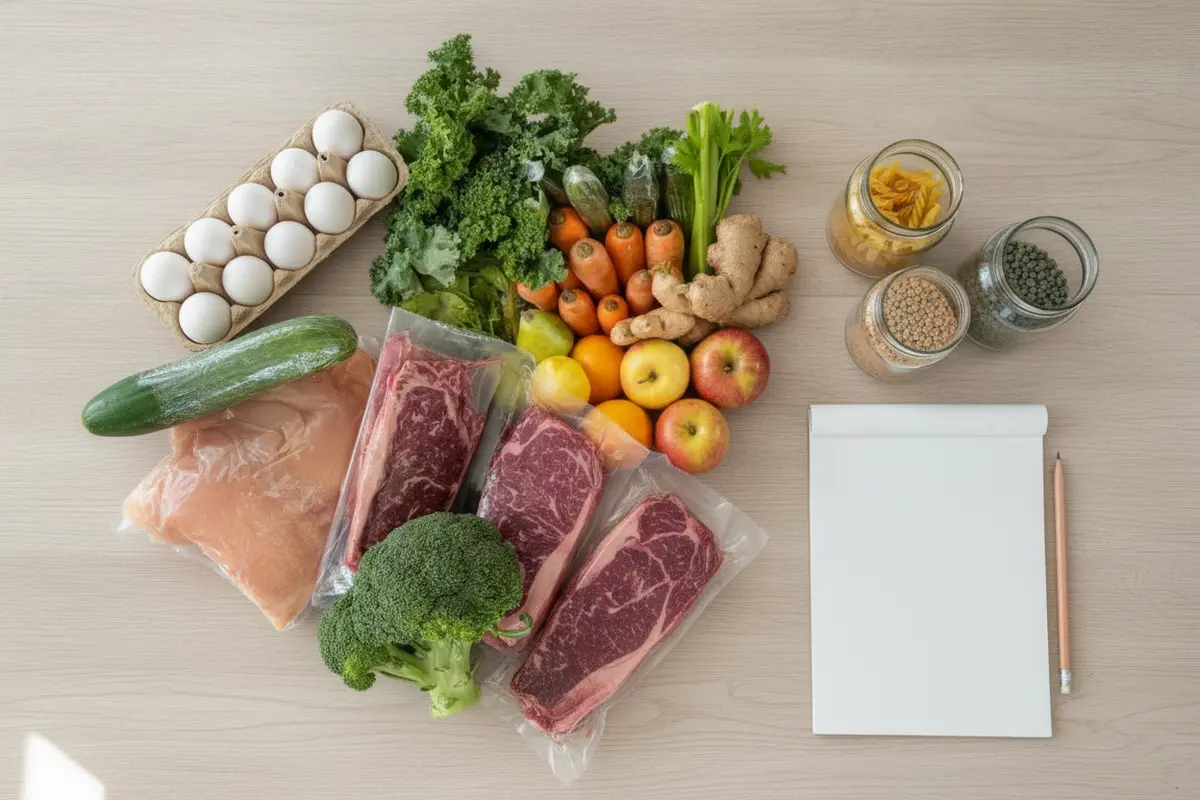
Try a small example. If pasta is planned for one evening and a grain bowl later in the week, select vegetables and herbs that can contribute to both. Choose an amount suited to those meals, then check whether you already have a suitable pantry staple. This creates a useful overlap without locking the household into a rigid menu.
Treat the first order as a learning exercise. Notice which products were used quickly, which quantities were too large, and whether the delivery day worked. Adjust the next list. Tre'dish has practical guides on keeping a pantry stocked and saving time on grocery shopping that offer more planning ideas.
Compare a realistic basket rather than one advertised product. Write down the items you would actually buy, then compare product totals, delivery charges, minimums, and other checkout fees. Check package sizes too: the displayed price alone does not show whether a quantity or format suits your household.
Read the rules for substitutions and unavailable items. Find out whether the provider selects a replacement, asks you to approve one, or removes the item. If you rely on a particular ingredient or have dietary requirements, the substitution policy can matter as much as the product list.
Recurring-order terms deserve the same attention. Identify the deadline for editing or canceling, when payment is taken, and whether skipping a week has a charge. Tre'dish has no subscription fee; customers pay for the products they order. Customers can modify, skip, or cancel orders. Check the terms shown for the specific order. You can also read Tre'dish's guide to grocery delivery without subscription fees.
Value includes time and effort, not only the receipt total. A scheduled order can replace repeated shopping trips when the delivery timing and product range suit your week. If you need groceries immediately or just one item, a scheduled grocery service may not be the right answer for that occasion. Compare options against your actual routine.
A dependable routine should still allow for ordinary changes. Before you start, check how the provider handles travel, holidays, and weeks when you do not need a delivery. Note the order-change deadline and set a reminder early enough to review the cart.
Tre'dish is designed around weekly grocery delivery that customers can customize. Customers can modify or skip weeks without penalty. Learn more about groceries on autopilot and the approach behind Tre'dish's direct grocery delivery.
Coverage is a separate question from schedule flexibility. Tre'dish's confirmed service area is the Greater Toronto Area; Kitchener is outside that verified area. Do not assume weekly delivery is available at a Kitchener address. Check your postal code in the shopping experience or use the contact page to confirm current coverage before planning around an order.
Use this checklist before checkout, whether you are trying a new provider or changing your current routine:
For your first order, keep the cart manageable and choose familiar items. That makes it easier to judge delivery timing, packing, and the ordering process without relying on a large purchase. After delivery, note what you would repeat and what you would change. A few observations can make a later order better suited to your routine.
When comparing two services, keep the test consistent. Use the same household size, delivery address, approximate quantities, and meal plan for each cart. Compare similar categories where possible: a few vegetables, a protein, dairy or an alternative, and the pantry items you regularly replace. This avoids judging one service on a specialty item and another on a basic staple.
Record more than the displayed total. Note whether the products are available in sizes you need, whether the delivery date fits, and whether the provider explains substitutions and temperature-sensitive items. If a cart lacks a product, decide whether a reasonable alternative exists or whether you would need to shop elsewhere anyway.
Assess the experience after delivery, too. Was the order easy to receive? Were instructions clear? Did the contents match the order, and were chilled products handled as described? Those observations are more useful than a vague impression of convenience. Keep your checklist for a second order and see whether the service remains useful once the novelty wears off.
If a provider does not serve your postal code, do not plan around a hoped-for delivery exception. Compare other services that clearly state their local coverage, or choose a format available in your area. Ask whether a retailer offers pickup if home delivery is unavailable, and confirm the pickup window before ordering. For occasional needs, you might combine a local trip for fresh items with delivery for shelf-stable products, if the timing and terms suit you.
Keep the difference between a general guide and a specific service promise in mind. An article about grocery delivery in a city can help you compare questions to ask, but it does not establish that every named provider serves that city. Confirm coverage directly when your plans depend on it, especially if you have moved or delivery zones may have changed.
Tre'dish's confirmed service area is the Greater Toronto Area, and Kitchener is outside that verified area. Check your postal code or contact the team for current coverage before making plans around delivery.
Full grocery delivery may include a mix of fresh food and pantry products, depending on the provider. A produce box generally focuses on fruits and vegetables and may have a set or seasonal selection.
Rules vary, so check the edit deadline, cancellation terms, and skip policy before ordering. Tre'dish customers can modify or skip weeks without penalty.
Choose a provider that explains its chilled delivery handling, unpack refrigerated and frozen items promptly, and follow product storage directions.
Check address coverage, selection, delivery schedule, freshness handling, complete fees, order-change rules, and the process for resolving delivery issues.
Confirm your address first, then compare the service details with the groceries and delivery routine your household needs.