Local Food Grocery Delivery in Ontario: What to Check
Learn how local food grocery delivery works in Ontario. Check sourcing, freshness, coverage, packaging, flexibility, and community impact before choosing.


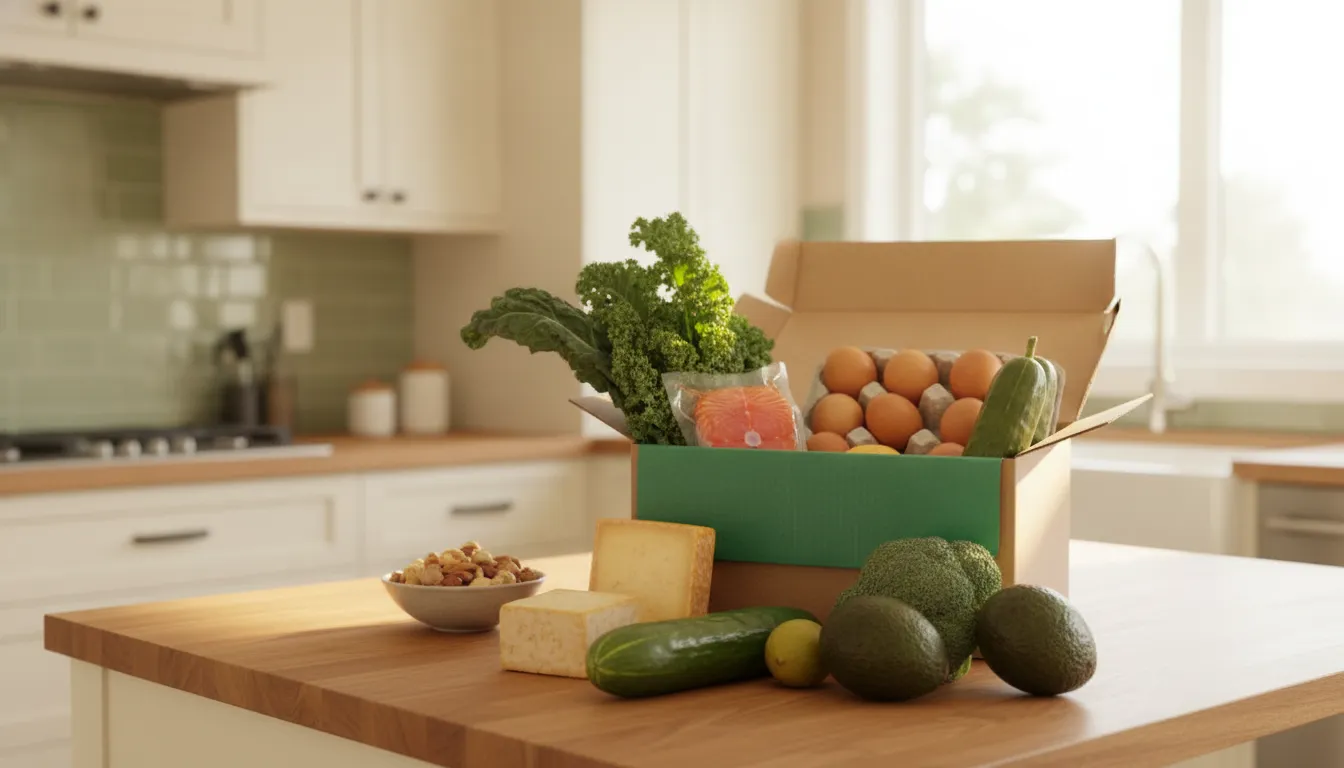
Choosing among food boxes Canada offers starts with a simple question: do you want ingredients for specific recipes, a surprise assortment, or groceries you choose for your kitchen? Those formats solve different problems. Compare what arrives, how much control you have, how the food is handled, and whether delivery suits your calendar before choosing a service.
“Food box” describes a delivery format, not a standard list of contents. One provider may send produce selected around a season. Another may supply portioned ingredients for recipes, while a third lets you choose a wider grocery basket. Look at the actual catalogue and order rules rather than relying on the label.
| Format | What arrives | Choice and planning | Useful when |
|---|---|---|---|
| Meal kit | Ingredients and instructions for selected recipes | Choose among available meals; portions are often tied to the recipe | You want guidance for a few planned dinners |
| Curated food box | A themed assortment, such as snacks or specialty foods | Often choose a theme or size, with limited item-level control | You enjoy discovery or are buying a gift |
| Produce box | A selection of fruits and vegetables | May be seasonal or preset; customization varies | You want produce delivered and can adapt meals to the selection |
| Grocery basket | Products across categories, potentially including produce, dairy, meat, bakery, and pantry items | May let you select individual items and adjust your order | You want to restock your own kitchen and choose how to use the food |
A meal kit can make the question “What shall I cook?” easier by connecting ingredients to recipes. A produce box may encourage you to cook with what is in season, but could leave you needing other staples. A broad grocery basket gives you more room to combine products around your own meals. None is automatically best; start with the task you want delivery to handle.

Write down the friction point you are trying to reduce. If choosing dinner is difficult, a recipe-led kit may help. If you run out of a few fresh ingredients every week, a produce delivery may be enough. If repeated grocery trips and separate lists are the problem, a grocery basket that spans several categories may be a closer match.
Use a real week as your test. Imagine Monday through Sunday, including breakfast, snacks, lunches, and the nights when nobody has time to cook. A dinner kit may cover several evening meals but not milk, fruit, or bread. A themed box may be enjoyable without doing much to replace the regular shop. A grocery basket can cover different needs, but you still decide what to make.
Consider the people eating the food and the way they eat. A fixed assortment can be convenient when everyone likes the same items. It can be less useful when one person avoids an ingredient, children have reliable favourites, or meal plans change from week to week. Check whether you can leave out products, choose quantities, or set preferences before ordering.
Do not assume that “customizable” means every product can be changed. Look for the exact control offered: choosing individual items, selecting from a short menu, changing quantities, or only skipping the whole delivery. A quick review of the order screen and cutoff rules can prevent unwanted surprises.
Open the product list and scan it as if you were preparing your next shop. Does it include the categories you need? Are item sizes and descriptions clear? Can you see whether an item is fresh, frozen, or shelf-stable? The more specific the listing, the easier it is to decide whether it belongs in your basket.
For a fair comparison, make a short list of ten items you regularly buy. Include items from different parts of the shop: perhaps fruit, vegetables, dairy, a protein, bread, and pantry basics. Check how many are available and whether you can choose the products individually. This small exercise is more useful than comparing box names or promotional photos.
Product selection also affects how much extra shopping you need. If a box covers only produce, you may still want a separate grocery trip for staples. If it offers a broad assortment, you can plan one basket around several parts of the week. Tre'dish offers groceries across categories including fresh produce, meat, seafood, dairy, bakery, and pantry goods. Browse Tre'dish's suppliers and Canadian partners to learn about its sourcing relationships.
Freshness depends on the product, packaging, time in transit, and what happens after delivery. For refrigerated groceries, check whether the service explains how chilled items are transported and what you should do when an order arrives. A clear plan for delivery timing matters too: even a carefully packed box is inconvenient if it sits outside for hours.
Tre'dish deliveries are refrigerated and use insulated boxes and ice packs. That handling is intended to support fresh grocery delivery rather than make customers trade freshness for convenience. When comparing services, look for practical details instead of relying on broad claims: how the delivery is kept cool, when you will receive it, and where to find instructions for storing products.
At home, unpack perishable products promptly and follow the storage information on their packaging. Health Canada's general food safety information offers a starting point for safe food handling: general food safety tips. Keep in mind that safe handling at home complements, rather than replaces, the provider's transport and packaging practices.
Set aside a few minutes to check the order against the confirmation. Confirm that chilled items are still cold, inspect packaging for damage, and note any missing or substituted products. Put refrigerated and frozen items away first, then organize pantry goods. If something seems wrong, follow the provider's stated support process and keep the order details available.
These simple steps also help improve your next order. If a quantity was too large or a particular item did not suit your plans, adjust it before the next cutoff. A short note on what was used, left over, or missing can make future planning more accurate.
A dependable rhythm can make grocery planning easier, but only if you can adapt it when life changes. Check the regular delivery day, the time window, and the deadline for editing an order. Find out how to skip a week, change items, or cancel. A schedule that is clear before you sign up is easier to build into a household routine.
Tre'dish is designed around weekly grocery delivery, with the flexibility to skip or adjust orders without penalty. Customers pay for the products they order; there are no subscription fees. Read how Tre'dish works for details on its ordering model, and see Groceries on Autopilot for more about fitting grocery ordering into a routine.
Compare the complete order, not just the advertised box price. Check the item prices, delivery charges, minimum order rules, and any subscription fee. Then ask whether the box contains products you would actually use. A low headline price is not useful if the assortment does not match your household and leads to another shop.
Try this practical basket comparison:
This approach compares the value of a useful shop, not an abstract box. It also makes it easier to spot differences in selection. If a fixed assortment contains several items your household will not eat, a lower price may not make it a better fit. If a wider basket lets you choose the amount and mix, consider whether that control is worth more to you than recipe instructions or a surprise selection.
Tre'dish charges for products rather than a subscription fee, and customers can modify, skip, or cancel orders. The contents and total depend on the products chosen. For questions about a specific order or service detail, use the Tre'dish contact page.
A first order does not need to solve every meal in the house. Start with a quick inventory of your fridge, freezer, and pantry. Note what is running low, what needs to be used soon, and what you already have enough of. This prevents duplicate purchases and gives you a realistic starting list.
Think in components rather than assigning every ingredient to one exact meal. A few versatile groceries can support several combinations, while a highly detailed plan can fall apart if an appointment runs late. If your household uses a mix of fresh foods and pantry staples, a broad basket may give you more flexibility than a box centered on a single recipe or category.

For a closer look at how different baskets are organized, read the guide to three types of grocery boxes. If a weekly rhythm is what you need, the practical advice in the weekly grocery delivery guide can help you think through timing and preparation.
A meal kit begins with recipes. It provides ingredients for dishes you select, often in portions planned for those recipes. A grocery basket begins with products for your kitchen. You decide how to combine them, whether that means cooking from scratch, using pantry ingredients, or keeping quick options on hand.
The difference is about who makes the meal decisions. A recipe-led kit gives you a structure and can reduce the work of choosing what to cook. A grocery basket offers broader control over what you buy and how you use it. If you want step-by-step cooking guidance for a few dinners, the first format may suit you. If you want to choose groceries across categories and keep your plans open, the second may be more useful.
Tre'dish is a grocery subscription, not a fixed recipe box. Customers can select groceries for weekly delivery and adjust upcoming orders. Its confirmed service area is the Greater Toronto Area, so check that your address is currently covered before planning around delivery. Learn more about Tre'dish and its grocery service.
Use this short checklist before committing to a format or placing an order:
Answering these questions turns a broad search into a practical decision. A box should match how your household actually eats and shops, rather than requiring you to change your routine to use every item.
A food box can mean groceries, produce, or a curated assortment. A meal kit is more specific: it generally supplies ingredients and directions for selected recipes. Check the contents and ordering choices to know exactly what a provider means.
It depends on the service. Some boxes are preset, while grocery baskets may let you choose items and quantities. Review the edit deadline and substitution policy before ordering.
No single schedule applies to every provider. Some services use weekly delivery, while others sell one-time or less frequent boxes. Check the cadence and whether you can skip or change a delivery.
No. Customers pay for the products they order, and can skip, modify, or cancel orders. The total depends on the products selected.
Tre'dish's confirmed service area is the Greater Toronto Area. Check current coverage for your address before placing an order.
A useful food box is one that fits your real shopping needs. Compare the contents, choice, freshness practices, schedule, and full cost, then select the format that helps your household most.
With a clear list and a delivery plan that can flex with your week, it is easier to choose groceries that get used and make the next shop feel manageable.