What Is a Grocery Box? The 3 Kinds to Know
A grocery box can mean a reusable container, a subscription service, or a community program. Learn which grocery box option fits your shopping style best.


Choosing dinner support is not only about how quickly a recipe reaches the table. It is also about how much choice you want once the week changes. Meal kits provide recipe structure, measured ingredients, and a clear cooking plan, while flexible grocery delivery lets you choose the foods, quantities, and combinations that suit your household.
Meal kits Canada services are designed for shoppers who want planned recipes and guided preparation. Flexible grocery delivery may be a better fit when you want more control over ingredients, portions, recurring staples, or last-minute changes. This guide explains the difference, then considers Tre'dish as an alternative for readers comparing both models.
The best starting point is understanding what a meal kit actually includes and where its structure helps most. From there, you can compare choice, preparation, delivery, and flexibility with a clearer sense of what fits your routine.
Meal kits are recipe-led food boxes designed to help you cook a planned meal at home. Instead of choosing every ingredient yourself, you select a recipe and receive the ingredients needed for it, usually measured or portioned, along with cooking instructions. The format sits between restaurant takeout and a traditional grocery trip: you still prepare the meal, but much of the planning and ingredient gathering is done for you.
A typical kit may include a recipe card, vegetables, grains, sauces, seasonings, and a protein or plant-based alternative, depending on the recipe. Some services offer step-by-step cards or videos, while others assume more kitchen experience. The important distinction is that the ingredients are assembled around a specific dish. You are buying a cooking plan as well as the food.
Meal kits can be useful for people who want more structure around weekday cooking. They may suit a busy household that does not want to decide what to make each evening. A newer cook may appreciate guided instructions. They can also help people who want to try recipes without buying a full package of every ingredient. Meal kits can create a more predictable routine when planning is the main obstacle.
Planning does not need to cover every day. Health Canada notes that people can plan meals for a full week or just a few days. The right choice depends on schedule, cooking time, household size, and ingredients already at home. Its guidance also identifies practical benefits such as saving shopping time, reducing stress, and limiting food waste by buying only what will be used. Read the full Health Canada meal-planning guidance for more detail.
Meal kits are not the same as flexible grocery delivery. A kit gives you a defined recipe and a set of ingredients. A grocery service lets you choose individual products, decide how much to buy, and use those products across several meals. The better fit depends on whether you want cooking direction or more control over your household's weekly food order.
Comparing meal kits in Canada takes more than looking at the number of recipes in a weekly menu. The best option depends on how your household cooks, what you need to eat, and how much control you want over the order. Use the same checklist for every service so the differences are easy to see.
Start with menu choice and dietary needs. Check how many recipes are available, how often the menu changes, and whether the service accommodates the foods your household actually eats. Look for clear ingredient lists and allergen information. If one person avoids dairy, gluten, meat, or specific ingredients, confirm whether the service offers suitable recipes or only limited substitutions.
Also consider whether the portions and serving sizes match your household. A recipe-led box can simplify dinner planning, but it may not cover breakfasts, lunches, snacks, or meals for different preferences. A grocery model may offer more control when everyone wants something different.
Compare the full effort, not just the recipe's stated cooking time. Include unpacking, sorting ingredients, preparation, cooking, and cleaning. Then check delivery coverage, available delivery days, and whether someone must be home to receive a chilled order. Coverage can vary across Canada, so confirm that the service reaches your postal code before comparing menus.
Packaging matters too. Look for information about insulation, cooling materials, recycling, and how ingredients are protected in transit. Safe handling still matters after delivery. Health Canada recommends keeping cold food cold. It says refrigerators should be at 4 C or lower. See its food safety guidance for practical handling advice.
Finally, compare flexibility and total cost. Check whether you can skip a week, change an order, cancel recurring deliveries, or adjust quantities without friction. Add delivery charges, taxes, optional extras, and the value of unused ingredients to the advertised order price. Health Canada notes that meal planning can save shopping time, reduce stress, and reduce food waste when you buy only what you will use. Its meal-planning guidance also recommends adapting plans to your schedule, cooking time, household size, and ingredients already on hand.
Meal kits can be a useful choice when the main challenge is deciding what to cook. They bring a recipe, measured ingredients, and a defined preparation plan into one delivery. That structure can make weeknight cooking feel more manageable, especially for households that want to try new dishes without buying every ingredient separately.
They are not the best fit for every household, though. Some shoppers need more control over portions, substitutions, dietary preferences, or the balance between fresh food and pantry staples. Health Canada notes that meal planning should reflect your schedule, cooking time, household size, and ingredients already on hand. There is no single right way to plan a week of meals.
| Consideration. | Meal kits may fit better when you want. | Flexible groceries may fit better when you need. |
|---|---|---|
| Recipes. | Step-by-step ideas that reduce daily meal decisions. | Freedom to follow your own recipes or improvise. |
| Portions. | Ingredients measured around a planned number of servings. | Quantities adjusted for children, guests, leftovers, or changing appetites. |
| Cooking structure. | A defined process with a predictable sequence of tasks. | Ingredients that can support quick meals, batch cooking, or prepared options. |
| Choice. | A curated menu that narrows the decision-making. | Selection across produce, meat, seafood, dairy, pantry staples, and household needs. |
| Household control. | A convenient plan when everyone is happy with the selected recipes. | More flexibility to swap ingredients, change quantities, and accommodate preferences. |
The practical answer for many households is to match the model to the week ahead. Choose a kit when learning recipes or reducing planning decisions matters most. Choose flexible groceries when you already have meal ideas, need ingredients for several people, or want one order to cover more than dinner. Tre'dish, for example, lets customers select individual groceries or curated bundles rather than a fixed meal kit, with more room to adjust the order to the household. Learn more about how Tre'dish works.
Whichever model you choose, delivery and storage still matter. Health Canada recommends keeping cold food cold and maintaining a refrigerator at 4 C or lower. A convenient plan works best when it also fits your actual schedule, storage space, and cooking habits.
The main difference is how much of the meal is decided before you order. A meal kit is built around a specific recipe. It typically includes the ingredients and instructions needed to prepare that planned dish, often in portions designed for a particular number of people. Grocery delivery starts with the household instead. You choose the products, amounts, and combinations that fit your week.
Meal kits provide structure. You select from a menu, then receive the ingredients for the recipes you chose. That can make dinner easier when you want a clear plan and do not want to decide what to cook. The trade-off is that your order is tied to those recipes. If your household needs extra vegetables, a different protein, more pantry staples, or ingredients for breakfasts and lunches, you may still need a separate grocery order.
With grocery delivery, the meal plan is more open-ended. You can buy individual produce, meat, seafood, dairy, eggs, bakery items, frozen foods, pantry staples, and other household products. Tre'dish also offers curated bundles, but you are not limited to a fixed meal kit. Its catalog includes more than 2,000 products across over 30 categories, giving households room to build a practical order around their own recipes and routines. You can learn more in this guide to how Tre'dish works.
Meal kits make portion planning straightforward because the recipe and ingredient quantities are set in advance. That is useful for a household that wants a defined number of servings and a repeatable cooking process. It may be less useful when appetites vary, guests are joining dinner, or one person needs a different quantity.
Grocery delivery gives you direct control over quantity. You can choose the amount of each product, combine groceries for several meals, and include recurring items your household buys regularly. Tre'dish customers can also modify orders during the open window, skip weeks, or cancel without fees. That flexibility supports weekly planning without forcing every meal into a recipe box.
In simple terms, meal kits organise the cooking decision for you, while grocery delivery supports the broader household plan. Choose a kit when measured ingredients and step-by-step recipes are the priority. Choose flexible groceries when you want to plan meals around your family, use your own recipes, manage quantities, and keep one order useful beyond dinner.
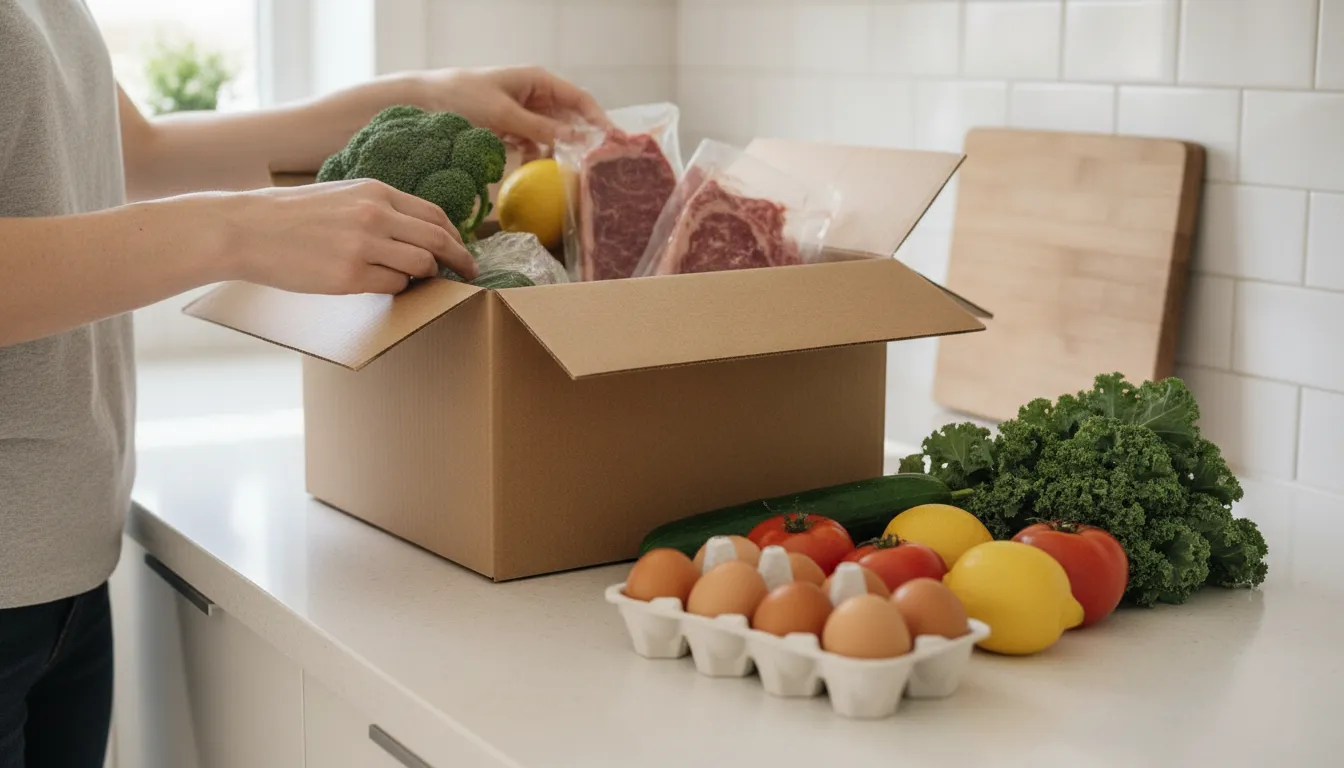
Meal kits can make cooking easier by pairing recipes with measured ingredients. But they are not the only way to simplify weekly meals. Some households want the convenience of scheduled grocery delivery while still choosing the products, quantities, and meal ideas that fit their plans. That is where a flexible grocery service can be a better match.
Tre'dish offers more than 2,000 products across over 30 categories. Instead of limiting each order to a set recipe, you can select individual groceries or curated bundles for the way your household actually eats. That may mean stocking ingredients for several family dinners, adding breakfast and pantry items, or choosing a bundle when you want a simpler starting point.
This broader choice also gives you more control over quantities. You can select what you need rather than receiving a fixed portion of every ingredient in a recipe. The result is a grocery order that can support your own recipes, familiar favourites, dietary preferences, and changing schedules.
For a closer look at the ordering process, read how Tre'dish works.
Tre'dish combines warehouse fulfilment with scheduled delivery, helping replace another grocery trip with a planned delivery window. Recurring orders can also be modified, skipped, or cancelled. That matters when travel, work, family commitments, or an already-full fridge changes your plans. You are not locked into treating every week exactly the same.
Tre'dish also focuses on Canadian products and local and regional producers, including Ontario dairy, eggs, and produce suppliers. For Ontario households, that creates a practical way to bring quality groceries into a regular routine while keeping freshness and product choice in view. One percent of every purchase is donated to Feed Ontario, connecting everyday shopping with support for food security in the province.
If you want more detail on this model, explore Tre'dish's flexible grocery subscription in Canada.
A flexible grocery service is especially useful when you want time savings without giving up control. Meal kits provide structure through recipes and pre-portioned ingredients. Tre'dish provides a wider grocery foundation, so you can decide how much structure each week requires.
A good weekly food order should support the way your household actually eats. Start with what is already on your calendar, then build a practical mix of recipes, staples, and ingredients that can work across several meals. Health Canada notes that there is no single right way to plan. You can plan for a full week or only a few days, depending on your schedule, cooking time, household size, and ingredients already at home.
A little checking before you choose a meal kit can prevent surprises on delivery day. The best option depends on your household, cooking habits, storage space, and how much control you want over ingredients and quantities. Use this checklist when comparing meal kits in Canada.
Confirm your postal code is covered, then check available delivery days, delivery windows, and what happens if nobody is home. Look for clear information about insulated packaging, refrigeration, and how long food should remain safe after arrival. Health Canada recommends keeping cold food cold and setting refrigerators to 4 C or lower. You should know how the box is expected to be handled when it arrives.
Review the full ingredient list for every recipe, including sauces, seasonings, and optional toppings. Check whether allergens are clearly identified and whether the service explains how it manages shared facilities or cross-contact. Also consider the real preparation work. Are ingredients washed, chopped, or measured? How many pans, tools, and minutes will you need? A recipe that looks convenient may not suit your week if it requires equipment or steps you do not usually use.
Finally, decide whether you want fixed recipes and measured portions or the freedom to choose individual groceries. A flexible grocery service such as Tre'dish may suit households that want to select their own products and quantities, rather than follow a set menu. That distinction is often more important than the number of recipes listed.
The best option depends on how you prefer to shop and cook. Choose a recipe-led kit if measured ingredients and step-by-step instructions help you decide what to make. A flexible grocery service may suit you better if you want to choose individual products, adjust quantities, or shop for a whole household with different preferences.
There is no universal answer. Compare the full order cost with the groceries you would otherwise buy, including delivery, extras, leftovers, and ingredients already in your kitchen. Meal planning can help reduce waste by focusing purchases on what you expect to use, according to Health Canada.
Meal kits generally centre on selected recipes, pre-portioned ingredients, and cooking instructions. The important difference between services is how much choice they give you around menus, portions, substitutions, delivery, and recurring orders. Check those details instead of assuming every Canadian service works the same way.
They can support healthy routines when the recipes fit your needs and portions, but the service itself does not make every meal healthy. Review ingredients and nutrition information, then plan around your schedule, household size, and cooking time. Health Canada notes that there is no single right way to plan meals, and recommends adapting a plan to what works for you.
A meal kit starts with recipes and the ingredients selected for them. Flexible grocery delivery starts with the products you want, so you can control brands, quantities, and the mix of meals and household essentials. Tre'dish offers individual groceries and curated bundles, with options to modify, skip, or cancel recurring orders.
If you prefer choosing the products, quantities, and ingredients that fit your household, flexible grocery delivery can offer a practical alternative to fixed recipe kits. Ontario households can browse a broad selection, plan around the week ahead, and adjust an order as their needs change.