The Best Seafood Delivery Companies, Tested
Find the top seafood delivery companies for fresh, high-quality fish and shellfish delivered to your door. Get tips on choosing the best service for you.


A keto grocery routine is easier to maintain when your list reflects how you actually shop: fresh foods you will use, dependable staples, and enough flexibility for a changing week. Instead of chasing a perfect product list, build a repeatable system that helps you check labels, plan meals, and adjust your order as needed.
A practical keto grocery list focuses on foods that fit your personal approach to lower-carbohydrate eating, organized by store section so you can compare ingredients, serving sizes, and current availability before buying. Treat keto as an individual dietary choice, not medical advice, and confirm product details each time. This approach keeps planning practical without assuming every packaged food suits every shopper.
Once the basics are clear, the most useful place to start is the cart itself: what should earn a regular spot, and what deserves a closer label check?
A keto grocery list is a practical starting point for choosing foods that are lower in carbohydrates and higher in fat, with moderate protein. It usually focuses on meat, poultry, fish, eggs, hard cheese, unsweetened higher-fat yogurt, nuts, seeds, oils, avocado, and lower-carbohydrate vegetables. The goal is not to buy foods simply because they appear on a generic list. Check each product's current ingredients, nutrition information, and serving size before adding it to your cart.
Ketogenic eating is generally described as a low-carbohydrate, high-fat approach. Canada.ca notes that a ketogenic diet may provide roughly 5% to 10% of daily calories from carbohydrates, with the remainder divided between fat and protein. That is different from the general balance described by Health Canada, where carbohydrates account for 45% to 65% of daily calories. Read the background guidance at Canada.ca before treating a sample list as a personal plan.
For weekly shopping, build the list around a few flexible categories:
Some foods, including bread, potatoes, legumes, cereals, sweetened products, and certain fruits and vegetables, may not fit a person's chosen carbohydrate target. Needs vary, and keto is not medical advice. If you are considering it for a health condition, take medications, or have specific nutrition needs, speak with a qualified health professional before changing how you eat.
Organizing your list by store section makes weekly shopping easier and helps you notice what still needs checking. Start with broad food groups, then confirm each product against your own carbohydrate target, serving size, and current label. A store-section format is a useful starting point, not a guarantee that every item fits a keto approach.
Common keto shopping guidance groups the list around produce, meat and seafood, dairy and eggs, and pantry items. The categories below follow that practical path while leaving room for your preferences and the meals you plan to make.
Store-section structure for a keto grocery list
Starting choices: Leafy greens and other lower-carbohydrate vegetables, such as lettuce, kale, and spinach. What to check: Serving size and your personal carbohydrate target. Some vegetables and fruits contain more sugar than others.
Starting choices: Fresh proteins that match your planned meals. What to check: Marinades, sauces, breading, and prepared items, which may add carbohydrates or other ingredients.
Starting choices: Eggs, hard cheese, and other dairy choices you already use. What to check: Nutrition information, added sweeteners, and serving sizes, especially for yogurt and flavoured products.
Starting choices: Nuts, butter, oils, and meal ingredients that support your planned recipes. What to check: Ingredient lists and total carbohydrates. Packaged products can vary between brands and flavours.
Health Canada notes that carbohydrates occur in many food groups, including vegetables, fruits, milk products, nuts, and seeds. That is why the final step is always label checking rather than relying on a category name. For a broader planning approach, you can also use grocery meal planning to connect each section of your list to specific meals.
Build this part of your list around versatile foods that can anchor several meals. Meat, poultry, fish, eggs, hard cheese, higher-fat yogurt, nuts, butter, oils, and avocado are commonly included in keto shopping guidance. However, a product's category alone does not confirm that it fits your personal carbohydrate target. Check the current nutrition panel and ingredient list before adding packaged foods.
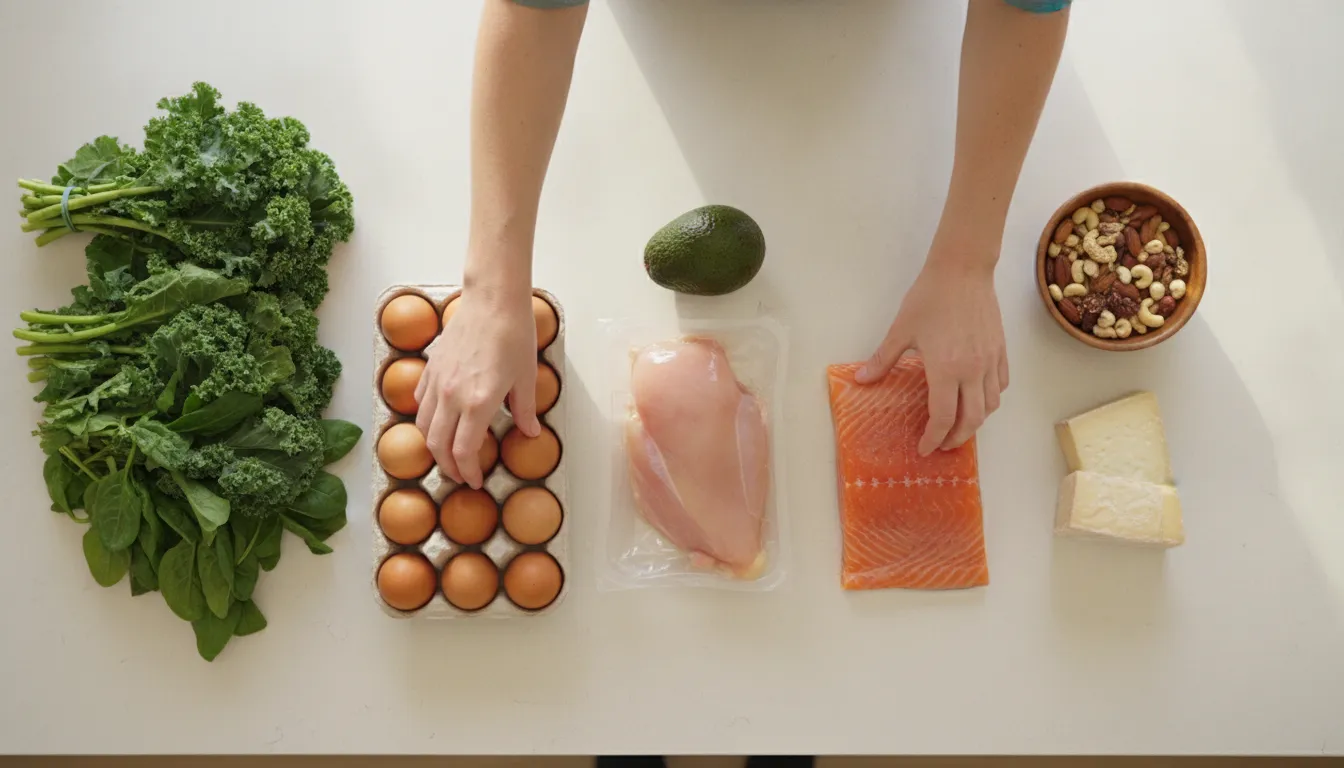
Start with a mix of fresh proteins that gives you options through the week. Add poultry, fish or seafood, and other unbreaded meats according to your household's preferences. Eggs are useful for breakfasts, quick lunches, and simple dinners. If you buy prepared or marinated items, look beyond the front label. Sauces, coatings, and sweeteners can add carbohydrates that are not obvious from the product name.
For fats, choose ingredients that make meals satisfying and practical, such as avocado, nuts, seeds, butter, or cooking oils. You do not need to buy every option. Pick a few that match the meals you actually cook, then check portion guidance and dietary needs. A useful list balances variety with ingredients you will use before the next delivery.
Dairy deserves the same careful check. Hard cheeses and higher-fat yogurt commonly appear in keto food lists, but milk products can contain carbohydrates, and flavoured varieties may include added sugars. Compare serving sizes, total carbohydrate, and ingredients across similar products instead of assuming that higher fat automatically means keto-compatible.
For a broader structure, use this guide to plan a balanced weekly grocery order, then adapt the categories to your own nutrition goals. The Canadian government notes that people following a ketogenic diet may prefer meat, poultry, eggs, fish, hard cheese, high-fat yogurt, nuts, oils, and avocado. Individual needs still vary, so read the government overview.
Build the produce part of your keto grocery list around vegetables you will actually use. Lettuce, kale, and spinach are commonly included in ketogenic food guidance, while higher-carbohydrate choices such as corn, beets, carrots, and potatoes may need more careful portion planning. These are general shopping cues, not a universal medical rule. Your own carbohydrate target and health needs may be different.
Pantry staples can include nuts, seeds, vegetable oils, coconut oil, and other ingredients that help you assemble meals without another store trip. Keep portions and labels in mind. Carbohydrates occur in more foods than bread and sweets, including vegetables, fruit, grains, milk products, legumes, nuts, and seeds, according to Health Canada.
Read the current Nutrition Facts table and ingredient list for canned vegetables, sauces, dressings, broth, nut products, and snacks. Watch for added sugars, starches, and serving sizes that are smaller than the amount you expect to eat. Carbohydrate targets vary by individual plan and health guidance, so there is no single threshold that fits every shopper. Use the nutrition information as a reference, then follow the guidance that fits your plan.
Fresh, frozen, and packaged foods can all have a place in a useful weekly list. The key is matching each item to a planned meal and verifying the label before it goes in your basket.
A useful keto grocery list becomes easier to follow when every item has a job. Instead of choosing groceries one aisle at a time, connect your list to a few simple meals, your household's schedule, and the carbohydrate targets you are using. This turns weekly shopping into a repeatable routine rather than a fresh decision-making exercise.
Keep the routine flexible. Tre'dish orders can be modified during the open order window, and weeks can be skipped or cancelled without fees. That makes it easier to adjust quantities when plans change, while still keeping your keto grocery list connected to real meals.
A keto grocery list is a useful starting point, but the package in front of you is the final reference. Before adding an item to your cart, check the serving size, total carbohydrate, and ingredient list. A product that appears low in carbohydrate at first glance may have a small serving size or include ingredients that do not fit your personal approach.
Health Canada's guidance explains that carbohydrates provide energy and are part of a healthy eating pattern. For that reason, a keto plan should not be treated as a universal rule for everyone. A ketogenic diet can also have short-term side effects, and longer-term effects need more research. If you have a health condition, take medication, are pregnant, or are unsure whether this approach is appropriate, ask a qualified health professional for advice tailored to your needs. Learn more about ketogenic diet considerations from the Government of Canada.
It can help with the shopping routine, as long as you treat Tre'dish as a flexible grocery catalog rather than a keto certification system. You can browse categories such as produce, meat and poultry, seafood, dairy and eggs, pantry staples, and specialty products, then decide which items fit your own keto grocery list. Check the current package label, ingredients, serving size, and total carbohydrate content before adding anything to your order.

Tre'dish does not replace your label check or personal nutrition plan with a keto certification. Browse the general catalog, compare available choices with your own plan, and build a basket around the foods you actually expect to use. Tre'dish also emphasizes Canadian-made products and partnerships with local producers, which can support a quality-focused grocery routine without locking you into a fixed box.
For a quick overview of the shopping flow, read how Tre'dish works. You can also choose quality groceries for delivery by checking freshness, ingredients, and fit for your household before ordering.
Tre'dish serves the Greater Toronto Area and offers customizable weekly grocery delivery. You can adjust your order during the open order window, skip a week without penalty, or cancel without fees. There are no subscription fees; you pay for the products you choose. That flexibility matters when your meal plan changes, you are travelling, or a particular item is not currently available.
The simplest approach is to review the catalog each week, confirm labels, and order only what supports your plan. Keto needs vary, so consult a qualified health professional for individual dietary or medical guidance.
Check the serving size, total carbohydrates, ingredient list, and any added sugars. A product that looks low-carb at first glance may not fit your personal target once you review the full label. Keep current packaging in mind because formulations and availability can change.
No. Keto is a specific low-carbohydrate eating pattern, not a universal prescription. Individual needs, medications, health conditions, and goals matter. If you are considering a major dietary change, speak with a qualified health professional who can provide advice for your situation.
Yes. Build your own list by combining the categories you use most, such as produce, proteins, dairy and eggs, pantry staples, and specialty items. This gives you room to adjust quantities and meals around your household's schedule.
Tre'dish provides a flexible grocery catalog rather than a keto-specific category or certification. Products and contents can change, so review each item's current ingredients and nutrition information before ordering. You can browse the catalog before creating an account.
Yes. Tre'dish supports customizable weekly grocery orders. Customers can modify orders during the open order window, skip weeks without penalty, or cancel without fees. Service is currently available in the Greater Toronto Area.
A keto grocery list works best when it fits the way you actually shop. Tre'dish can help you browse quality groceries and build a flexible weekly routine, while keeping your choices in your hands. Check current products and availability, then adjust your order as your plans change.