
Popcorn Delivery in Ontario: A Practical Pantry Guide
Learn how to choose quality popcorn delivery in Ontario and build a flexible pantry routine for movie nights, lunchboxes, guests, and everyday snacks.


Knowing how to choose beef for a family dinner starts with the meal you want to make, not with a cut name alone. Think about how many people are eating, how much time you have, and whether you want a roast, quick skillet meal, or slow-cooked dish.
Once those choices are clear, it is easier to pick beef that suits your recipe and your week. Use this guide to compare familiar cuts, plan a sensible amount, and make the shopping decision before dinner becomes a last-minute puzzle.
Start with the cooking method, the time available, and how you want to serve the meal. Those three details narrow the options quickly. A slow braise can be rewarding when you have several hours, but it is not a useful plan for a night when everyone needs dinner soon. Likewise, a roast is convenient for a shared meal, while individually portioned steaks can suit a smaller table.
Think about the rest of the meal as well. Beef served with potatoes and vegetables may call for a different amount than beef folded into pasta, tacos, or rice bowls. If children or guests have different preferences, serving sides separately can make the meal easier to adapt. Pick a plan that fits the household you are feeding rather than buying a cut because it sounds impressive.
Different cuts work well in different situations. This table is a starting point, not a fixed recipe: size, thickness, and cooking instructions affect the final timing. For cut ideas and cooking context, read our guide to choosing meat for flavour and cooking needs.
| Dinner plan | Cuts to consider | Why they may fit | Cooking approach |
|---|---|---|---|
| Shared family roast | Rib, sirloin, or round roast | A whole cut is easy to carve at the table | Roast using a recipe suited to that cut and size |
| Quick weeknight meal | Steak or thinly sliced beef | Individual pieces or thin slices can fit a shorter cooking window | Pan-sear, grill, or stir-fry according to the recipe |
| Comforting one-pot dinner | Chuck or stewing beef | Long, moist cooking gives connective tissue time to soften | Braise or simmer until tender |
| Tacos, pasta, or patties | Ground beef | Easy to divide into recipes and servings | Cook thoroughly in a skillet or as patties |
A useful rule is to let the recipe determine the cut instead of trying to make every cut work in every dish. A slow-cooking cut may not give the result you want when quickly seared. A tender steak may be wasted in a long stew if the recipe does not call for it. If a recipe names a particular cut, use that as the starting point; if you need to substitute, check that the alternative suits the same cooking method and is cut to a similar size.
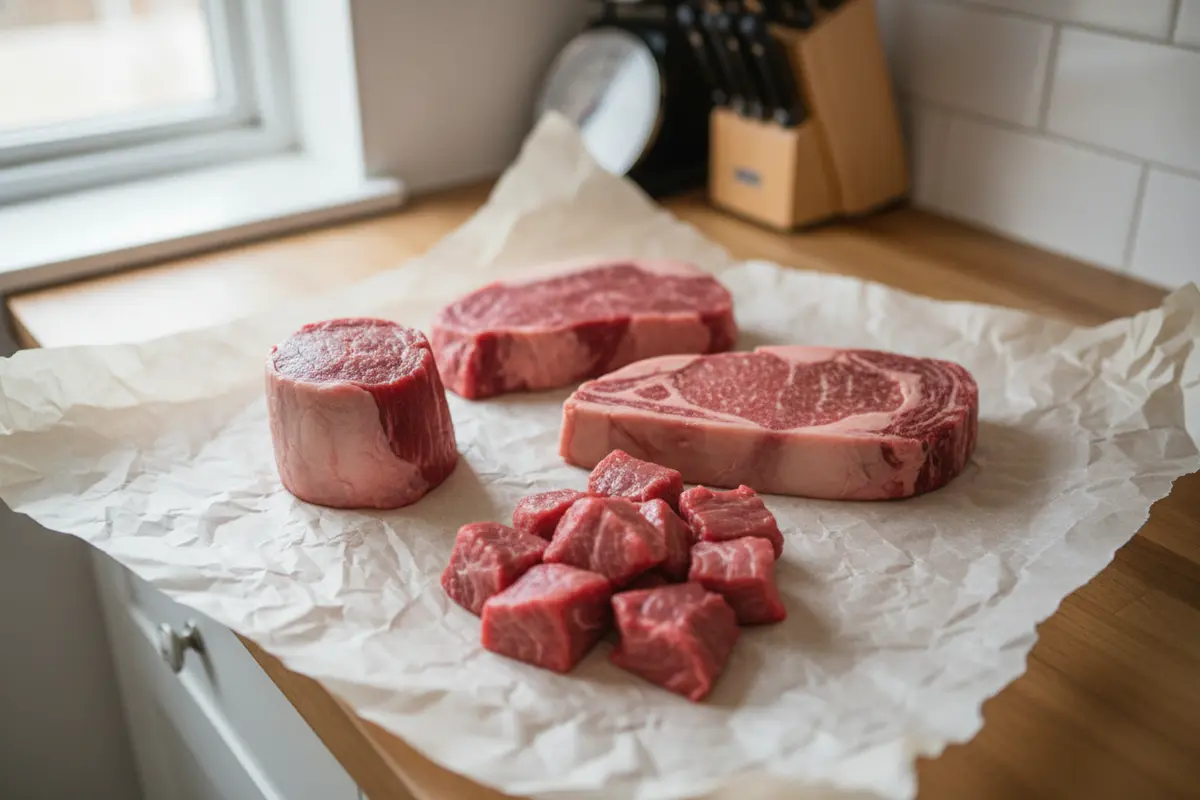
Start by protecting the cooking method, not the exact name on your shopping list. If the recipe calls for a steak to pan-sear, look for another steak-style cut intended for quick cooking rather than switching automatically to a cut meant for braising. If the recipe is a stew, a suitable stewing cut is usually a more sensible alternative than a tender steak. The specific cut and recipe still matter, so use a trusted recipe or product description to guide the substitution.
Before you swap, check how the replacement differs in shape and thickness. A thick roast will not cook in the same time as a thinner piece, and small stew cubes may finish sooner than larger chunks. Keep an eye on the recipe's cues for doneness and tenderness. Adjusting the cooking time based on the piece in front of you is more reliable than following a time written for a different size without checking the food.
You can also change the dish if the available cut suggests a different plan. For example, if the roast you intended to buy is not available but you find steak, make a quick dinner with the steak and save the roast recipe for another day. If your schedule allows slow cooking and you find stewing beef, choose a stew or braise rather than trying to turn it into a fast skillet meal.
This small bit of flexibility can prevent a poor match between cut and technique. If the product description is unclear, choose a recipe that names the cut you have, or ask the seller for clarification before ordering.
There is no single portion number that works for every family dinner. The right amount depends on whether the meat is bone-in or boneless, the appetites at the table, how much of the meal comes from side dishes, and whether you want leftovers. Begin with the recipe's stated yield. Then check whether its serving size makes sense for your household instead of treating the package weight as the number of portions.
For example, a family serving a roast with several substantial sides may not need the same weight per person as a meal where steak is the only main item. If you are expecting guests, consider the range of appetites and offer filling sides. For a smaller household, a smaller roast or a recipe that uses leftovers can make more sense than buying a large cut without a follow-up plan. When you order meat online, compare the listed weight and product description with the recipe yield; our online meat ordering guide offers more points to check before ordering.
Think about how the heat will reach the beef. Tender cuts are often suited to relatively quick, dry heat such as grilling or pan-searing. Cuts that are firmer or contain more connective tissue are often better matched to longer cooking with moisture, such as a covered braise. The cooking method is not just a matter of convenience: it affects how tender the finished meal will be.
Choose a meal built around steak, thin slices, or ground beef, and make the sides simple enough to prepare at the same time. You might cook ground beef for tacos while warming tortillas and chopping toppings, or pan-sear steak while a salad and a quick vegetable are assembled. Keep the recipe in view and avoid trying a new technique on a night when you have little room to adjust. Smaller pieces often cook faster than a large roast, but follow the recipe rather than guessing at a finish time.
A braise or stew can suit a day when you can get the pot started well before serving. Brown the meat if the recipe asks, add its recommended liquid and seasonings, then let it cook gently for the stated time and check for tenderness. The goal is not to rush a cut intended for slow cooking. If the meat is still firm, it may need more time; use the recipe's cues and keep the dish at the recommended heat.
Many recipes recommend resting beef after cooking so it is easier to carve and serve. Follow the recipe's resting guidance, and for a roast or steak, look for the direction of the muscle fibres. Slicing across the grain can make each piece easier to chew. A sharp knife and a stable cutting board also make serving safer and neater, especially when you are portioning food for several people.
Read the package or online listing carefully and match the product to the dish you plan to cook. Check the cut name, weight, whether it is bone-in or boneless, and any preparation or storage notes. If you are choosing between two options, compare the details that affect your recipe rather than relying on a broad label such as premium.
Quality also includes handling and storage, not just the cut name. Keep raw meat separate from ready-to-eat foods, follow the package's refrigeration instructions, and clean hands and surfaces after handling it. Use a food thermometer and follow current safe cooking guidance for the particular beef preparation. The Government of Canada's food safety information is a useful place to find current advice on handling and preparing food safely. For more considerations about buying meat online, see our meat-ordering safety checklist.
Tre'dish offers grocery delivery in the Greater Toronto Area, with refrigerated delivery and insulated packaging with ice packs to help keep groceries fresh. Learn more about how Tre'dish works or browse information about Canadian suppliers and partners. The best choice remains the one that suits the dinner you can actually prepare and the storage instructions for the product you choose.
Make the decision in two stages: first select the meal, then decide when to shop and cook. If you know Tuesday is crowded, plan a faster recipe for that night and save the slow-cooked meal for a day when you can start earlier. A roast can also be a planned two-meal choice: serve slices the first night, then use properly stored leftovers in sandwiches or bowls. The second meal should be part of the plan, not an assumption that leftovers will take care of themselves.
A short weekly plan can reduce duplicated ingredients. If you are buying beef for tacos, for example, check whether the same vegetables and toppings can be used elsewhere in the week. If you choose a roast, decide in advance whether you will use the remainder in another meal. Put the recipe, delivery timing, and storage plan together so you are not left wondering whether a cut will keep until the day you need it.
Tre'dish is designed around weekly grocery delivery. Customers can modify or skip weeks without penalty, and there are no subscription fees; customers pay for products. That flexibility can help when dinner plans change, without requiring you to build every week around a fixed menu. Read more about weekly groceries on autopilot and use our local butcher box delivery guide for more consumer shopping considerations.

Before adding beef to your shopping plan, use this checklist. It keeps the decision connected to your actual dinner rather than the number of options available.
If you are unsure about delivery details, contact Tre'dish customer support. To review the broader shopping approach, you can also visit our guide to premium meat box delivery. A good choice is not necessarily the largest or most elaborate cut. It is the one that fits your cooking plan, meal size, and week.
One practical approach is to work backward from serving time. Write down when you want dinner on the table, then reserve time for the main cooking method, resting or finishing, and setting out sides. If a recipe takes several hours, choose it only when you can begin early enough; a slow braise still needs the recipe's stated cooking time. For a quicker meal, prepare toppings or vegetables before the beef hits the pan so you can serve it soon after cooking.
For a roast with leftovers, decide how you will cool and store the unused portion before the meal begins. Put leftovers away promptly in suitable containers and follow current food-safety advice for storage and reheating. This turns a larger cut into a purposeful second meal rather than an uncertain extra. If your week changes, you can switch the order of planned meals, provided the product is stored and used according to its package guidance.
Ground beef or thin steak can be practical when time is limited because each works with a skillet or grill and can be part of a straightforward meal. Choose a recipe with clear instructions and pair it with sides you can prepare alongside it.
Choose a roast when you want a shared centrepiece to carve and have time for oven cooking. Choose steak when you want individual portions and a quicker cooking method. In either case, use a recipe written for the cut and size you select.
Yes. Cuts such as chuck or stewing beef can suit braises and stews. Plan enough time for gentle, moist cooking, and follow the recipe until the meat is tender rather than expecting it to cook like a steak.
Buy extra when you already have a practical plan for it, such as sandwiches, rice bowls, or another dinner. Use the recipe yield and your household's appetite to decide how much makes sense, then store leftovers according to food-safety guidance.
Follow the product's storage directions and refrigerate it promptly after purchase or delivery. If you will not cook it within the recommended period, follow reliable guidance for freezing and thawing rather than relying on guesswork.
With a cut that suits your recipe, a clear cooking plan, and sides that fit your schedule, beef can become a straightforward family dinner rather than another complicated decision.