
Order Meat Online Cheap: A Guide to Quality & Value
Order meat online cheap without sacrificing quality. Find tips on choosing the best cuts, comparing suppliers, and getting great value delivered to your door.


Choosing a grocery delivery service is about more than finding a convenient way to fill the fridge. For busy Ontario households, the right option should make weekly planning easier while still delivering food that feels fresh, well sourced, and worth bringing home.
A weekly grocery delivery service should offer dependable scheduled delivery, quality and fresh products, useful Canadian and local choices, and enough flexibility to adjust, skip, or change an order when your household plans change. For GTA shoppers, it should also be clear about its delivery area, packaging, and how the service fits your regular routine.
The best choice is rarely the one with the most features. It is the one that makes your normal grocery week simpler without taking away control over what you buy. Here is how to compare the details that matter, starting with the essentials to check before you place a recurring order.
A useful weekly grocery delivery service should make your routine easier without taking away your ability to choose. Before committing, look beyond the promise of convenience and assess how the service handles the details that affect your household every week.
| What to compare | Question to ask | Why it matters |
|---|---|---|
| Selection | Can you find regular produce, proteins, dairy, and pantry staples? | Fewer gaps mean fewer extra shopping trips. |
| Flexibility | Can you change, skip, or pause an order? | Your delivery routine can follow real life. |
| Freshness | How are chilled and frozen products handled? | Perishables need a clear handoff and prompt storage. |
| Coverage | Does the service deliver to your address? | Local availability is part of the decision. |
Start with selection. Can you find the everyday groceries your household already buys, or will you still need a separate shopping trip for staples? Look for a mix that supports real routines, including fresh produce, proteins, dairy or alternatives, pantry basics, and Canadian-made or locally produced items where those choices matter to you. A service should help you shop for your household, not push you into a fixed box or narrow menu.
Recurring delivery only works when it remains flexible. Check whether you can change items, quantities, and delivery timing before an order is finalized. You may need more of one staple one week, less the next, or no delivery while you are travelling. Tre'dish automatic weekly orders can be modified, paused, or skipped before the order window closes. That gives the routine structure while leaving room for changing schedules.
It is worth checking the service rules before you sign up. Are there subscription fees? Is cancellation straightforward? Are you paying for groceries you selected, or for a rigid package that may not match your needs? Tre'dish has no subscription fees and does not use a rigid meal-kit model. The focus is on choosing the groceries you want and having them delivered on your schedule.
Review how delivery fits your week. A scheduled weekly drop-off can be more useful than a service that is fast but unpredictable, especially when you are planning meals or managing a busy household. Confirm that the service delivers in your area and consider whether its timing works for how you receive groceries. Tre'dish currently serves shoppers in the Greater Toronto Area, so GTA households should verify their address during the shopping process.
Finally, look for a company whose values match your own. Local and Canadian sourcing, clear service terms, and community impact can all be part of the decision. Tre'dish says 1% of every purchase supports Feed Ontario's food-security work. If you want more control over the recurring routine, you can customize recurring grocery deliveries rather than treating weekly delivery as a one-size-fits-all commitment.
Freshness depends on more than selecting good products. A reliable weekly grocery delivery service needs a clear process for handling, packing, transporting, and receiving perishable food. Look for a service model that makes the handoff simple, keeps the weekly routine predictable, and gives you enough information to store food promptly when it arrives.
Cold food should stay cold throughout the journey. Health Canada advises buying cold or frozen food at the end of a shopping trip and refrigerating raw meat, poultry, and seafood soon after arriving home. You can review the full Health Canada grocery food safety guidance when comparing delivery policies.
That means a good service should make delivery timing and packaging easy to understand. When your order arrives, check that chilled items feel properly cold, frozen items remain frozen or partly frozen, and packaging is intact. If something seems warm, damaged, or otherwise unsuitable, contact the service promptly and ask how it handles quality concerns.
Tre'dish uses a direct-to-consumer model built around customizable weekly grocery orders and scheduled delivery in the Greater Toronto Area. Customers choose the groceries they want rather than receiving a fixed meal kit. This makes it easier to assess the quality and suitability of each item for the household. The service model is explained in how farm-fresh grocery delivery works.
Quality also includes asking clear questions about sourcing. If Ontario or Canadian products matter to your household, check how the service identifies those products and whether the descriptions give you enough information to make a confident choice.
Freshness checklist:
It matters because a weekly grocery delivery service should support your real shopping routine, not replace it with a narrow, fixed box. Before choosing a service, look for enough variety to cover everyday staples alongside fresh produce, Canadian-made goods, and products from local producers. A broader, relevant selection makes it easier to keep one dependable order instead of filling gaps with extra grocery trips.
Local sourcing also gives you a clearer way to judge what you are buying. Ask whether the service identifies Canadian-made goods, local producers, and the origin of key ingredients. Those details help you make informed choices without assuming that every local product has the same supply story.

Start with the foods your household buys repeatedly. Can you find the basics you need for breakfasts, lunches, dinners, snacks, and weekends? Then look for meaningful choice within those categories, such as different produce options, pantry staples, dairy or alternatives, and locally made specialties. Selection is useful when it reflects how people actually eat, not when it simply creates a long list of products you will never order.
Tre'dish brings together Canadian-made products, local and heritage producers, and everyday groceries. Examples in its catalog include Gryfe's Bagels, Hewitt's Dairy, and De Mello Coffee. You can learn more about its approach to Canadian grocery delivery and local sourcing before deciding whether the range fits your home.
Choosing local and Canadian products can make a routine order feel more connected to the people and producers behind it. It can also help you prioritize products made or grown closer to home when that matters to your household. The best service makes those options easy to discover while still giving you enough flexibility to choose what works for your budget, preferences, and weekly plans.
A weekly order works best when it reflects the way your household actually eats, rather than an idealized meal plan. Before adding items, check the pantry, refrigerator, and freezer. Note what is already open, what needs using soon, and which staples will last beyond the next delivery. This quick reset helps prevent duplicate purchases and gives you a clearer starting point.
Start with the meals you expect to prepare at home, then account for leftovers and any nights you will eat out. A household with sports practices may need quick breakfasts and simple dinners, while a work-from-home couple may use more lunch ingredients. Do not order seven full days of meals if your calendar includes restaurant plans, travel, or family visits. Build the order around the meals that are most likely to happen.
For a practical framework, use this guide to build a balanced grocery delivery order. Then adjust the mix to your household: increase produce and convenient staples for a busy week, or reduce perishables when plans are uncertain.
Use normal household portions as a starting point, not the largest package available. Consider how many people will eat each item, how often it appears on the menu, and whether it can be frozen or stored safely. Families may need larger quantities of breakfast staples, fruit, and lunch items. Smaller households can choose fewer perishables and replenish more selectively.
It also helps to separate repeat essentials from flexible items. Milk, eggs, coffee, and lunch basics may belong on most orders. Fresh herbs, specialty ingredients, and extra snacks can depend on that week's plans. This approach keeps a weekly grocery delivery service useful without making every order feel identical.
Treat the recurring order as a starting point, not a commitment to buy the same basket forever. Tre'dish says shoppers can modify, pause, or skip an automatic weekly order before the order window closes. That flexibility matters when you are away, hosting guests, eating out more often, or working through a fuller freezer.
Review the order before its window closes, remove what you still have, change quantities, and add what the coming week requires. A short check each week keeps the routine aligned with real life while preserving the time-saving benefit of scheduled delivery.
The practical details often decide whether a grocery service becomes a useful weekly habit. Before choosing one, check how delivery is handled, what happens to the packaging, where the service operates, and whether the payment model is clear.
Look for a predictable delivery rhythm that makes planning easier, rather than a service that leaves you guessing from week to week. Tre'dish is built around direct-to-consumer fulfillment and scheduled weekly delivery. That means your order follows a dependable routine, while you still choose the groceries that suit your household.
It is also worth checking what happens after the groceries arrive. Health Canada recommends refrigerating or freezing perishable foods within two hours, or within one hour on hot summer days. A good delivery plan should make it practical to bring cold items inside and store them promptly. You can read more about how farm-fresh grocery delivery works before deciding what fits your home.
Ask whether the service uses packaging designed to protect groceries in transit, and whether the materials can be reused or repurposed. Tre'dish deliveries use insulated boxes and ice packs to help keep groceries refrigerated. The boxes can also be repurposed around the home instead of immediately becoming waste.
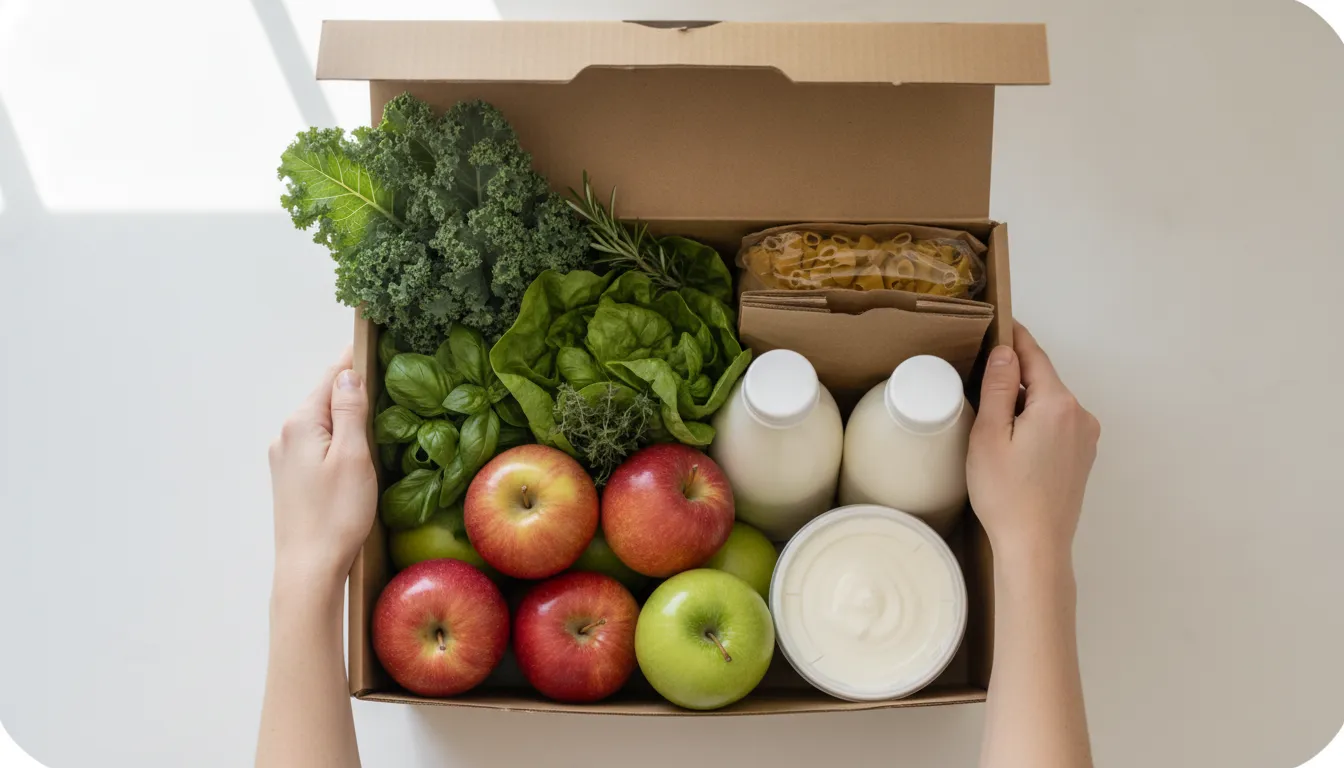
Read the fee structure carefully. Tre'dish has no subscription fees, so customers pay for the products they order rather than paying an additional fee simply to belong to the service. Orders are designed for the Greater Toronto Area, including Toronto and surrounding municipalities. Confirm that your address is within the current GTA service area before building the service into your routine.
Finally, consider whether the company contributes to the community it serves. Tre'dish directs 1% of every purchase to Feed Ontario's food-security work. That gives shoppers a concrete way to connect routine grocery spending with local community support, alongside access to Canadian-made products and goods from local producers.
A weekly grocery delivery routine can be a strong fit if you want dependable access to quality groceries without planning another store trip every few days. It is especially useful for GTA households balancing work, family, commuting, or other responsibilities, while still wanting to choose what goes into each order.
This model tends to work well for shoppers who already repeat many of the same essentials, prefer predictable planning, and value fresh, Canadian-made, or locally sourced products. It can also help households that want to reduce the mental load of remembering staples. With Tre'dish, orders can be modified, paused, or skipped before the order window closes, so weekly delivery does not have to mean receiving an identical order every time.
It may suit you if you want groceries delivered in the GTA, prefer selecting products yourself rather than accepting a fixed meal kit, and appreciate a service with no subscription fees. You can use a recurring order as a starting point, then adjust quantities and items as your household's needs change.
A weekly service may be less useful if your household rarely cooks at home, changes locations frequently, or prefers making every grocery decision in person. It may also be a poor fit if you are outside the confirmed GTA service area, need a delivery schedule that the service does not offer, or cannot arrange prompt storage for perishable items when an order arrives.
If most answers are yes, a customizable weekly routine may be worth trying. If not, an occasional delivery or in-store shopping may give you more flexibility.
You choose the groceries you want online, set up a weekly order, and receive scheduled delivery. A flexible service should let you adjust quantities and selections rather than sending a fixed box. Tre'dish is designed around customizable weekly grocery orders in the Greater Toronto Area.
Yes, flexibility is important when your routine changes. Tre'dish customers can modify an order before its window closes, pause or skip a week, and cancel without fees. Check the cutoff for your order so changes are made in time.
Some services charge a recurring membership fee, so review the pricing terms before signing up. Tre'dish states that it has no subscription fees. Customers pay for the grocery products they order, rather than for a separate subscription charge.
Check that packaging is intact and that perishable foods are cold when they arrive. Refrigerate or freeze perishable items promptly, and ask the service how it handles quality concerns.
Tre'dish's confirmed primary service area is the Greater Toronto Area, including Toronto and surrounding municipalities. Coverage can depend on the delivery address, so enter your location during the shopping process to confirm whether service is available where you live.
If a flexible weekly grocery routine fits your household, you can explore the available options and choose what works for you.