Who Delivers Groceries? Your 5 Best Bets in Canada
Wondering who delivers groceries in Canada? Compare the top 5 grocery delivery services to find the best fit for your budget, schedule, and shopping style.


Choosing organic groceries online takes more than clicking an "organic" filter. Confirm what the label means and compare product details. Think about how fresh items will be handled between packing and delivery. A good order should also fit the way your household shops, whether that means recurring staples, seasonal produce, or the freedom to skip a week.
Organic food delivery can be a practical choice when each product listing clearly identifies its organic status, size, and price. The service should also provide clear delivery timing and order-change options. In Canada, organic claims are regulated, but organic, natural, local, and Canadian-made are not interchangeable terms. Check the evidence for each item instead of assuming the whole catalogue meets the same standard.
Start by looking closely at the wording and certification details on the product page. That simple check helps you distinguish a verified organic claim from broader marketing language before you build the rest of your order.
Look for a specific organic claim and check what the product description actually says. Avoid treating words such as natural, local, Canadian-made, or premium as proof of organic certification. In Canada, an organic product is an agriculture or aquaculture product certified under Part 13 of the Safe Food for Canadians Regulations. Products making an organic claim in interprovincial trade must be certified under the Canada Organic Regime. The Canadian Food Inspection Agency explains the requirements.
A certified organic claim has a defined meaning. A single-ingredient food, or a multi-ingredient food with at least 95% organic content, can be labelled or advertised as organic. Products at that threshold may also display the Canada organic logo. For a packaged product between 70% and less than 95% organic content, look for wording that states the percentage of organic ingredients instead. That product cannot use the Canada organic logo. Products with less than 70% organic content may identify organic ingredients only in the ingredient list. These distinctions are summarized in Canada's guidance for buying organic food.
No. Natural is a separate description and does not, on its own, confirm that a product is certified organic. The same applies to local, Canadian-made, farm-fresh, and premium. Those terms can tell you something useful about sourcing, production, or positioning, but they answer different questions. A product can be Canadian-made without being organic, or organic without being locally produced. Read the full product details rather than inferring one claim from another.
Start with the product name and description. Look for the word organic used for the specific item, and check whether the listing identifies the relevant ingredients or certification information. Then review the size, quantity, images, and unit pricing so you know exactly what you are ordering. Tre'dish has an Organic produce category and has documented items such as organic Bosc pears and organic Honeycrisp apples, but availability and product claims can change. Confirm the current listing before adding an item to your order.
This approach keeps expectations clear: choose organic products where the listing supports the claim, and treat every other product according to the information provided. You can browse Tre'dish's catalogue before creating an account, then compare the available options at your own pace.
A useful catalog should make it easy to understand what you are buying before you add it to your order. Start with the category, then check the individual listing. Tre'dish has an Organic produce category, with documented examples such as organic Bosc pears and organic Honeycrisp apples. Availability and product claims can change, so confirm the details on the live catalog rather than assuming every item is organic.

| Catalog detail | Why it matters |
|---|---|
| Organic designation | Confirms the claim for the specific item. |
| Size and quantity | Shows how much you will receive. |
| Unit pricing | Helps compare different package sizes. |
| Availability | Confirms the item fits your delivery and order window. |
You can browse organic groceries before creating an account. Add products individually, review quantities, and use the listing details to build an order that fits your household. Taking this short catalog-check step keeps the convenience of organic food delivery without giving up control over the products you choose.
Freshness depends on more than the word organic on a product page. It also depends on when an order is prepared and how long it spends in transit. It depends on how the order is handed over and what you do with it when it arrives. A careful organic food delivery service should make those parts of the process clear without promising that every item will have the same shelf life.
Tre'dish uses a warehouse-based fulfilment model that is more direct than the traditional farm-to-distribution-centre-to-store-to-customer chain. Fewer planned handoffs may help products move through the system efficiently, but it is not a guarantee that every item will arrive at a particular level of freshness. Produce can vary by type, season, and time since harvest, so inspect your order when it arrives and follow the storage guidance on each package.
Start with the items that need the most attention. Look over fresh produce for visible bruising or damage, and check packaged foods for intact seals and the relevant best-before information. The Canadian Food Inspection Agency explains that a best-before date describes how long a properly stored, unopened product should retain qualities such as freshness and taste. It is useful shelf-life information, not an automatic guarantee of food safety.
Move refrigerated and frozen products into appropriate storage promptly. Keep ready-to-eat or pre-cut produce refrigerated according to the package directions, and wash fresh produce before eating unless the label says it is ready to eat. If something arrives damaged, unusually warm, leaking, or otherwise inconsistent with the product description, photograph it and contact Tre'dish promptly so the order can be reviewed.
Scheduled delivery gives you a better chance to plan for the handoff. Choose a delivery preference that fits your household, and try to be available when the order is expected. If you will be away, arrange a suitable handoff rather than leaving perishable groceries unattended for an uncertain period. Tre'dish uses scheduled weekly deliveries and third-party logistics, so confirm current delivery availability and instructions on the shopping platform before ordering.
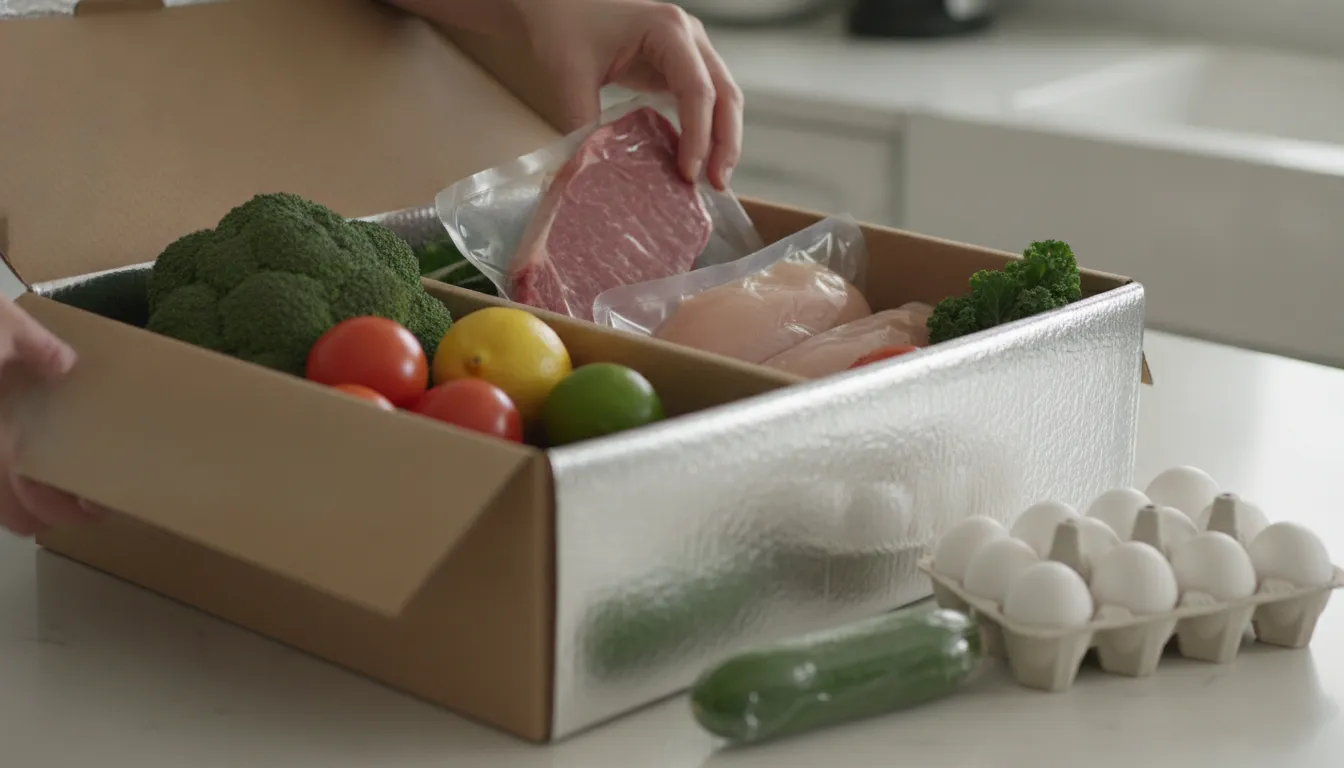
For a clearer view of the order window, delivery cadence, and customer controls, review how the grocery delivery model works. The goal is not a blanket freshness promise. It is a delivery routine that helps you plan, receive, store, and assess your groceries with fewer unnecessary trips.
Organic, local, Canadian-made, and premium are related ideas, but they do not mean the same thing. Organic describes how a product was produced and, in Canada, an organic claim is tied to the applicable certification rules. Local sourcing describes where a product or producer is based. Canadian-made tells you where a product was produced or prepared. A product can be local without being organic, or organic without being locally produced. Check the individual listing for the claim that matters to you instead of assuming one label covers all three.
That distinction is useful when choosing organic food delivery in Ontario. You can look for organic options where they are available, while also considering the producer behind other products in your order. Sourcing information can add context about freshness, supply relationships, and the kinds of businesses your grocery spending supports.
Tre'dish highlights 100+ Canadian-made products and partnerships with local producers, including Hewitt's Organic, Gryfe's Bagels, and De Mello Coffee. These relationships give shoppers access to products connected to Canadian businesses, not only the standard supermarket selection. The right choice still depends on the product details and your household's needs, but producer information makes that choice more transparent.
The fulfilment model is also described as warehouse-based and more direct than the traditional route from farm to distribution centre to store to customer. Fewer handling stages may support a more straightforward path from supplier to shopper. However, that is not a guarantee that every item will have the same freshness or shelf life. Read more about farm-to-door grocery delivery in Canada to understand the sourcing and fulfilment approach.
Responsible sourcing includes looking beyond the product itself. Tre'dish reports a packaging reuse approach that repurposes unused boxes from packaging partners. Reusing suitable packaging can help keep materials in circulation rather than treating every delivery container as single-use waste. It is one part of a broader sustainability picture, alongside planning and delivery choices.
Tre'dish also says it donates 1% of every purchase to Feed Ontario, supporting access to fresh produce, meat, and pantry staples for Ontario families in need. For more context on packaging and the company's wider approach, see sustainable grocery delivery in Ontario. These practices do not change whether a product is certified organic, but they can help you evaluate the wider impact of your grocery routine.
Flexible grocery delivery should make routine shopping easier without taking control away from your household. Tre'dish's Groceries on Autopilot model is designed for that balance. You can select regular items, set weekly delivery preferences, and adjust what you receive as your needs change. That matters when one week includes packed lunches, another includes guests, or your preferred organic products are not available in the same quantities.
Yes. Tre'dish supports order changes during the open window, so you can review and update your selections before the order is finalized. You can change products and quantities, rather than treating the original recurring order as permanent. You can also skip a week when you are travelling, have extra groceries at home, or simply do not need a delivery.
Availability can vary by product, including organic items. A flexible system lets you respond to those changes instead of building your routine around a product that may not be listed every week. Check the live catalogue when you are planning an order, then update your regular choices if a suitable alternative is available.
Tre'dish charges for the products in your order rather than charging a subscription fee. Payment is charged when the order window closes, according to the documented operating model. This gives you a clearer opportunity to review the basket before it is finalized. It also keeps the focus on the groceries you choose, not on maintaining a membership simply because you signed up.
You can cancel without fees if the service no longer fits your household. That option is useful for Ontario shoppers who want the convenience of recurring delivery but do not want a rigid commitment. The same approach applies to weekly preferences: use a regular pattern when it saves time, and change it when your schedule or grocery needs change.
When comparing organic food delivery services, look beyond whether recurring orders are offered. Check whether you can modify selections, skip a week, and cancel without fees. Those controls help delivery fit real household routines while leaving room to choose based on current product details, quality, and availability.
A thoughtful first order makes future grocery runs easier. Use this checklist to compare products, confirm the details that matter to your household, and set up delivery without adding unnecessary complexity.
Start by checking a delivery catalogue that identifies organic products at the item level. Tre'dish has an Organic produce category and lists products such as organic Bosc pears and organic Honeycrisp apples, but availability and organic claims can vary by item. Browse the live catalogue before ordering.
Look for the product's specific organic claim and certification details rather than assuming that natural, local, Canadian-made, or premium means organic. In Canada, products making an organic claim in interprovincial trade must be certified under the Canada Organic Regime. See the Canadian Food Inspection Agency guidance on organic claims for the rules.
Review product details, choose a delivery window that suits your household, and inspect fresh items when they arrive. For packaged foods, a best before date describes expected freshness and quality when the unopened product has been properly stored. But it is not a guarantee of food safety. The CFIA date-label guidance explains the difference.
No. A grocery delivery service may offer organic products alongside conventional products. Check each listing, label, and ingredient detail individually, and do not treat the service name or a product category as certification for the entire order.
Tre'dish's autopilot model supports regular item selection, delivery preferences, order changes during the open window, skipped weeks, and cancellation without fees. It charges for products rather than a subscription fee, so review your selections before the order window closes.
Use Tre'dish to browse available groceries, review product details, and build an order that fits your household. Explore the selection before deciding what belongs in your regular rotation, keeping your choices practical and personal.