Practical Guide: Grocery Delivery Guelph
Compare grocery delivery in Guelph, plan fresh weekly orders, and check address coverage, delivery timing, product choice, and flexibility before choosing.


A grocery store that delivers can make weekly shopping easier, but a convenient checkout is only part of the decision. Before choosing a service, check whether it reaches your address, how it handles chilled items, what products it carries, and how much control you have over delivery weeks. If you are comparing options in Ontario, use the checklist below to find a service that fits your household rather than choosing on speed alone.
Ask about grocery delivery options
Start with your postal code. Delivery coverage can vary by company and even by neighbourhood, so a service advertised for Ontario may not serve every community in the province. Check the exact address before you plan a full order. Tre'dish's confirmed service area is the Greater Toronto Area (GTA); do not assume that delivery is available elsewhere in Ontario.
Then look at how the service describes its delivery schedule. Is there a recurring weekly delivery day, a set window, or a limited number of available slots? A dependable window is often more useful than a vague promise of speed, especially if someone needs to be home or groceries must be brought inside promptly.
Check whether you can order the whole shop or only a narrow category. Some services focus on produce boxes, meal kits, meat, or pantry staples. A grocery delivery service with a broader selection can make it easier to combine fresh food, dairy, and everyday items in one weekly plan. Review the available items before creating a routine around the service.
For more on how a recurring grocery order works, see Tre'dish's guide to groceries on autopilot. If Canadian-made products and producer relationships matter to your household, you can also explore Tre'dish suppliers and Canadian partners.
Delivery timing matters because groceries do not all tolerate the same wait. Fresh and frozen items need appropriate temperature control from dispatch through arrival. Ask what packaging is used for chilled products, whether orders are delivered in an insulated container, and what you should do if you cannot bring the order in right away.
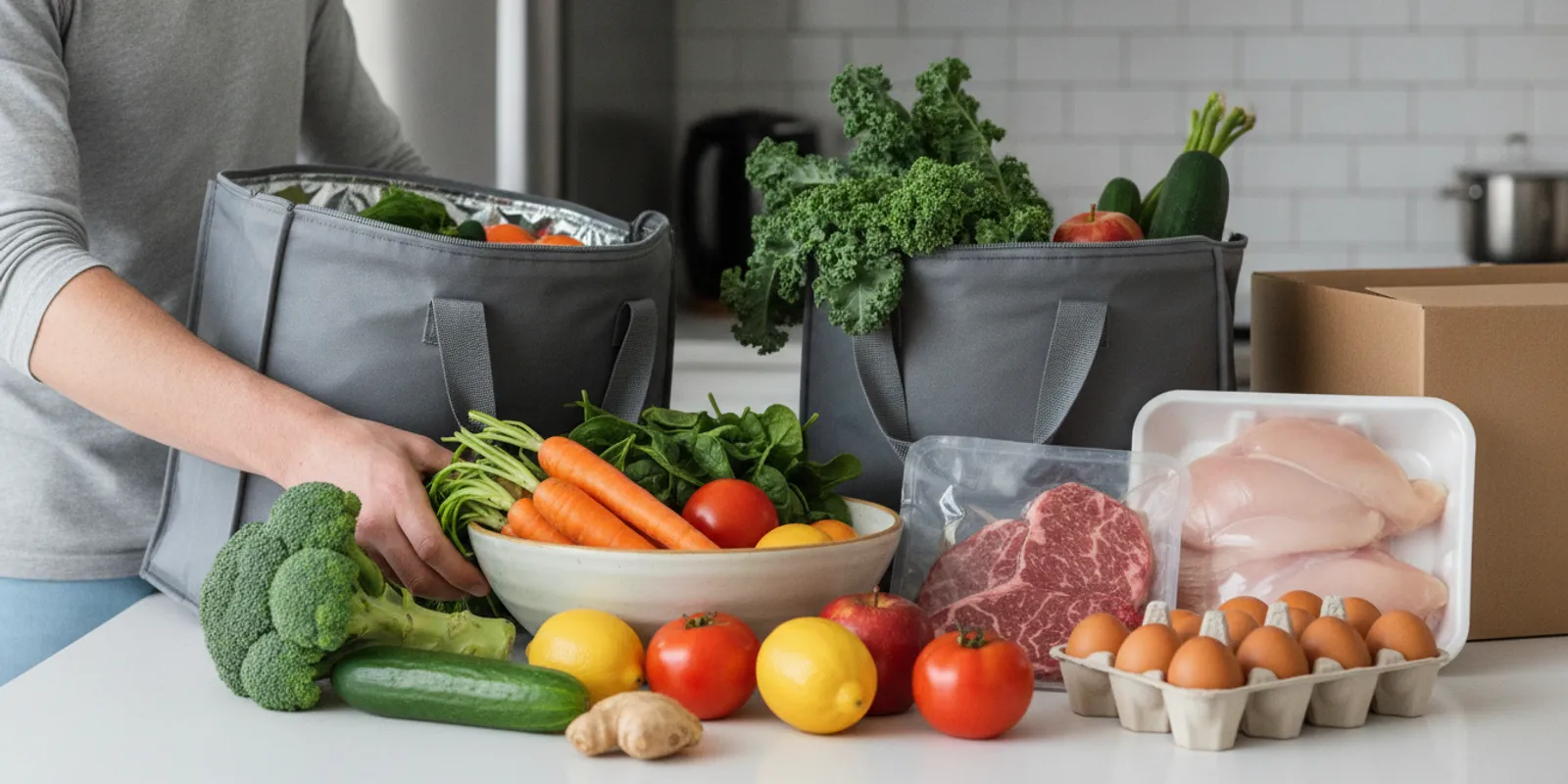
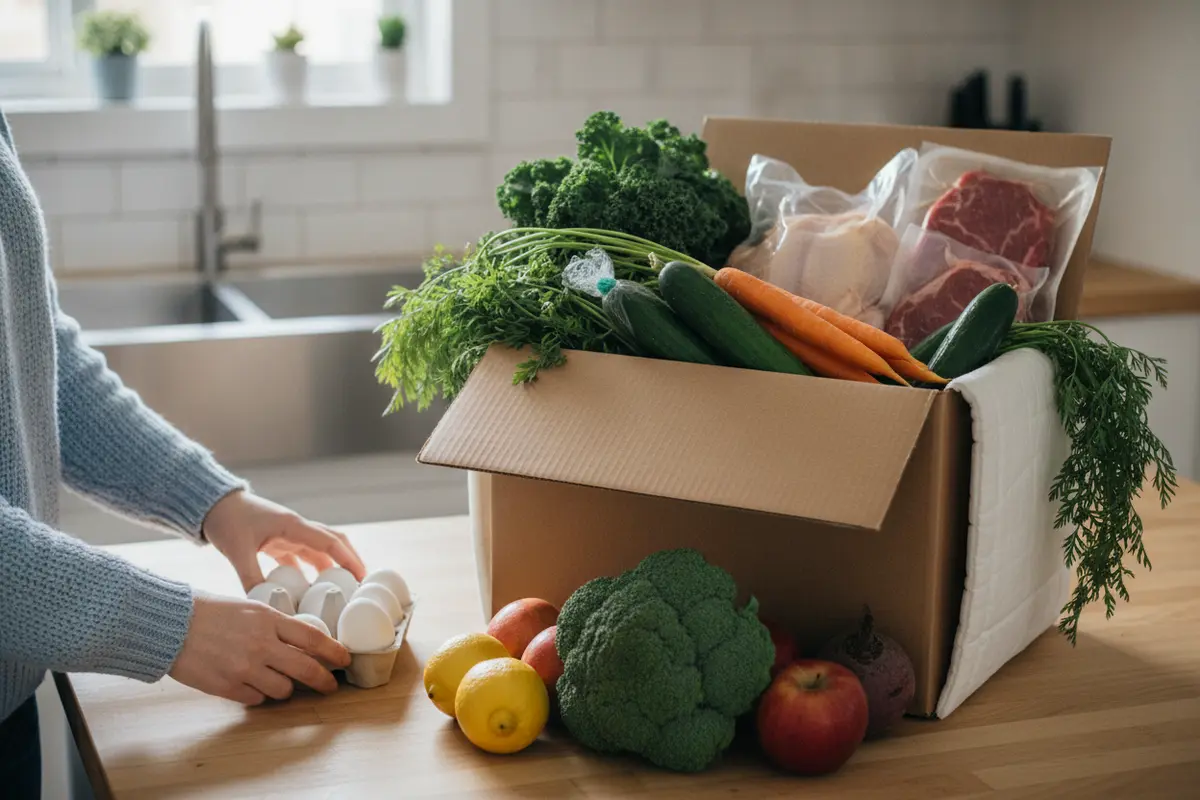
Tre'dish deliveries use refrigerated handling and eco-friendly packaging, including insulated boxes and ice packs. That combination is intended to protect freshness while reducing packaging waste. When comparing another service, look for clear explanations rather than relying only on a product photo or a general promise of freshness.
Check the practical details too. Does the service tell you when to expect the driver? Can you choose or update delivery instructions? What is the process if an item is missing, damaged, or not in acceptable condition? A reliable provider should make its contact and resolution steps easy to find before checkout.
For general food handling information, consult Health Canada's food and health resources. Follow product labels and the service's directions for storing chilled or frozen groceries once they arrive.
Delivery services can look similar at first, but the ordering model changes how much planning and control you have. Compare the details that affect your household every week, not just the first order.
| What to compare | One-time order | Recurring grocery delivery | Produce or meal box |
|---|---|---|---|
| Typical use | Fill a specific need or try a service | Restock groceries on a regular schedule | Receive a selected category or planned meals |
| Product choice | Varies; often chosen at checkout | May allow a household to customize its order | May be fixed or limited to a theme |
| Schedule control | Choose a slot for each order | Check whether weeks can be skipped or changed | Check how often boxes arrive and what changes are allowed |
| Best question to ask | Are fees and delivery terms clear? | Can I adjust the order before it is finalized? | Can I use the full contents in my meals? |
There is no single best format for everyone. A one-time order can be useful when you need a few items quickly. A focused box may suit someone who wants a regular supply of one category. A customizable weekly grocery order can work well when you want delivery to become part of a routine without giving up the ability to change your list.
Look beyond the number of products shown on a website. Does the selection include the ingredients your household actually uses? Can you find familiar staples alongside fresh items? Are product descriptions clear enough to make an informed choice? Quality and freshness depend on the products and how they are handled, so a large catalogue alone is not proof of a good fit.
Local sourcing may also matter. If you want to support Canadian makers or regional producers, look for clear product details and supplier information. Tre'dish highlights Canadian-made groceries and works with local farms and producers. You can review its supplier information to see the kinds of partnerships it describes, then compare that with your own shopping priorities.
For fair value, compare the items you would actually buy and include any delivery charges, minimum order, or service fees. A low advertised price is not the only useful measure. Consider how much time the service saves, whether you can avoid buying items you will not use, and whether product quality matches your expectations. Tre'dish has no subscription fees; customers pay for products. Its stated average basket savings are approximately 25%, but individual products and baskets vary. Treat any comparison as a reason to review the actual cart, not as a promise about every item.
Flexibility is one of the most important details to confirm before making a recurring service part of your routine. A household's plans change: you may be away, have leftovers, or need to adjust meals. Find out when an order becomes final, whether you can edit quantities, and how to skip a week or cancel. Check the terms directly so you know what cutoff applies.
Tre'dish is designed around weekly delivery that customers can customize. Customers can skip or adjust weeks without penalty, and can modify or cancel orders. There are no subscription fees; customers pay for products. This means a recurring rhythm does not require treating every week as identical.
When you compare services, distinguish between the word “subscription” and the actual terms. Ask whether the schedule is automatic, what action is required to skip a delivery, and whether you can see the order before it is finalized. For a practical overview of getting started, read the guide to signing up for weekly grocery delivery and how Tre'dish works.
A small, well-planned first order is a straightforward way to see whether the service fits. Use this checklist before checkout:

Planning around meals can help keep a delivery useful. Before ordering, check the fridge and pantry, list the meals already on your calendar, and estimate which fresh items need using first. Put delicate produce or short-dated items into early-week meals. Save shelf-stable groceries for later. This simple step helps prevent overlap between what arrives and what is already at home.
It can also help to divide your list into essentials and flexible choices. Essentials are the foods you rely on each week, such as breakfast basics or ingredients for familiar dinners. Flexible choices are items you can swap based on availability or what you already have. This makes it easier to review an order quickly and decide whether a substitution works for your meals. If your household has dietary preferences or ingredient requirements, read product information carefully and confirm details with the service when something is unclear.
After delivery, take a few minutes to check the order against your receipt and put groceries away in line with their storage instructions. Note which products your household used and which were left over. That feedback gives you a better starting point for the next order. Over a few weeks, you can adjust quantities and make the routine more personal instead of repeatedly rebuilding a list from scratch.
If you are in the GTA and want to learn about the available ordering options, contact Tre'dish with questions about your address or schedule. You can also read the grocery subscription guide for Canadian households for a broader look at recurring grocery delivery.
Make the comparison using the same basket and the same delivery assumptions. Choose a handful of groceries you regularly buy, such as milk, vegetables, bread, and pantry basics. Check whether each service carries them, compare the listed product sizes, and note delivery charges or minimums. A price comparison is useful only when the items and quantities are similar. If one provider offers a smaller pack or a different product type, account for that difference rather than comparing headline prices alone.
Next, compare the time and coordination involved. One service may offer a delivery day that fits your schedule, while another may require a less convenient window. Find out whether the order needs to be received in person, how delivery instructions work, and whether you receive updates. Then check the policy for substitutions. If an item is unavailable, can you choose an alternative, or does the service make that choice for you? These details affect whether the service saves effort in practice.
Finally, consider how easy it is to pause the routine. A service that makes it simple to skip or edit an order can suit changing work schedules, travel, or weeks when your fridge is already full. Read the terms before relying on assumptions. Look for the order cutoff, cancellation process, and any fees tied to changes. A clear policy makes a recurring delivery easier to plan around.
It should serve your address, explain delivery timing and item handling, offer the products you need, and make its prices and order terms clear. If you are considering recurring delivery, check how to change or skip a week.
Check coverage using your postal code or exact address before planning an order. Tre'dish's confirmed service area is the Greater Toronto Area, so shoppers outside the GTA should verify availability rather than assume it is province-wide.
Yes. Tre'dish customers can skip or adjust weeks without penalty. Customers can also modify or cancel orders; check the ordering details so you know when changes need to be made.
No. Tre'dish has no subscription fees; customers pay for products. Review the products and any order details at checkout so you understand the total for your basket.
Bring chilled and frozen items inside promptly, follow the product's storage instructions, and contact the service if an item arrives in poor condition. Check the provider's support process before ordering so you know how to report a concern.
A good delivery service should make the weekly shop more manageable without asking you to compromise on freshness or control. Compare coverage, handling, selection, and change policies, then start with a practical order that matches the way your household eats.
For GTA households, Tre'dish offers a customizable weekly grocery routine with refrigerated delivery, no subscription fees, and the option to skip or adjust weeks.
With a clear delivery window and the freedom to adjust your order, weekly grocery delivery can fit a changing household routine.