Order Meat Online Cheap: A Guide to Quality & Value
Order meat online cheap without sacrificing quality. Find tips on choosing the best cuts, comparing suppliers, and getting great value delivered to your door.


Choosing where to buy groceries can mean looking beyond the storefront. A Canadian address does not automatically tell you who owns a retailer, where its products come from, or how closely it works with producers. Those details help you make a choice that reflects your priorities, whether that means fresher food, stronger local relationships, or a more dependable way to shop.
When comparing canadian owned grocery stores, check the ownership structure, sourcing information, producer relationships, service model, and community commitments together. A Canadian-owned option may give shoppers a clearer connection to local suppliers, but ownership and product origin are separate questions.
Tre'dish is an Ontario-based option that sources from more than 200 local Ontario farmers and producers, while offering customizable weekly or bi-weekly delivery. Start by clarifying what Canadian-owned means in practice, then use that definition to assess the choices in front of you.
When shoppers look for canadian owned grocery stores, they are usually asking more than where a storefront is located. They want to understand who owns the business, where decisions are made, and whether their grocery choices support Canadian communities. Those are useful questions, but the label is not the same as Canadian-made.
Canadian-owned generally describes the ownership and business structure behind the retailer. It can indicate that the company is owned by Canadian individuals, investors, or a Canadian parent organization. A store can operate in Canada without being Canadian-owned, just as a Canadian-owned retailer may carry products from several countries.
Ownership also does not automatically prove that every product comes from a Canadian farm or manufacturer. To understand product origin, shoppers need to check the details on individual labels, product pages, or sourcing information. Treat the retailer's ownership and the origin of each item as separate parts of the decision.
A grocery store's physical location tells you where you shop. It does not, by itself, explain who controls the business or where its economic value flows. A local storefront may be part of a larger organization, while a Canadian-owned business may serve customers through stores, delivery, or another model.
This distinction matters because Canada's agricultural and agri-food sector is a significant contributor to the national economy. Choosing a Canadian-owned grocery business can be one way to keep more economic activity connected to Canadian communities. Especially when the retailer also shows how it works with local producers. Learn more about Canada's agricultural and agri-food sector.
Canadian-owned grocery stores can stand apart through community-focused sourcing and an effort to keep economic value within Canadian communities. That does not mean every Canadian-owned retailer has the same suppliers, products, or service model. It means ownership gives shoppers one useful lens, alongside sourcing transparency, product origin, freshness, and flexibility.
The practical approach is to avoid relying on a single badge or assumption. First clarify who owns the retailer. Then look at where products come from and whether the business explains its producer relationships. The next step is a simple verification checklist you can use before choosing a Canadian grocery option.
A store's location is not enough to establish who owns it. A retailer may operate in Canadian communities while being part of a larger company headquartered or controlled elsewhere. Use the following checklist to separate a Canadian-owned grocery business from a store that simply sells products in Canada.
Look for direct, current information from the retailer, its parent company, and its supplier pages. A clear ownership trail is more useful than a Canadian flag, a local address, or a broad "support local" message.
Finally, compare the evidence across several sources and note the date of each disclosure. If a retailer clearly explains its parent company, ownership, sourcing, and local partnerships, you can make an informed choice without treating Canadian-owned and Canadian-made as interchangeable labels.
These terms describe two different parts of the grocery supply chain. Canadian-owned refers to the retailer or business behind the store. It describes who owns and operates the company. Canadian-made refers to a product and where it was produced, processed, or manufactured.
A Canadian-owned grocery retailer may carry a mix of products from Canadian and international suppliers. Ownership alone does not mean every item on its shelves was made in Canada. The reverse is also true: a Canadian-made product can be sold through a retailer headquartered or owned outside Canada.
That distinction matters when you are trying to make a more informed choice. If supporting Canadian businesses is important to you, look at the retailer's ownership and its relationships with local suppliers. If your priority is buying products made in Canada, check the origin information for the individual items in your basket. One choice tells you more about where your retail spending goes. The other tells you more about where a particular product comes from.
Product origin can also vary by category. A packaged item may be made or processed in Canada using ingredients from more than one country. Fresh food may come from a Canadian farm during one season and a different growing region at another time. Rather than assuming that a Canadian-sounding brand or store name guarantees Canadian origin, use the information provided on the product and by the retailer.
It is helpful to assess both signals together. A retailer that clearly explains its sourcing gives shoppers more context, while clear product-origin information makes it easier to choose item by item. This approach recognizes that Canada's agricultural and agri-food sector is an important part of the national economy, as noted by the U.S. Department of Commerce, without turning a broad label into a blanket promise.
For Ontario shoppers, the practical question is not simply whether a store is Canadian-owned or a product is Canadian-made. Ask how openly the retailer connects you with Canadian producers, how it identifies product origin, and whether those details are easy to verify before you order.
Ownership tells you who operates a grocery business. Producer relationships show how that business makes sourcing decisions. When a retailer works directly with local farms and food producers, shoppers may get clearer information about where products come from. When they are available, and how the retailer responds to the realities of Canadian agriculture.
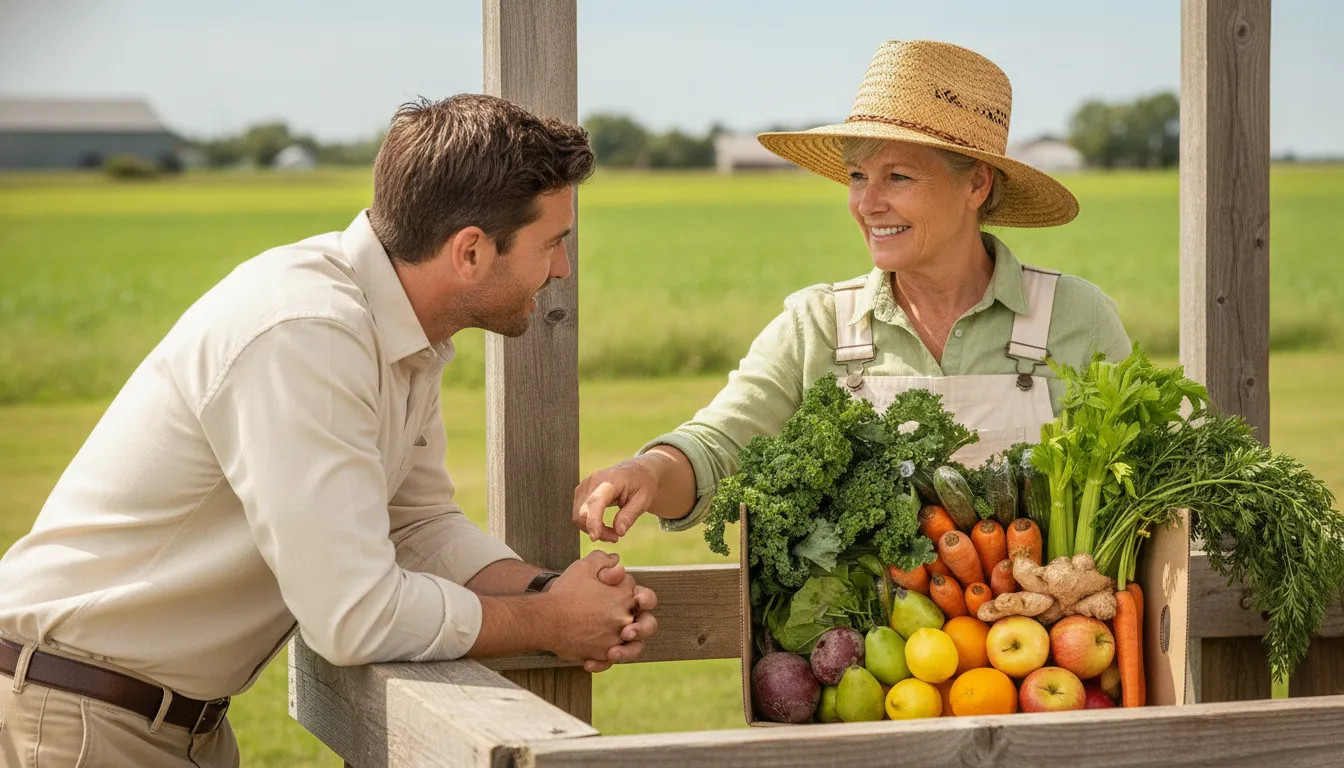
A retailer with established producer relationships can answer more useful questions than simply naming a country of origin. Shoppers can ask which farm grew a product, whether the item is available seasonally, and how the retailer handles changes in supply. Those details do not guarantee that every product is local, but they make sourcing easier to understand and compare.
Short supply chains are sometimes presented as a way to improve food-system resilience and strengthen community-level connections, although the results depend on how the supply chain is organized. Research on local food systems also distinguishes social benefits from environmental claims. Buying local is not automatically a lower-carbon choice, so it is better to look for specific sourcing information than broad sustainability promises.
Local sourcing works with the growing seasons rather than ignoring them. A Canadian-owned grocery store that maintains producer relationships may offer different products throughout the year, explain substitutions, or highlight what is currently available. That can help shoppers plan around freshness while setting realistic expectations. Research on local seasonal food production connects seasonal strategies with more sustainable food-consumption habits, but availability will still vary by crop, weather, and region.
Seasonal changes are not a drawback to hide. They can be a useful sign that a retailer is showing how food reaches the shelf instead of presenting every product as permanently interchangeable.
Before choosing among Canadian-owned grocery stores, ask:
For an Ontario-focused option, Tre'dish sources from more than 200 local Ontario farmers and producers. You can read more about its local Ontario food producers. The value of that model is not a promise that every item is locally grown. It is a clearer connection between shoppers, the products they receive, and the producers who help supply them.
Local food systems can contribute to rural development and a sense of community, according to academic research on local food networks. That makes producer transparency a practical factor to compare, alongside ownership, product quality, and service.
Canadian ownership and everyday convenience do not have to compete. The useful question is how a grocery business delivers on both. Before choosing, compare its ordering schedule, product range, delivery process, flexibility, and the clarity of its value proposition. A Canadian-owned option should fit the way you actually shop, not ask you to trade time or reliability for local connections.
Start with cadence. Weekly or bi-weekly delivery can replace repeated trips, but the schedule should be dependable and easy to understand. Then look for customization. Can you adjust an order when your household needs change, or skip a delivery when you are away? These details matter as much as the ownership label because they determine whether the service works in real life.
Freshness also depends on what happens after you place an order. Ask how refrigerated products are handled, how they are packed, and whether the delivery process protects quality from the warehouse or producer to your door. Tre'dish uses insulated boxes and ice packs as part of its refrigerated, eco-friendly delivery approach. That connects convenience with the practical expectation that groceries should arrive ready for your kitchen.
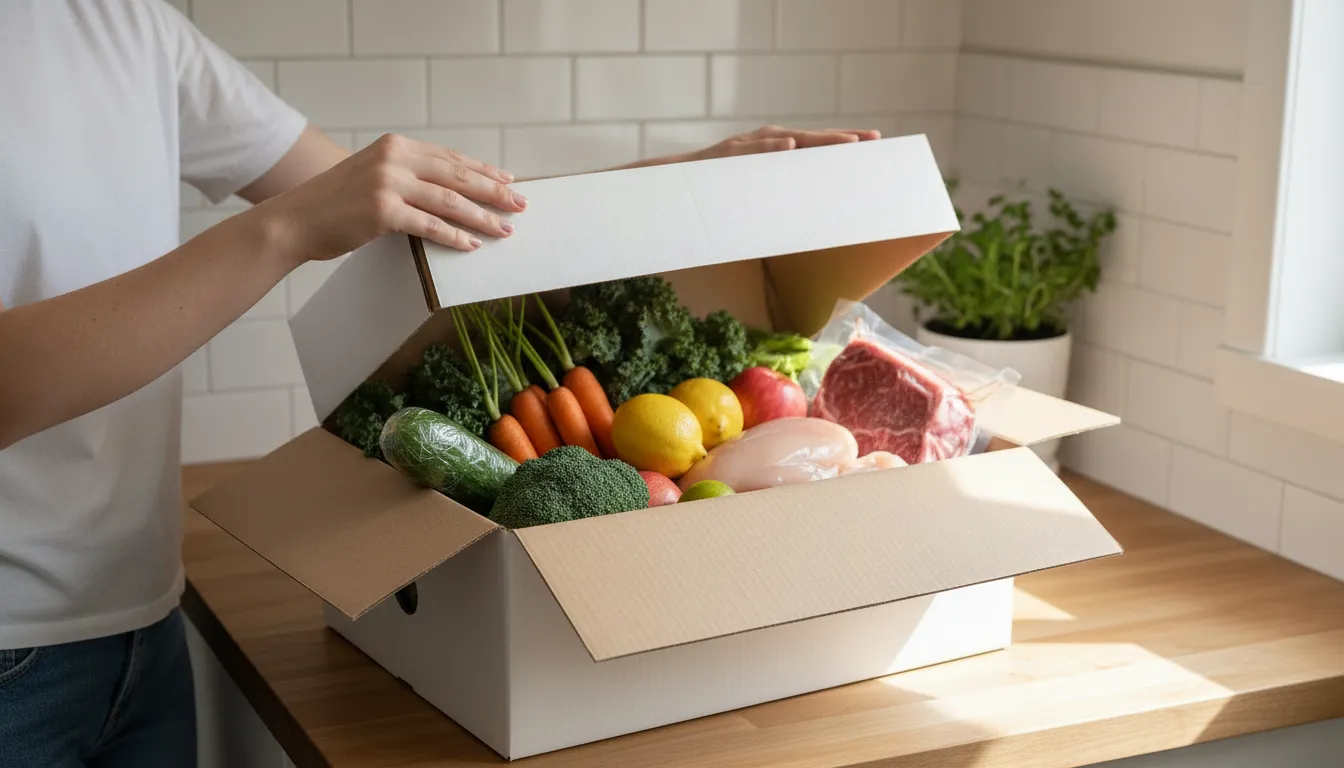
Product range is another useful test. A service may be locally connected yet still need to cover the staples, fresh foods, and household items you regularly buy. Tre'dish sources from more than 200 local Ontario farmers and producers and serves customers across Ontario. That producer network can make local sourcing part of a practical weekly routine rather than a separate shopping project.
Finally, read the value language carefully. Look for clear information about what you receive, how orders work, and what flexibility is included. Tre'dish focuses on fair, transparent value while keeping quality and convenience central. For more context, see this guide to the how the grocery delivery model works. The best choice is one that makes supporting Canadian and Ontario producers easier without adding friction to your week.
Community impact is one practical way to look beyond a store's product list. A grocery option can affect which producers get access to customers, where economic activity takes place, and how a business contributes to the communities it serves. That does not mean every local or Canadian-owned label guarantees a particular result. It means shoppers can ask better questions about relationships, sourcing, and accountability.
Local food systems are often discussed in terms of their potential to support rural development and strengthen a sense of community. Research on local food systems makes that social connection clear, while also cautioning against simple promises about resilience or environmental impact. The broader food-system research is useful context when comparing grocery choices.
Canada's agricultural and agri-food sector is a significant contributor to the national economy, according to the U.S. International Trade Administration's overview of Canada's agricultural sector. Choosing a grocery business that builds relationships with Canadian producers can help keep attention and commercial activity connected to that sector. The effect depends on the business model and its actual sourcing practices, so look for specific information rather than relying on broad community language.
For Ontario shoppers, Tre'dish connects its grocery service with a community-focused approach through its partnership with Feed Ontario. The company donates a portion of profits to the organization. This is one part of the overall choice, alongside product quality, sourcing transparency, delivery reliability, and flexibility. It should be understood as a stated partnership, not a promise that one grocery order solves a wider social issue.
A useful comparison asks: Who does the business work with? Can it explain where products come from? Does it identify community partners clearly? Answers to those questions give the phrase "community impact" more substance and help you choose a grocery option that fits your priorities.
Once you know what a retailer means by Canadian-owned, compare the details that shape your everyday experience. Ownership matters, but it is only one part of the decision. Look at where products come from, how clearly the retailer describes producer relationships, and whether the service fits the way your household shops.
The best option should make its priorities easy to understand. Use the criteria below to compare grocery stores, delivery services, and other Canadian grocery options without relying on a label alone.
Compare the business behind the store, the products on the shelves, and the service that gets food to your kitchen. A transparent retailer should be able to explain its sourcing, delivery or pickup model, freshness practices, and community commitments in plain language.
| Criterion | What to look for |
|---|---|
| Retailer ownership | Check the legal business, parent company, headquarters, and ownership information. Do not assume a Canadian store location means the retailer is Canadian-owned. |
| Product origin | Look for clear information about where food is grown, raised, made, or packaged. Canadian-owned and Canadian-made describe different things. |
| Producer transparency | Prefer retailers that identify farms, producers, regions, or sourcing standards instead of using broad local claims without detail. |
| Service model | Compare in-store shopping, pickup, delivery, or a combination. Tre'dish replaces repeated grocery trips with dependable weekly or bi-weekly delivery that customers can customize. |
| Freshness | Ask how products are handled between fulfillment and arrival. Tre'dish uses refrigerated, eco-friendly packaging, including insulated boxes and ice packs. |
| Flexibility | Check whether you can adjust the cadence and contents of an order as your household changes. A useful service should not make routine changes unnecessarily difficult. |
| Community impact | Look for specific commitments rather than vague statements. Tre'dish sources from over 200 local Ontario farmers and producers and focuses on fair, transparent value. |
This comparison also helps you spot trade-offs. One retailer may offer broad product choice, while another may provide stronger producer visibility or a more adaptable delivery routine. For Ontario shoppers, Tre'dish brings these considerations together through local sourcing, customizable delivery, refrigerated handling, and a clear value position.
Take a few minutes to verify the claims that matter most to your household. The result is a grocery choice based on ownership, origin, service, and trust, rather than a single slogan on a storefront.
Check the retailer's parent company, headquarters, ownership disclosures, and corporate information. Then look at its sourcing policy and producer relationships. A store's location alone does not confirm Canadian ownership, so review the business behind the storefront.
No. Canada's grocery market includes large national chains, regional retailers, independent stores, and specialized services. Ownership can vary by banner and parent company, so confirm the specific business rather than assuming every store follows the same model.
Canadian-owned describes the retailer or business that owns and operates the service. Canadian-made describes where a product was produced or manufactured. A Canadian-owned store may carry products from several countries, while a Canadian-made product may be sold by a retailer with different ownership.
Often, but availability and transparency vary by retailer, season, and product category. Look for clear producer information, Ontario sourcing details, and explanations of how seasonal products are selected. Tre'dish connects Ontario shoppers with products sourced from more than 200 local Ontario farmers and producers.
Ownership is one factor in a grocery decision, alongside quality, sourcing, convenience, and community impact. Canadian-owned businesses may keep more economic activity connected to Canadian communities, while local producer relationships can strengthen regional supply chains and community ties.
If you want to explore Canadian products while making grocery planning more dependable, Tre'dish gives you a practical next step. Browse the selection, consider the producers and sourcing details that matter to you, and choose what fits your household routine.
Get started and Start Shopping.